
- Advertisement -spot_img

Opposition parties slam Godongwana’s ‘fictional’ budget, warn of deepening economic crisis

- Advertisement -spot_img

Must read

By Simon Nare

South African political parties have slammed the budget tabled by Finance Minister Enoch Godongwana in the National Assembly, describing it as lacklustre and “fictional”.

Parliamentarians accused the National Treasury of relying on creative accounting to prop up a largely meaningless “fiscal anchor”, while prioritising debt stabilisation over land reform, free education, support for local government and industrialisation.

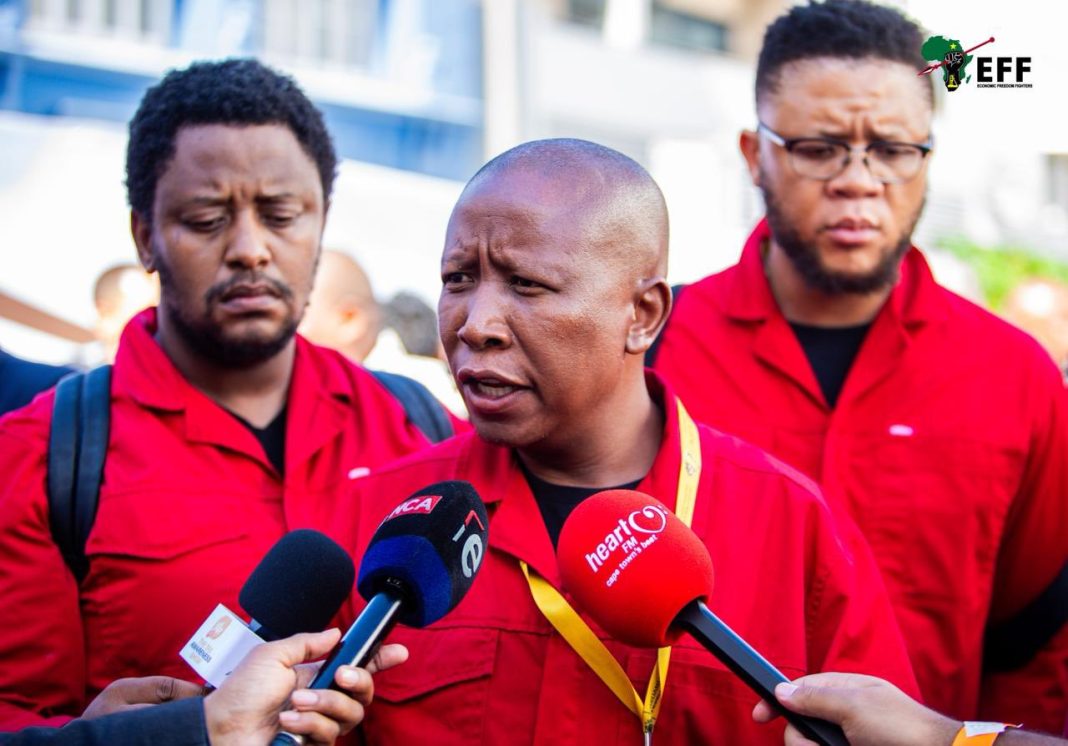
Reacting to Godongwana’s budget, the Economic Freedom Fighters (EFF) called on “progressive forces” to make coordinated and substantive inputs during committee deliberations.

The party said the budget failed to appreciate the depth of the country’s economic crisis, describing it as “microwaved economic success” and out of touch with the realities of a struggling and deindustrialising economy.

“The growth of 1.4% in 2025, which was initially tabled as a baseless projection of 1.9% in March 2025, and the projected growth of 1.8% over the medium term, are dismal when compared to the crisis we face as a nation,” the EFF said in a statement.

“The EFF is vindicated that the National Treasury is captured by the white capitalist establishment and continues to maintain a fiscal framework for profit and the repositioning of a global capital–Afrikaner nationalism alliance at the expense of Black people, and workers in particular, risking taking South Africa to new levels of neocolonialism.”

The Umkhonto we Sizwe Party (MKP) said the budget proved that the African National Congress had abandoned its liberation mandate, arguing that inflation and enrolment growth continued to erode resources.

The party added that approximately 75% of provincial education budgets remain locked into salaries, leaving inadequate funding for infrastructure and materials. Since 2024, it said, there has been no structural expansion in university placements or teacher employment.

“A generation promised open doors now confronts shrinking opportunity under fiscal consolidation. Municipal collapse continues under austerity funding. The 2026 division of revenue allocates R182.3 billion to local government in 2026/27, rising to R195.3 billion by 2028/29, yet the municipal share of nationally raised revenue remains about 9.4%,” the MKP said.

“This allocation is insufficient to rebuild infrastructure or institutional capacity. Communities queue for water while the Treasury celebrates primary surpluses.”

Trade union federation Congress of South African Trade Unions (COSATU), on the other hand, said that while it appreciated some progressive and important allocations it had campaigned for, the budget failed to respond decisively to the fundamental crises facing the working class and the economy.

The federation pointed in particular to a 41.1% unemployment rate, economic growth far below the 3% needed to create jobs, struggling public and municipal services, as well as state-owned enterprises, which it said entrenched poverty and inequality, alongside endemic crime and corruption.

“Tragically, the Budget is focused on balancing the books, not aggressively kickstarting economic growth or tackling unemployment. Key to providing an environment where the economy can take off and the lives of the working class be improved is ensuring that frontline public services have the resources needed to fulfil their constitutional and developmental mandates,” said COSATU.

However, COSATU welcomed increases for health, education and social security, including R18 billion to enrol 300,000 Grade R learners; R7.8 billion for National Health Insurance grants; and R24 billion for revitalising public healthcare.

The Democratic Alliance (DA), the ANC’s key partner in the Government of National Unity (GNU), welcomed the adjustment of the value-added tax registration threshold for small, micro and medium enterprises from R1 million to over R2 million, as well as other upward revisions.

These include higher tax exemptions for primary residences, increased tax-free savings account limits, turnover tax threshold adjustments, and higher capital gains tax exclusions for individuals and businesses.

However, the party said unemployment remained unacceptably high while growth was unacceptably low.

“We cannot be happy with 1.6% GDP growth. This should be the bare minimum in order to stabilise GDP per capita, meaning South Africans don’t get poorer every year,” said Mark Burke, DA spokesperson on finance.

The DA also expressed frustration at the burden several state-owned enterprises place on the fiscus, noting that they frequently require bailouts and debt guarantees, alongside the annual transfer of billions of rand — many of which it considers unjustified.

“For instance, the special appropriation to Passenger Rail Agency of South Africa (PRASA) for rolling stock fleet renewal needs serious interrogation, given reports of rampant corruption in this space,” said Burke.

INSIDE POLITICS

More articles

LEAVE A REPLY

Please enter your comment!
Please enter your name here

Inside Education E-Edition

spot_img

CATHSSETTA

spot_img

AVBOB STEP 12

spot_img

Inside Metros G20 COJ Edition

spot_img

JOZI MY JOZI

spot_img

QCTO

spot_img

Latest article



