



By Thapelo Molefe
Parliament has raised concerns over a lack of accountability in South Africa’s fast-growing podcast industry, while also acknowledging its growing role in expanding access to information, creating jobs and opening up new platforms for expression.
The issue took centre stage during a roundtable hosted by the Portfolio Committee on Communications and Digital Technologies on Tuesday, where policymakers and industry stakeholders debated how to respond to the rapid rise of podcasts and digital content platforms.
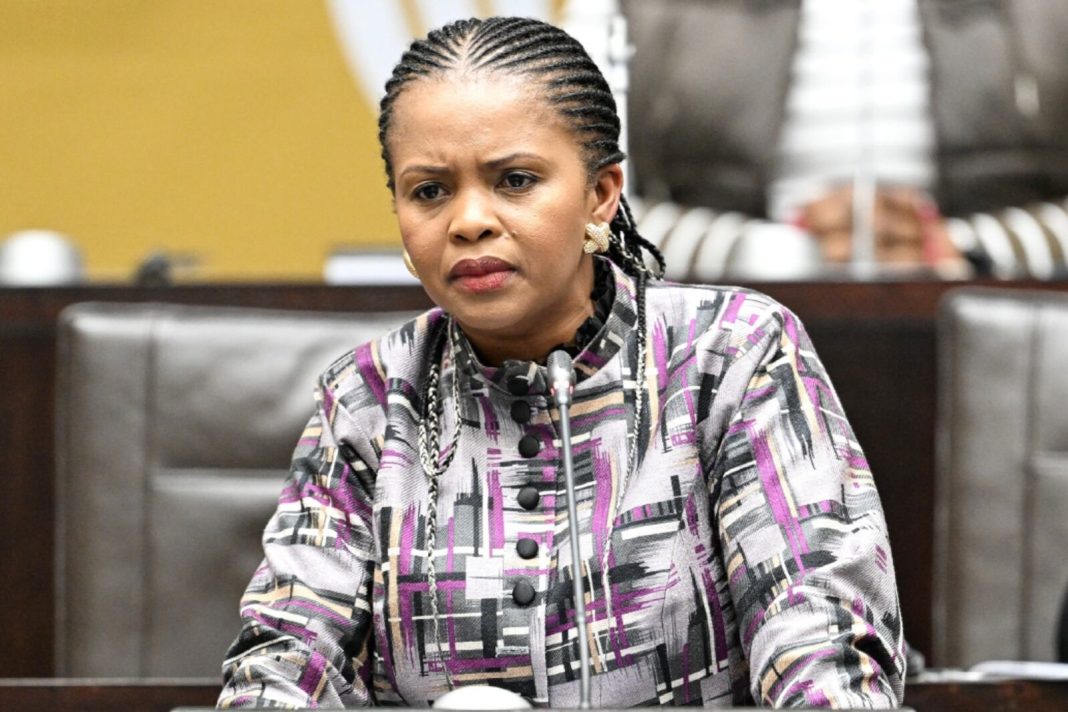
The committee’s chairperson Khusela Sangoni said while podcasting has opened up new opportunities for expression and entrepreneurship, it has also exposed gaps in oversight.
“The question before us is not whether podcasting should be regulated, but how do we create a framework that protects public interests… without stifling creativity and freedom of expression,” she said.
She described podcasting as a growing “cornerstone of cultural expression” that is enriching public discourse and giving a voice to people often excluded from traditional media.
Officials from the Department of Communications and Digital Technologies highlighted what they described as a critical weakness in the current system, the absence of a formal complaints mechanism for podcast content.
Chief Director of Broadcasting Policy Collin Mashile said unlike traditional broadcasters, podcast listeners do not have a clear channel to report harmful or offensive material.
“With broadcasting, it is very clear… you go to the BCCSA or ICASA and complain,” Mashile said. “
In this online environment, currently, we do not have that complaint mechanism.”
He added that this creates uncertainty about who should be held responsible for problematic content, whether it is the creator or the platform hosting it.
At the same time, officials noted that the openness of podcasting has lowered barriers to entry, allowing independent creators, small businesses and young people to participate in the media space without the heavy regulatory requirements faced by traditional broadcasters.
The roundtable also turned attention to global tech platforms such as YouTube and Spotify, which distribute podcasts but are not regulated in the same way as traditional broadcasters.
Mashile said policymakers are increasingly focused on “platform accountability”, especially as more than half of advertising revenue shifts to digital platforms.
“There is an emergence of collaboration among regulators… on how global podcast platforms that operate within their borders can address harmful content,” he said.
However, stakeholders also recognised that these platforms have enabled the rapid growth of the podcast ecosystem, giving South African creators access to global audiences and new revenue streams.
Lawmakers acknowledged that any move to introduce oversight must be carefully balanced against constitutional rights, particularly freedom of expression.
Sangoni pointed to growing concerns around online harms, including misinformation and abusive content, but warned against heavy-handed regulation.
“We have seen the impact that social media… has had in our society,” she said. “But this is also a success story of innovation and digital inclusion.”
Deputy Minister of Communications and Digital Technologies Mondli Gungubele echoed both the excitement and concern around the medium.
“It’s a huge intervention in terms of communicating news and providing critical overviews of what is happening in the country,” he said. “It’s an exciting vibrancy.”
At the same time, he acknowledged challenges around engagement and accountability.
“I’ve watched podcasts where even personally I got mocked very badly,” he said. “Sometimes I felt, could I have a way to respond? You find that you can’t.”
The discussions form part of a broader policy review process, including a draft white paper on audio and audiovisual media services and an online safety policy.
Government officials said these reforms aim to modernise outdated legislation that was designed for traditional broadcasting and does not fully apply to on-demand digital content like podcasts.
They stressed that policy development will need to support the sector’s growth, while ensuring consumer protection, ethical standards and respect for constitutional rights.
The committee said podcasting remains a significant opportunity for economic growth, youth participation and innovation, particularly as digital content creation continues to expand.
“We are not here with a predetermined outcome,” Sangoni said.
“We want to engage with the sector to find the way forward.”
INSIDE POLITICS






