

Farmers in South Africa are heading into the winter planting season with surging diesel prices and tightening supplies — triggered by the Middle East conflict — threatening production in sub-Saharan Africa’s largest commercial wheat-growing industry.
For Rossouw Dippenaar, who farms near Riebeek-West about 80 kilometers (50 miles) northeast of Cape Town, time is running out. He needs as much as 40 000 liters (10 564 gallons) of diesel to plant his wheat, but has only secured about 6 000 liters because some retailers are limiting purchases in a bid to prevent a run on their stocks.
“I don’t know what I will do if it doesn’t change in the next two weeks,” he said. “I’m living in hope that it will get better.”
A five-day halt to US strikes on Iranian energy infrastructure announced by President Donald Trump on Monday eased global oil prices. But there’s little sign that trade will normalize any time soon.
Iran continues to disrupt traffic through the Strait of Hormuz, restricting shipments from key oil and fertiliser producers such as Saudi Arabia, Qatar and Oman, and has dismissed Trump’s claims that ceasefire talks are underway.
Unlike in many sub-Saharan African countries, most of South Africa’s crops are grown on commercial farms, with production heavily dependent on inputs such as fuel and fertiliser.
Ethiopia produced about three times the 1.9 million tons of wheat that South Africa did last season, but it is primarily grown by small-scale farmers.
Cost shock
“The combined effects of rising diesel and fertiliser prices present one of the most significant cost shocks to producers in recent years,” Richard Krige, chairman of Grain SA, which represents corn and wheat farmers, said in a statement. “The impact on farmer viability — and therefore food security — could be severe.”
Since the US and Israel began bombing Iran on February 28, global oil prices have surged by 40% or more, and emerging-market currencies such as the South African rand have plunged.
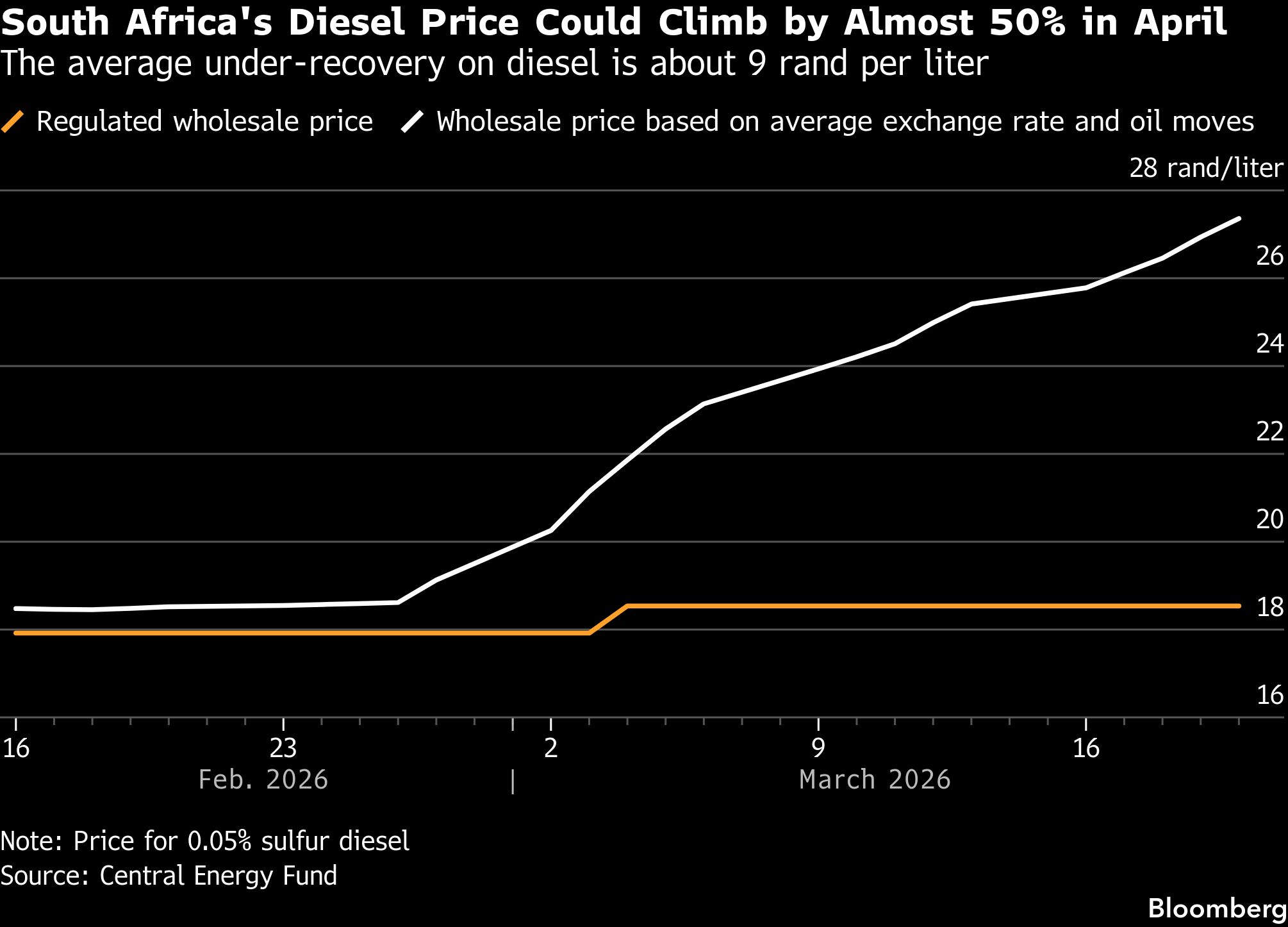
Fuel and fertiliser account for about half of grain farmers’ production costs in the country, and preliminary data suggests the diesel price, which is set monthly, will rise by almost half in April. Many farmers have already ordered fertiliser, but expect to pay higher prices when they replenish supplies.
Wheat farmers aren’t the only ones who are concerned.
First to be affected will be sunflower and soybean farmers, who will need diesel to harvest by the end of this month. Wheat, barley, and canola farmers will start planting in April, and corn farmers in Africa’s biggest exporter of the staple will begin harvesting in late May.
Farmers of so-called winter grains, such as wheat, may cut plantings if they aren’t confident that prices for their produce will rise sufficiently to compensate for higher costs.
So far there is little sign of that.
Wheat grain falls into a waiting truck at a grain silo in Malmesbury, South Africa.
Wheat prices on the South African Futures Exchange in Johannesburg have climbed only 4.9% since the start of the war and the most commonly traded corn contract is up 9.4%. If they do rise significantly, there would be a knock-on effect on inflation in a country where corn meal and bread are the main staples, and beef cattle and poultry are fed with corn.
“Farmers are price takers and will either have to absorb these costs or they will say they can’t plant profitably anymore and will halt production,” said Corné Louw, an agriculture economist at Grain SA.
South Africa, which has seen its refinery capacity halve in recent years, imports most of the fuel it consumes and 80% of the 2 million tons of fertilizer it uses annually.
A third of the crop nutrients come from the Middle East.
“Our biggest hope is that the commodity prices will rise with the input costs,” said Johan van Zyl, who farms between Malmesbury and Moorreesburg in the Western Cape province.
“If you’re going to be selling at a low price while it’s expensive to get the crop in the ground, it’s a recipe for disaster and you will become bankrupt.”
The higher fertiliser prices are currently the main concern, but availability will become a major worry if the war drags on, said Wandile Sihlobo, chief economist at agricultural business chamber Agbiz and presidential envoy on agriculture and land.
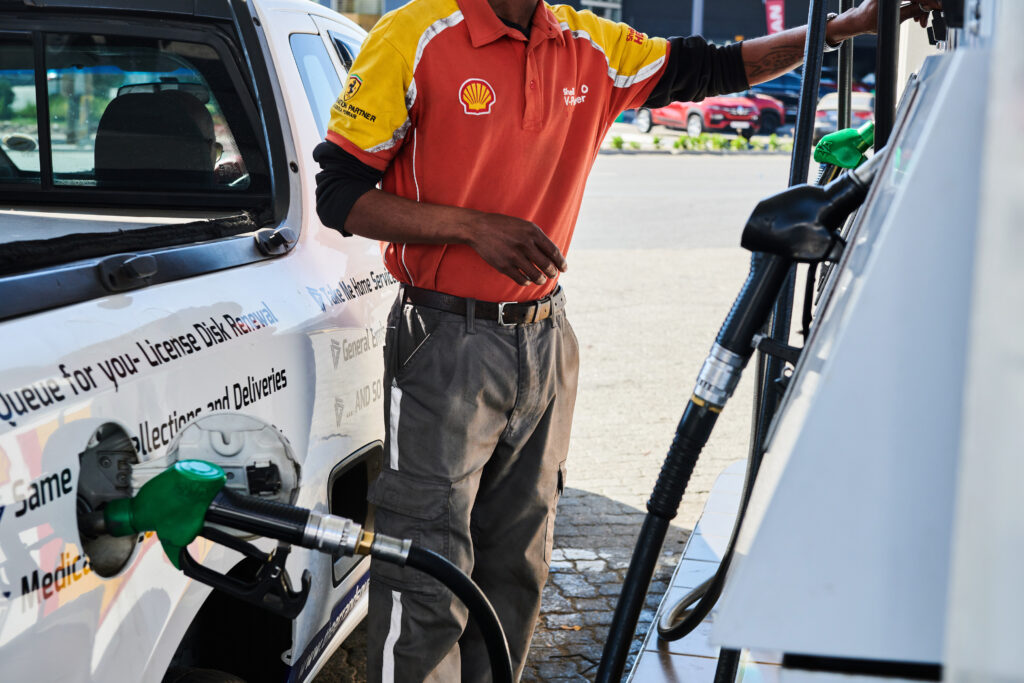
While industry associations and the government insist the country has enough fuel and the regulated diesel wholesale price will only increase on April 1, some filling stations have run dry or are limiting the volume of diesel people can buy. Farming co-operatives such as OVK have already started increasing what they charge for diesel.
The government has said it has little room to intervene. In a March 11 speech to a Grain SA congress, Agriculture Minister John Steenhuisen lamented the impact of global market volatility but mentioned no measures the government could take.
“It’s an international crisis, and because we are so dependent on imports, it means producers will feel it,” said Willem de Chavonnes Vrugt, president of Agri SA, the biggest farmers’ lobby group. “And that will end with the consumer if local production does not happen.”
The first official indication of how wheat production will be impacted will come on April 23 when the Crop Estimates Committee releases its report on farmers’ intentions to plant winter cereals for 2026.
Many farmers say they will need to press ahead regardless of the current market conditions.
“We just have to plant blindly,” said Dippenaar.
“What else can we do?”
BLOOMBERG