
By Akani Nkuna
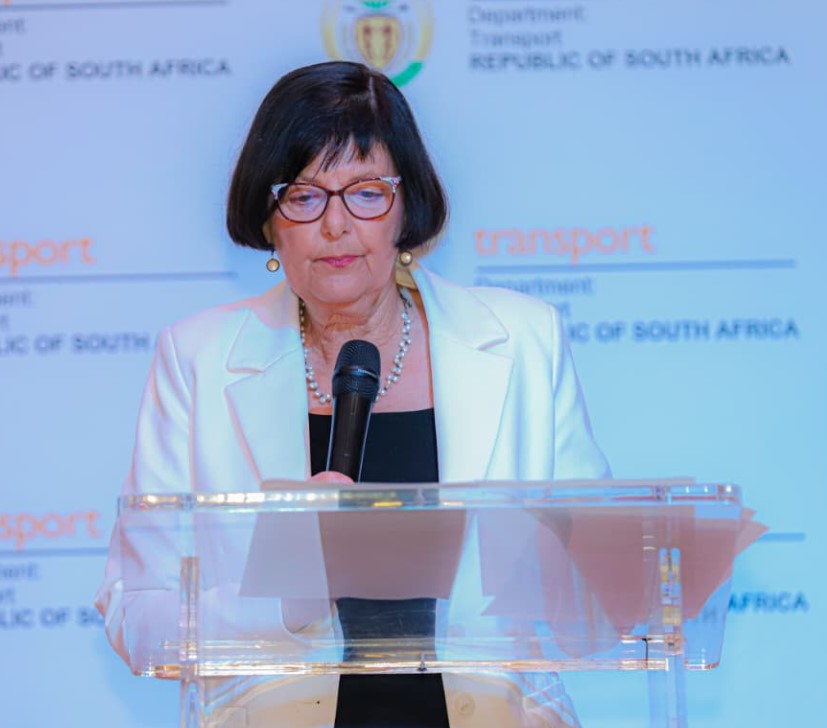
Transport Minister Barbara Creecy on Thursday launched the public engagement process on the draft National Rail Master Plan, saying the overhaul needed to revive the country’s rail system and shift freight from road to rail would require close to R2 trillion in public and private investment.
Addressing stakeholders at the launch of the Gauteng consultation process, Creecy said: “This Plan aims to position rail as the backbone of South Africa’s logistics and transport ecosystem.”
She said the draft plan outlines “a sustainable, strategic framework for rail network planning” and covers both passenger and freight rail, including commuter services and long-distance passenger travel.
She said the plan recognises that a stronger rail network would benefit “households, communities and the economy as a whole”.
Constraints, she said, included infrastructure needs and areas for expansion.
A primary goal, she said, was to “rebalance road-to-rail freight distribution”.
The road system remains South Africa’s dominant transport backbone, spanning about 750,000 km, while the majority of the provincial network consists of low-volume gravel roads.
In the current medium-term budget framework, the transport department says it has had to reduce some targets for roads rehabilitated, resealed and re-gravelled after budget cuts.
R140.6 billion has been allocated to the road transport programme, including R86.8 billion for SANRAL and R51.8 billion for the provincial roads maintenance grant.
Creecy said that the draft plan does not propose rail as a replacement for other modes of transport, but as part of an integrated network.
“This word ‘re-balance’ is critically important. Because this plan recognises the central and important role that rail must play in an integrated system together with trucking, taxis and buses,” she said.
“The plan contemplates a ‘brownfield’ approach to optimise existing infrastructure to minimise cost, paired with targeted ‘greenfield’ expansions where economically feasible and aligned with technological advances in the global rail renaissance.”
Creecy said the draft master plan is aimed at addressing a significant gap between current rail performance and freight demand.
“Currently approximately 165 million tons of freight are moved on our rail system annually. Research indicates that market appetite for rail freight transportation is closer to 280 million tons,” she said.
She said the consequences of that shortfall include lost foreign exchange earnings and job losses when mining and agricultural products cannot be “affordably and timeously exported”.
Congestion, road deterioration, and safety concerns were inflating transport costs and undermining efficiency, she said.
In the commuter rail sector, Creecy said high transport costs were eroding workers’ disposable income and forcing many people to spend hours on congested roads.
“An effective commuter rail system would lower household costs, save time, reduce accidents and improve accessibility to income and services for low-income communities,” she said.
She said full implementation of the plan would require combined public and private investment of close to R2 trillion over the next 30 years.
She said modelling showed that “every one million rand spent in this way, will increase GDP by R4,3 Million”.
Such investment would boost industries including steel, cement, logistics and engineering, while creating jobs and lifting household incomes.
She said government was launching a centralised web-based platform containing the draft plan, GIS mapping, interactive tools and a user manual.
She asked stakeholders to use it to review the document and submit input.
Consultations will be held across all provinces and among freight, commuter, passenger and labour groups, with the public comment process set to conclude in July 2026 before the plan returns to Cabinet for consideration and approval.
INSIDE POLITICS





