
- Advertisement -spot_img

SIU wins order setting aside R85m KZN-Mozambique border wall tender

- Advertisement -spot_img

Must read

Des Erasmus

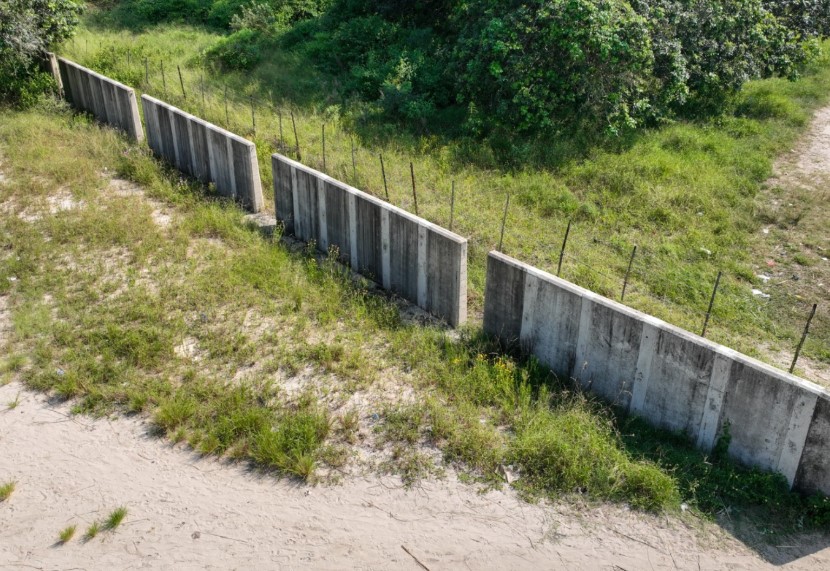
The Special Tribunal has set aside an R85 million KwaZulu-Natal-Mozambique border wall tender after finding that the ISF Shula Joint Venture used a fraudulent B-BBEE certificate, submitted an expired Letter of Good Standing, and failed to meet mandatory financial capacity requirements.

The wall was commissioned by the KwaZulu-Natal Department of Transport “in response to community concerns about rampant cross-border crime, particularly the smuggling and trafficking of stolen and hijacked vehicles into Mozambique,” the Special Investigating Unit (SIU) said in a statement on Friday.

In July 2016, the community of uMkhanyakude in KZN protested about rampant crime in the area. On 29 March 2018, the department published an invitation to tender for the construction of an 8km concrete barrier wall between uMkhanyakude and Mozambique.

A total of 14 bids were submitted. Six were found to be unresponsive, the majority because they did not meet the requirement that the tenderer must have a B-BBEE Level 1 status.

The ISF Shula JV bid was one of three that progressed to evaluation on price and preference points. The tender was approved on 12 July 2018 and the contract concluded on 16 August 2018.

“Instead of delivering on this urgent public safety measure, the Joint Venture submitted fraudulent documents, failed to meet mandatory requirements, and left the project incomplete despite receiving R84 million,” the SIU said.

Only 5.29km of the wall was erected, with 2.71km still outstanding, forcing the department to issue another tender worth R62,288,559 for completion of the work in June 2023, nearly five years after the original contract was concluded.

In its judgment, the Tribunal said the department had stated in an explanatory affidavit that, on average, 74.7% of the work had been done before the contract was cancelled.

The Tribunal also found that the B-BBEE certificate submitted by the joint venture was false, and the fraud was extensive.

The ISF Shula JV provided a consolidated Joint Venture B-BBEE certificate, dated 1 December 2017, purportedly issued by verification agency Inforcomm.

However, the Chief Executive Officer of Inforcomm provided a sworn statement confirming that Inforcomm did not issue the certificate.

The certificate showed a 50/50 ownership split between ISF and Shula, which was inconsistent with the JV Agreement submitted as part of the bid — that agreement recorded ISF as holding a 70% share and Shula 30%.

The certificate was issued under the 2007 B-BBEE Codes of Good Practice, which had been repealed and replaced by the 2013 Codes from 1 May 2015.

The certificate claimed the ISF Shula JV had a Level 1 B-BBEE contributor status with a score of 80 points, but under the 2007 Codes, 80 points equated to a Level Three contributor, and under the 2013 Codes, a Level Four.

“Under both the 2007 and the 2013 Codes the ISF Shula JV could never achieve a Level 1 B-BBEE contributor status,” Tribunal Judge Chantel Fortuin said in the ruling.

Neither ISF nor Shula seriously disputed the certificate was false. Both companies shifted blame to an accountant, one Mr Budden, whom they had engaged to obtain the certificate.

“It is astonishing how the first and second respondents fail to take responsibility for this fraudulent B-BBEE certificate. This was a document in their names, submitted for a tender in their names and all the responsibility is shifted to a third party,” the judgment reads.

Fortuin said the attitude of deflecting all responsibility “persists throughout this application and will, as it should, be considered as one of the factors in determining an outcome”.

She said the invalid B-BBEE certificate was enough, on its own, to render the award unlawful.

“An invalid B-BBEE certificate amounts to no certificate being submitted. Consequently, I find that the award of the tender to the ISF Shula JV was unlawful because a falsified and invalid B-BBEE certificate was provided.”

The Tribunal also found that the Letter of Good Standing submitted for the tender was invalid.

All bidders were required to submit a valid Letter of Good Standing with the Compensation Commissioner, a mandatory tender requirement for both parties in a joint venture.

ISF submitted a letter issued on 7 May 2017. On ISF’s own version, that letter expired on 30 April 2018, before the contract was even concluded.

“In my view, the letter was indeed stale and invalid for the purposes of the tender. In effect, therefore no Letter of Good Standing was submitted by Shula,” said the judge.

Regarding financial capacity, the Tribunal found that the joint venture should not have passed the functionality threshold.

The tender required bidders to score at least 60% in a functionality assessment. In the Financial Capacity category, the JV was awarded six out of a possible 10 points, a score that required a Grade C credit rating, but the bid documents did not contain the necessary certified letters from both JV members’ banking institutions confirming their credit ratings.

Had the correct score of zero been applied to that category, the JV’s total functionality score would have fallen to 50%, below the mandatory 60% threshold.

On the Tribunal’s reasoning, the JV’s bid should not have survived the first stage of evaluation.

The joint venture was, in Judge Fortuin’s words, “a sham”.

Shula stated in its answering affidavit that it was part of the ISF Shula JV “in name only” and that it never intended to conduct any work or otherwise participate in the project for which the tender was awarded.

ISF and Shula had formed the JV in order to increase their Construction Industry Development Board rating, which allowed them to tender for projects of higher value.

“The two companies planned to, after winning the tender, split back into individual companies and work on their respective projects,” the judge said.

This was further evidenced by a new JV agreement entered into on 9 April 2019 — after the tender was already awarded — which made explicit that for the border wall contract, Shula would attend to all the work as a subcontractor of the joint venture, with any profits or losses accruing solely to Shula’s benefit.

However, because this fourth ground of review had only been raised by the SIU in its heads of argument and not in its founding papers, Judge Fortuin made no formal finding on it, noting that “one or more of the remaining three grounds of review would amount to an unlawful contract to be reviewed and set aside” regardless.

The SIU had originally sought repayment of the full R84,346,497.86 paid to the JV.

The Tribunal declined to grant this primary relief, noting that approximately 74% of the work had in fact been performed.

Instead, the Tribunal ordered the alternative relief: that ISF and Shula disgorge only the profits derived from the contract.

Said Fortuin: [I]t is necessary for this tribunal in exercising its discretion to craft a just and equitable remedy to assess the blameworthiness of the first and second respondents and whether they should be entitled to the profits from the undisputed services it rendered to 74% of the building.”

As part of the order, ISF Shula Joint Venture has been directed to repay all profits it derived from the contract to the SIU.

The Tribunal further ordered the KZN Department of Transport and its head of department must start disciplinary proceedings within 30 days against officials who served on the Bid Evaluation Committee and had not yet been disciplined for their involvement in the tender award.

“This judgment validates the SIU’s investigation and sends a clear message that fraudulent certificates, misrepresentation, and incomplete delivery will not be rewarded,” the SIU said.

INSIDE POLITICS

More articles

LEAVE A REPLY

Please enter your comment!
Please enter your name here

AVBOB STEP 12

spot_img

Inside Education E-Edition

spot_img

Inside Metros G20 COJ Edition

spot_img

JOZI MY JOZI

spot_img

QCTO

spot_img

Latest article



