



By Johnathan Paoli
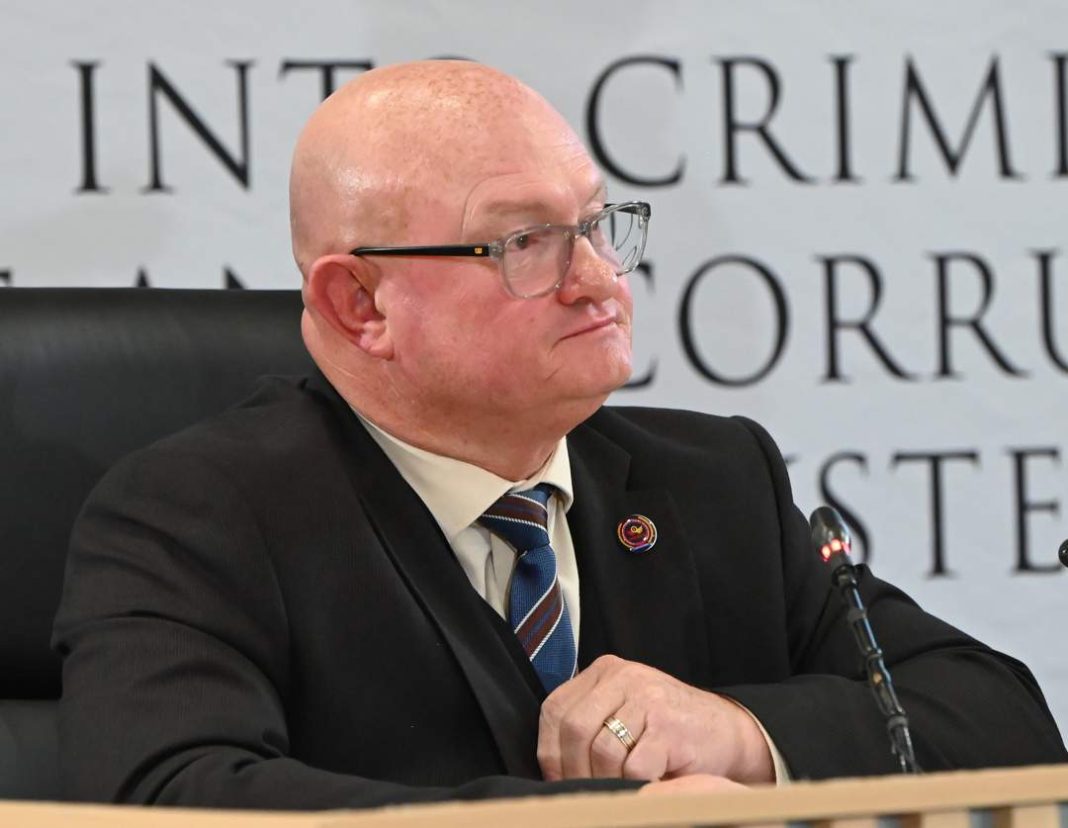
Hawks component head for Serious Organised Crime Investigations, Major-General Hendrik Flynn, has described a series of procedural failures and possible deliberate actions that led to the theft of more than 500kg of cocaine from a police facility in Port Shepstone in 2021.
Appearing before the Madlanga Commission of Inquiry on Tuesday, Flynn said that the handling and safeguarding of the seized drugs was fundamentally flawed, concluding that the circumstances surrounding the theft were “not a coincidence” but appeared to be “by design”.
“Commissioners, I’m of the view that it is no coincidence, and that the sequence of events is indeed by design. It was no coincidence,” Flynn said.
The drugs (541 bricks of cocaine weighing about 541kg and valued at over R200 million) were originally seized during an intelligence-driven operation linked to a container intercepted in Isipingo, south of Durban in KwaZulu-Natal.
They were later transported from a police station in Isipingo to a storage facility in Port Shepstone, where they subsequently vanished.
Flynn said the consignment formed part of a broader transnational trafficking network and was likely destined for distribution within South Africa.
He explained that the shipment bore markings such as “Tik-Tok” and “Jaguar”, identifiers commonly used by international drug syndicates to track consignments.
Flynn pointed to serious breaches of protocol, particularly regarding the control of keys and access to the storage facility.
“Senona was supposed to open the safe and not provide the key to anybody under his command,” Flynn said.
According to Flynn, suspended Hawks KZN head Major General Lesetja Senona took possession of the keys to the storage facility and later handed them to a warrant officer Livingstone Mpangase who was not authorised as the official responsible for managing evidence storage.
Flynn said “the whole process was upside down”, adding that proper audit procedures and handover protocols were not followed.
He said that only designated custodians should access exhibits and that any deviation from this process created vulnerabilities.
“A key holder must satisfy themselves before assuming responsibility,” Flynn said.
Flynn said according to reports, Senona gave the keys to the warrant officer in order to obtain a sample for forensic testing.
But the commission heard that no proper record existed of the movement of the drugs to a forensic laboratory, despite the claims.
Flynn questioned why investigators returned to collect samples, and said that there had been no intention to transport the bulk of the cocaine to the Forensic Science Laboratory in Tshwane, raising further suspicion about the handling of the evidence.
Flynn also highlighted security failures at the Port Shepstone facility.
The alarm system was non-functional at the time of the theft due to an expired contract with a security company and a lack of maintenance, including dead batteries.
He said these issues should have been addressed through provincial supply chain management processes.
The commission heard that the facility itself may not have been suitable for storing high-value drug exhibits.
Flynn expressed doubt that the site had previously been used for such purposes and disagreed with earlier claims that it had been used despite prior theft incidents.
Commission chairperson Mbuyiseli Madlanga asked Flynn whether the sequence of failures was a possible “comedy of errors”, or more than merely accidental.
His testimony forms part of a wider inquiry into allegations of corruption and criminality within law enforcement agencies linked to drug trafficking investigations.
The component head told the commission that there has been substantial progress into the investigation following his appointment in September 2024.
Flynn’s testimony also broadened to the nature of organised crime in South Africa, emphasising that drug trafficking operations are deeply intertwined with corruption.
“Organised crime never takes place without corruption, such activities span both public and private sectors,” he said.
He outlined how international drug syndicates use methods such as “rip-on, rip-off”: concealing narcotics in legitimate cargo and removing them at ports with the assistance of compromised officials.
Proceedings ended for the day, with Flynn expected to resume his testimony on Wednesday morning.
INSIDE POLITICS






