
By Akani Nkuna
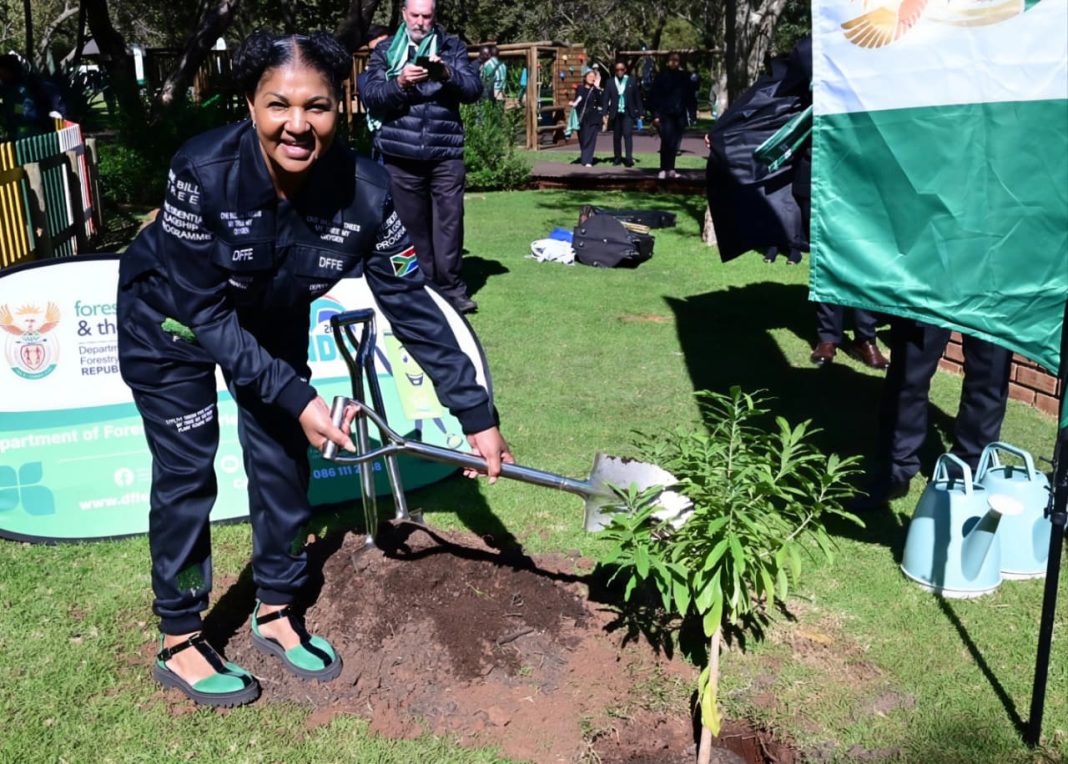
Deputy Minister of Forestry, Fisheries and the Environment Bernice Swarts on Monday launched the Presidential 1 Billion Trees Programme.
She called on stakeholders across all nine provinces to support a nationwide tree-planting drive aimed at mitigating climate change.
“We call on all South Africans, including all spheres of government, organised business, organised labour, civil society and all citizens to participate in the campaign to plant 10 million trees on Heritage Day in September 2026 as part of the Presidential One Billion Trees Programme,” Swarts said.
She was speaking at the launch held at the South African National Biodiversity Institute Pretoria National Botanical Gardens.
Held under the theme “My Tree, My Oxygen. Plant Yours Today”, the launch brought together members of the diplomatic corps, interfaith formations, traditional leaders and community representatives, who pledged support for the programme amid growing concerns over climate change.
The initiative follows the department’s 2025 campaign, which exceeded its target after more than 1.3 million trees were planted on Heritage Day.
Swarts said the expanded programme would focus on raising awareness about the importance of tree planting while encouraging communities and stakeholders to take responsibility for protecting the environment.
She said the campaign would take into account the environmental conditions of each province, particularly water scarcity.
“Through our scientists, we have made sure that we do not plant trees in provinces where they will not grow,” Swarts said.
“We have also ensured that we do not plant trees that require large amounts of water, given South Africa’s water challenges. We are planting root-friendly trees that will not damage infrastructure.”
Swarts said the department aims to plant 10 million trees in a single day on Heritage Day this year, with each province expected to plant at least one million trees.
She added that members of the diplomatic corps would also contribute by funding, donating seedlings or participating in planting activities in provinces of their choice.
According to Swarts, 60% of the trees to be planted will be fruit-bearing species to support food security, while the remaining 40% will be indigenous trees.
She said government was also educating communities about the economic value of trees to ensure meaningful participation in the programme.
“We are now helping communities understand the economic value of a tree, but people must also understand that they are breathing because of a tree,” she said.





