
- Advertisement -spot_img

KZN police say situation under control as anti-immigration protests spread in Durban

- Advertisement -spot_img

Must read

By Johnathan Paoli

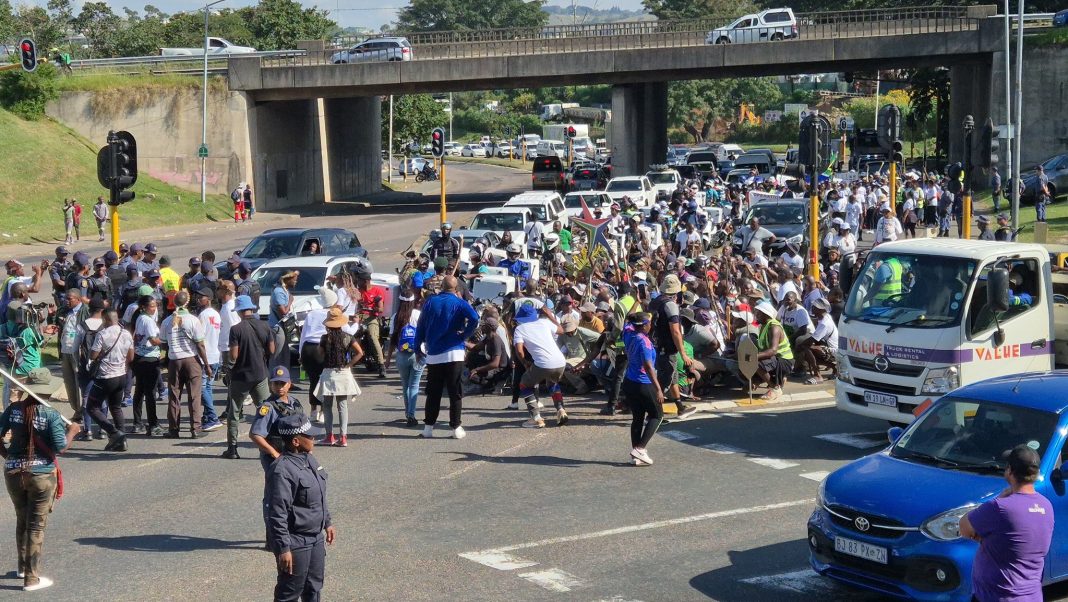
KwaZulu-Natal police have confirmed they have the situation “under control” as Durban sees the second day of anti-immigration protests across parts of the province, as hundreds of foreign nationals remain camped outside the Diakonia Centre in Durban fearing for their safety following fresh marches led by the March and March movement.

The protests continued on Wednesday in areas including the Durban CBD, Pinetown and Isipingo, with demonstrators demanding tougher action against undocumented migrants and reiterating a 30 June deadline for illegal foreign nationals to leave South Africa.

KZN SAPS spokesperson Colonel Robert Netshiunda, speaking to Newzroom Afrika, said police had intensified monitoring operations and were responding rapidly to demonstrations, even when organisers failed to notify authorities in advance.

“The police in KwaZulu-Natal are on top of the situation as things stand. The same happened today in Pinetown. Police were there ensuring that the march is protected and as far as things are, we can say the province is stable and police are on top of the situation,” Netshiunda said.

He said police were often forced to “play catch up” because protest groups no longer needed formal permission to march following a 2018 Constitutional Court ruling that invalidated parts of the Gatherings Act requiring prior notice for demonstrations involving more than 15 people.

“Anybody can just wake up any day and start marching without notifying anybody and that’s not a crime anymore, meaning police will have to react, mobilise resources and ensure that that march is monitored,” he said.

However, Netshiunda warned civilians against taking the law into their own hands, dismissing claims circulating on social media that police had discovered drugs during raids linked to the protests.

Referring to a viral clip on social media of an apparent “drug bust” in an apartment, rumoured to be “run by foreigners”, Netshiunda corrected speculations.

“There was no drugs which we found. What you see on your screens are empty capsules. We do not know what was going to be put inside those things. In that particular flat where those things were found, people who are living there are suspected drug-addicted South African nationals. There was no foreigner found in that building,” he said.

Netshiunda stressed that only law enforcement officials were legally empowered to search individuals.

Meanwhile, about 150 foreign nationals are spending a second night sleeping outside the Diakonia Centre in the Durban CBD after initially gathering at Durban Central Police Station seeking protection from alleged threats linked to anti-immigration protests.

Many said they no longer felt safe returning home despite assurances from police.

Southern Africa Refugee Organisations Forum chairperson Eric Butoki said several displaced migrants feared violence if they returned to their communities.

“We don’t know yet because we have no guarantee of the issue, the solution of our problem. Those who feel unsafe, we don’t block anyone. The people choose that they will be here. They feel unsafe and that’s the reason why they prefer to sleep on the floor,” Butoki said.

He said they were awaiting a follow-up meeting involving police and officials from the Department of Home Affairs, where migrants would reportedly be asked to present documents for verification.

Tensions have continued to escalate as the March and March movement intensified demonstrations in KwaZulu-Natal and Gauteng over undocumented migration, drawing condemnation from civil society organisations, religious groups and human-rights bodies.

The South African Human Rights Commission (SAHRC) said it was “deeply alarmed” by reports and footage of violence targeting non-nationals.

“Violence, intimidation, hate speech, looting and property destruction are unacceptable and constitute serious human-rights violations and criminal conduct,” the commission said in a statement.

The SAHRC warned that criminal allegations against some non-nationals should not be used to inflame tensions or justify vigilantism.

“Taking the law into one’s own hands may lead to attacks on people, exacerbate disharmony and defeat the ends of justice,” the statement said.

A coalition including SECTION27, Lawyers for Human Rights, Equal Education and Kopanang Africa Against Xenophobia accused movements such as March and March and Operation Dudula of spreading fear and intimidation.

The organisations said children had increasingly become targets of xenophobic mobilisation, citing incidents at schools in Gauteng and KwaZulu-Natal.

“These acts are not only cowardly, but also strike at our constitutional values and shared humanity,” the coalition said.

The groups argued that migration was being unfairly blamed for deeper structural failures including unemployment, poverty, corruption and collapsing public services.

“Research consistently shows that anti-immigration sentiment rises when people feel economically insecure and politically abandoned, not because migrants are actually taking resources, but because scapegoating is easier than holding those in power accountable,” the statement said.

The Southern African Catholic Bishops’ Conference also condemned attacks on migrants, calling the violence “a grave assault on human dignity”.

However, the bishops acknowledged frustrations around unemployment, poor service delivery, porous borders and failures within the Department of Home Affairs.

“While these concerns and frustrations are real and must be addressed honestly, they can never justify violence against another human being,” the church leaders said.

International rights group Human Rights Watch similarly criticised authorities for what it described as insufficient intervention against xenophobic vigilantism.

Both Gift of the Givers and the Red Cross have reached out, and provided food and supplies.

Community leaders said negotiations involving refugee representatives, police, the Diakonia Council of Churches and Home Affairs officials were continuing, while protesters and migrants alike awaited the next round of engagements over documentation verification and security arrangements.

INSIDE POLITICS

More articles

LEAVE A REPLY

Please enter your comment!
Please enter your name here

CATHSSETTA

spot_img

AVBOB STEP 12

spot_img

Inside Education E-Edition

spot_img

Inside Metros G20 COJ Edition

spot_img

JOZI MY JOZI

spot_img

QCTO

spot_img

Latest article



