- Advertisement -spot_img

Bafana Bafana: Broos must make his World Cup swansong count

- Advertisement -spot_img

Must read

By Thebe Mabanga

This evening, South Africa takes its place on football’s biggest stage as one of 48 nations from a field of 211 FIFA member associations competing at the 2026 FIFA Men’s World Cup in Mexico, the United States and Canada.

Bafana Bafana begin their campaign against hosts Mexico at the iconic 87,000-seat Estadio Azteca, the largest stadium in Latin America and one of the most storied venues in world football.

South Africa’s objective should be twofold.

First, Hugo Broos’s side must aim to exceed expectations and reach the knockout stages, whether by securing second place behind Mexico or by progressing as one of the tournament’s best third-placed teams ahead of Czechia or South Korea, their other Group A opponents.

South Africa plays Czechia in Atlanta on June 18 and the South Korea in Monterey, where the Sustainable Development Goals were adopted, in the early hours of the 25th of June.

Very few will wake up for a dead rubber match.

In the opening match, South Africa will have to battle altitude, heat and humidity, nerves and a boisterous home crowd as roles are reversed from 16 years ago when the two sides met in the corresponding fixture of the World Cup in South Africa in 2010.

At 2.2 km above sea level, Mexico City sits half a kilometre above Johannesburg.

This is where Broos will have to closely monitor Mamelodi Sundowns players.

Their season started in the Club World Cup in the US last July had a brief respite to start the domestic season.

They then reached the final of a gruelling CAF Champions League campaign.

Broos will need to be satisfied that fatigue has not caught up with key players including Bafana Bafana captain Rowen Fernadez, full backs Aubrey Modiba and Khuliso Mudau, and Teboho Mokoena at the heart of midfield.

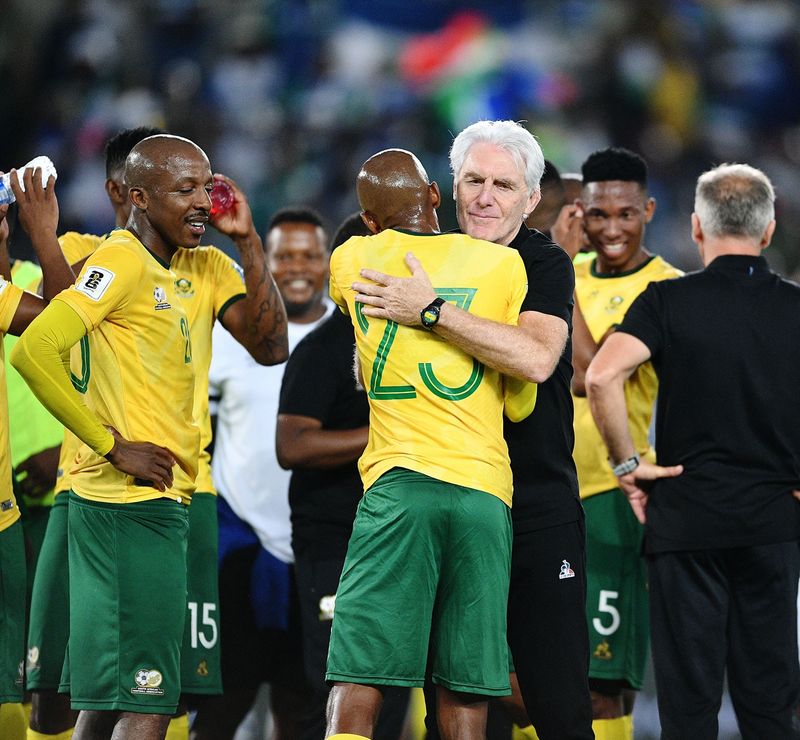
Broos must sign off his five-year term by releasing the hand brake, let the team play with freedom and display whatever attributes he believes are South Africa’s strength.

Fans would like to believe that flair and creativity are South Africa’s strength, but Broos has shown, throughout his tenure and with his final selection for the World Cup, that he believes defensive solidity is South Africa’s foundation, complemented by counter attacks and effective channel use, as well as that of a target striker.

This is why he has persisted with Evidence Makgopa, even as his own supporters at Pirates remain unconvinced.

At the heart of defence, Ime Okon should partner Mbekezeli Mbokazi, mainly for aerial strength while Sphephelo Sithole can be expected to anchor midfield behind Mokoena and Thalente Mbatha.

Up front, Burnley FC forward, Lyle Foster, will be first choice striker, despite fading towards the end of the English season.

Oswin Appollis is the actual livewire threat for club and country, more than the mercurial generational talent Relebohile Mofokeng, of whom much is expected but must bulk up his muscle so as not to be pushed off the ball to earn a coveted move to Europe.

Broos should not hesitate to introduce Jayden Adams or Iqraam Rayners as game-changers from the bench should circumstances demand. He cannot afford to wait until the dying stages against South Korea before throwing on all his attacking options.

As he prepares for what could be his World Cup swansong, he should aim to make it a memorable adventure.

African teams have a history of producing shocks in opening matches. Cameroon stunned Argentina in the opening game of Italia ’90, while Senegal defeated France at the 2002 World Cup in South Korea and Japan. South Africa, meanwhile, held Mexico to a draw as hosts in 2010.

Beating Mexico on home soil would be a remarkable achievement, but it remains a remote prospect. A draw, or even a narrow defeat coupled with a competitive performance, would be a respectable outcome.

Africa must make the most of its expanded allocation of places and produce, at the very least, a semi-finalist.

Morocco and Senegal will lead that charge. Egypt, provided Mohamed Salah is at his best, have the pedigree to go deep into the tournament.

Ivory Coast and Ghana will also fancy their chances if they can navigate difficult groups.

Collectively, African nations need to justify the continent’s expanded representation by delivering performances worthy of its guaranteed places and play-off berths.

If that trend continues, countries such as South Africa, provided they invest consistently in player development, can expect to qualify for World Cups more regularly.

The line between success and failure is often no wider than a crossbar.

Ask Quinton Fortune, whose effort rattled the woodwork against Denmark’s Peter Schmeichel at the 1998 World Cup with the score locked at 1-1.

One moment can change everything.

Ask Andre Arendse, whose slip at Daejeon Stadium in South Korea gifted Spain’s Raúl the opening goal in a 3-2 defeat.

Both incidents could have altered South Africa’s World Cup history.

And so, to the grand stage itself.

France, boasting a balanced squad and guided by Didier Deschamps as he nears the end of a distinguished tenure, begin among the favourites.

Spain will not be far behind.

Argentina and Portugal, inspired by the enduring brilliance of Lionel Messi and Cristiano Ronaldo respectively, will argue they possess enough supporting talent to mount serious challenges.

Brazil, by contrast, appear less convincing if they remain reliant on an ageing Neymar.

Belgium’s ‘Golden Generation’ has largely faded, while England, despite their depth, may once again flatter to deceive when it matters most.

To the victors, the spoils. Fortune favours the brave.

May the tournament be won by the side that attacks with ambition and imagination rather than one content merely to defend.

INSIDE POLITICS

More articles

LEAVE A REPLY

Please enter your comment!
Please enter your name here

Inside Education E-Edition

spot_img

CATHSSETTA

spot_img

AVBOB STEP 12

spot_img

Inside Metros G20 COJ Edition

spot_img

JOZI MY JOZI

spot_img

QCTO

spot_img

Latest article