

Des Erasmus
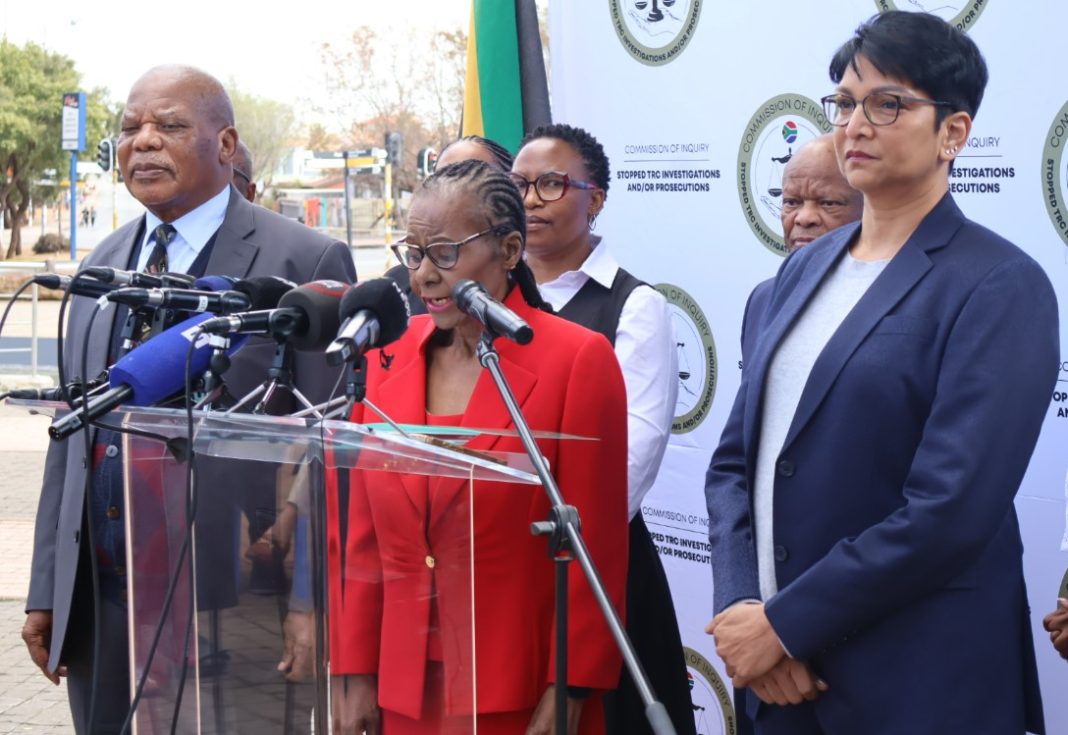
Three former police ministers will testify this week before the judicial inquiry investigating whether political pressure prevented apartheid-era crimes referred by the Truth and Reconciliation Commission (TRC) from being investigated or prosecuted.
Bheki Cele is scheduled to appear on Tuesday, followed by Fikile Mbalula, the current ANC secretary general, on Wednesday, and Nathi Nhleko on Thursday. All three men have already submitted sworn statements.
Cele served as police minister from 2018 until 2024 and was previously national police commissioner, while Mbalula and Nhleko held the police portfolio during earlier administrations.
The inquiry is expected to probe what the former ministers knew of decisions, discussions or policies affecting TRC investigations during their terms in office.
Documents sent to the witnesses asked them to provide records, correspondence, minutes and personal accounts that could help establish whether pressure was placed on police officers or prosecutors to halt the cases.
President Cyril Ramaphosa established the inquiry in May 2025 to determine whether attempts had been made to prevent the investigation or prosecution of crimes committed under apartheid.
The commission is chaired by retired Constitutional Court judge Sisi Khampepe, assisted by retired Northern Cape judge president Frans Diale Kgomo and advocate Andrea Gabriel SC.
Its terms of reference cover the period from 2003.
The inquiry must also determine whether police or prosecutors improperly cooperated with efforts to scupper or delay investigations and whether further investigations or prosecutions should be instituted against anyone found to have done so.
The TRC ran from 1995 to 2003, with its public hearings taking place from 1996 to 1998.
It documented gross human rights violations committed during apartheid and referred hundreds of unresolved cases to prosecuting authorities. Many were not pursued, despite alleged perpetrators either being denied amnesty or never applying for it.
The initial five-volume report was handed to President Nelson Mandela in October 1998, while the codicil and remaining documents were presented to President Thabo Mbeki in March 2003.
The inquiry follows a high court application filed in January 2025 by 25 survivors and families of people killed or forcibly disappeared during apartheid.
They accused the post-apartheid state of politically suppressing investigations and prosecutions and sought about R167 million in constitutional damages.
Settlement discussions between the families and the government produced an agreement that an inquiry should be established.
Announcing the commission, Ramaphosa said the long delays had caused victims’ families “great anguish and frustration”, adding that all affected families and South Africans deserved closure and justice.
The inquiry was initially expected to run for six months, but its deadline was later extended. Ramaphosa has given the commission until December 18 to submit its final report.
INSIDE POLITICS