
THEBE MABANGA
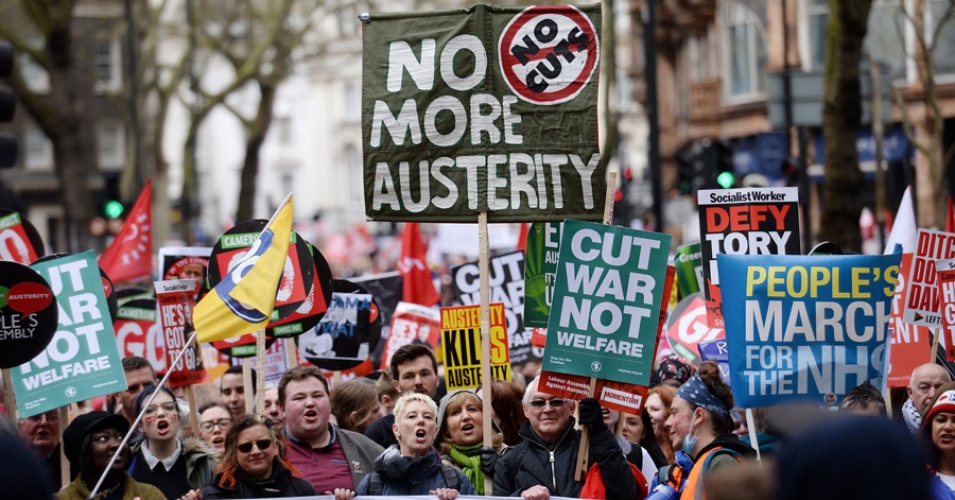
THE International Monetary Fund (IMF) has been challenged to end austerity measures as a condition for countries to access financial assistance, with South Africa, Egypt, Ukraine and Ecuador cited as the latest countries to be forced into government spending cuts.
A range of international Civil Society Organisations and academics, including Section 27 from South Africa, have called on the IMF to instead promote an equitable and inclusive recovery and not require countries to embark on fiscal consolidations in order to access loans form the IMF.
Fiscal consolidation and austerity measures refer to steps taken to cut public spending, such as education, health and social grants. In extreme cases, civil service salaries or pensions are affected by these measures.
In July this year, South Africa was granted $4.3 billion (R70 billion) under the Rapid Finance Instrument to assist with combating the health and economic fallout from the COVID-19 pandemic.
The condition for accessing the RFI is for a country to demonstrate that it has a crisis and spell out the measures it will adopt to repay the loan.
In South Africa’s case, the IMF loan will largely finance the budget deficit in order to allow government to continue its spending on fighting COVID-19 and other expenditure.
But government has to demonstrate areas where it will reduce or curtail spending in order to repay the IMF.
In a letter signed by Finance Minister Tito Mboweni and Reserve Bank Governor Lesetja Kganyago, the government undertakes to cut government spending, which suggests moves like shaving R160 billion off the Public Service Wage Bill, and the funding for struggling State-Owned Enterprises, will be closely watched.
In a blog released ahead of the IMF Spring Meeting with the World Bank this week, IMF MD Kristalina Georgieva has called for a review of the Global Debt Architecture.
Georgieva and colleagues and colleagues, Ceyla Pazarbasioglu and Rhoda Weeks-Brown, start off by noting that “the COVID-19 pandemic has pushed debt levels to new heights.”
The trio says compared to the end of 2019, average 2021 debt ratios are projected to rise by 20 percent of GDP in advanced economies, 10 percent of GDP in emerging market economies, and about 7 percent in low-income-countries.
“These increases come on top of debt levels that were already historically high,” the IMF notes.
They also note that while advanced countries can still borrow, emerging market and low-income countries face much tighter limits.
Among a range of measures the IMF calls for is the Debt Service Suspension Initiative by the G20 set to expire at the end of this year to be extended into 2021.
The IMF says it has also provided about US$31 billion in emergency financing to 76 countries, including 47 low-income countries, as well as debt-service relief to the poorest countries.
“The IMF calls for improved debt transparency and allowing those countries at high risk of a debt crisis to be helped to tackle systemic weaknesses urgently while the IMF and the Paris Club of rich creditor countries to devise an improved debt restructuring programme to benefit the entire system.”
“The world is at a critical juncture and should not sit idle waiting for a crisis. It needs to review its arsenal of weapons — a task we have been conducting at the IMF. It also needs to do the utmost to prevent, and if necessary, pre-empt, another sovereign debt quagmire.”
(COMPILED BY INSIDE POLITICS STAFF)





