- Advertisement -spot_img

SARB’s Monetary Policy Committee Fails To Speak To The Poor, Unemployed

- Advertisement -spot_img

Must read

THEBE MABANGA

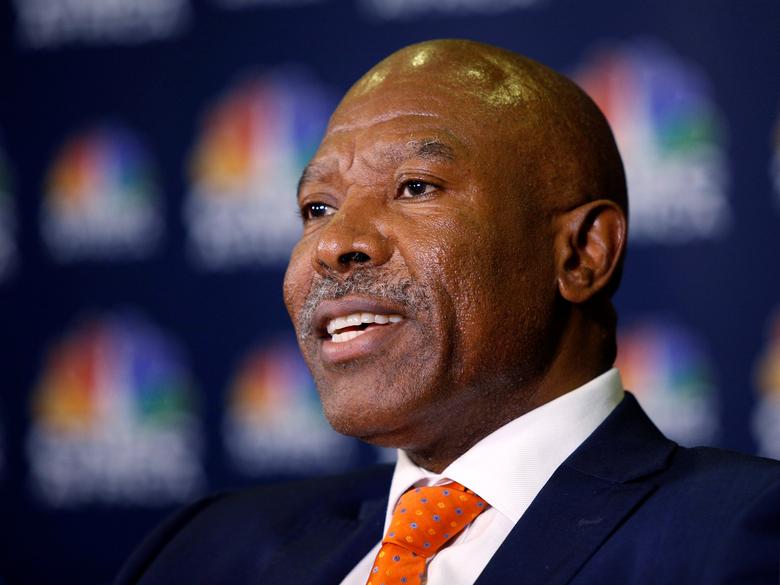
THE release of the Monetary Policy Review on Tuesday serves as yet another reminder of how the Monetary Policy Committee (MPC) of the South African Reserve Bank, as led and personified by Governor Lesetja Kganyago, is a body that will not speak to, or for, South Africa’s poor and unemployed.

Between the two MPC meetings in July and September, Kganyago gave public lectures to the Wits School of Governance as well as the University of Pretoria, as well as the Reserve Bank’s 100th Annual General Meeting (AGM).

In all these instances he had an opportunity to address how Monetary Policy can do in times of COVID-19.

In all these instances, he conveys the sense that it is now up to the MPC and other parts of government to implement reforms that will bring about the required growth to change the lives of the poor and unemployed.

In the latest MPR, the Reserve Bank sticks its to his guns, pointing out that rate cuts totalling 275 basis points to leave the repo at 3.5% and prime at 7% is as good as it will get. 

“With domestic interest rates at record lows and inflation apparently having bottomed out, it is likely that the repo rate will move somewhat higher in future. However, this normalisation of the repo rate is likely to be gradual, with rates staying at low levels for an extended period,” the MPR said.

The Bank also embarked on a government bond buying programme, but even that has slowed down as it says that other players are returning to the market offering enough support.

The Bank then pats itself on the back for acting early on the economic crisis to support economic activity.   “While this stimulus had limited effects in the first stages of the lockdown, given the restrictions on most forms of economic activity, it has supported the subsequent recovery. The bank says the low rates have increased household demand for credit, with mortgage applications and grants, for instance, now at 10-year highs,” it said

But at a time when the economy suffers a contraction of 51% of GDP in the second quarter and when two million more people were found to be unemployed in the second quarter, in addition to another 2.8 million people who have dropped out of the labour force, it’s worth asking whether the Bank can and should do more, and why it chooses not to.

The Bank says the effects of its 275 basis points cut will be felt in the middle of next year, but the question surely has to be would the effect not be more pronounced and presumably generate more economic activity if the cuts were more than 300 basis points? What does the Bank need the 3.5% cushion for?

Is it in the event of another crisis?

To have room to cut more?

If another crisis does not strike for another five years, would this not be a wasted opportunity?

This for a bank which on Wednesday announced that it is now sitting on R916 billion in reserves.

Is there to be a discussion on how these can or should be used in these extraordinary times? Not all of them of course, but at least part. Another holy cow to interrogate is why the differential between the repo and prime is fixed at 3.5%.

Can’t one bank break ranks and lower its prime lending rate by 0.5%? Rather than adjusting it for individual customers?

Except perhaps for the fuel price, no other industry has a fixed regulated margin of this nature.

Kganyago constantly argues that the MOC decisions are driven by data.

So at the last MPC Meeting, Inside Politics put the question to him that what does the data that 3 million people lost their income between February and April mean for interest rates.

Kganyago sought to sneer at the source of these figures before suggesting that the Bank stimulates economic activity in order to create employment.

The figures come from the National Income Dynamics Study Coronavirus Rapid Mobile Survey (NIDS CRAM) which asked 7 million South Africans about the state of employment, income and hunger in their households.

It is hard to fathom why or how Kganyago grew to be so detached form the plight of the poor. Many years ago, when he was presented as the new Director-General on the National Treasury, Kganyago was near tears as he was being presented by Joel Netshitenzhe, then the CEO of the Government Communication Information System (GCIS).

In his address, Kganyago expressed a belief that the position is truly an opportunity to impact people’s lives through the management of public finances, and he delivered on that role with some distinction as he presided over some of the most meaningful changes to the National Budget.

Netshitenzhe presented to the small audience Kganyago as a young accountant who came from the then Northern Transvaal, now Limpopo, to work for the ANC.

That young man was then sponsored to study at the London School of Economics (LSE) along with a clutch of cadres to prepare them to take up strategic roles in a newly democratic South Africa.

Just as the likes of Saki Macozoma and Danisa Baloyi had studied in the United States in the late 80s, Kganyago’s generation comprised the likes of Tshediso Matona, future DG and ill-fated Eskom boss, Philisiwe Mthethwa (then Buthelezi) was studying across the English Channel in France and there was the brightest spark among the lot, one Brian Molefe., also a future damned Eskom and Transnet boss.

The man who now presides over the MPC seem to the LSE educated, insulated technocrat who is oblivious to the plight of relatives he must meet on most social occasion.

The ‘Bubble of the MPC’ appears to have dimmed the compassion of the young man who cried for an opportunity to change the lives of the poor.

It is now composed of a brilliant academic Rashad Cassim , a former Treasury and Reserve Bank modeller Chris Loewald, an IMF trained economist Fundi Tshazibana and Kganayago’s former Treasury colleague and head of the budget office Kuben Naidoo.  

There is no doubt that the MPC needs a shake-up, starting with filling two long standing vacancies to counter the prevailing though process.

Lastly, we have to think of how we hold Kganyago, and here the blames lies squarely with friends and colleagues in the media.

The MPC Press Conference, now separated between journalists and analysts so we do not hear what analysts are asking, has degenerated into an echo chamber of peers trying to outdo each other trying to demonstrate who has a better understanding of the Quarterly Projection Model and the yield curve.

It is worth asking why publications which ostensibly represent the 3 million people who lost their incomes as a result of the lockdown do not dial in to ask questions on behalf of their readers. That is why we felt the need to put the question to governor who will not speak to, of for, the poor.

(COMPILED BY INSIDE POLITICS STAFF)

More articles

LEAVE A REPLY

Please enter your comment!
Please enter your name here

AVBOB STEP 12

spot_img

Inside Education E-Edition

spot_img

Inside Metros G20 COJ Edition

spot_img

JOZI MY JOZI

spot_img

QCTO

spot_img

Latest article