
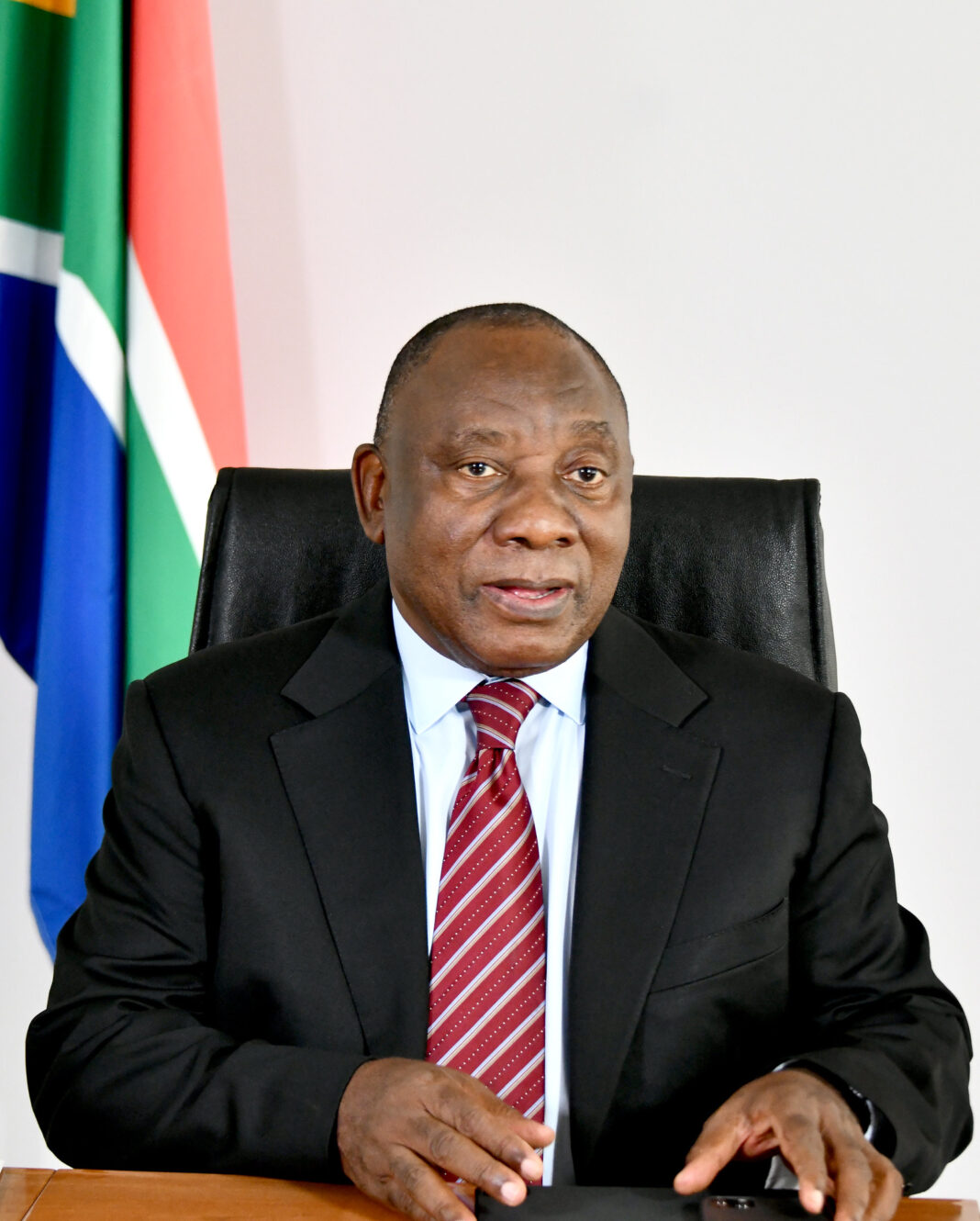
PRESIDENT Cyril Ramaphosa has announced that the sale of alcohol for off-site consumption will be prohibited on Friday, Saturday, Sunday and Monday, 2 to 5 April, covering the long weekend in an attempt to prevent a surge in the spread of the COVID-19 amid concerns of a Third Wave.
Ramaphosa addressed the nation on the country’s COVID-19 response on Tuesday night.
The National Coronavirus Command Council is concerned that if indeed the COVID-19 third wave hit South Africa, the country will be forced to return to a hard lockdown and impose restrictions commensurate with the level of risk.
Ramaphosa previously warned that the threat of a third wave of COVID-19 remained constantly present after the country moved to level 1 of the lockdown.
During his address, Ramaphosa said on-site sales at restaurants, shebeens and bars will be allowed, according to licensing conditions, up until 11pm.
But Steenhuisen said imposing a restriction on off-site alcohol sales for four days around Easter is not only entirely unscientific, it also places an unnecessary further strain on the livelihoods of those who make their living in this sector.
This is the action of a government completely out of ideas and out of touch with the plight of its citizens and a government whose own generous salaries are not affected by its arbitrary decrees, he said.
“The first two alcohol bans were directly responsible for 165,000 lost jobs in South Africa. Each of those jobs sustained a household, sometimes more. Over two-thirds of businesses surveyed by Cape Town Tourism had to let staff go. More than 80% had to cut salaries,” said Steenhuisen.
“Our country is in an unprecedented jobs crisis. It is almost unthinkable that our government would turn a blind eye to this and, with the stroke of a pen, impose arbitrary, unscientific restrictions that have nothing to do with fighting Covid-19, and threaten to destroy even more jobs and livelihoods.”
On Monday, Steenhuisen warned that with the country’s economy on its knees, and more than 40% of South Africans unemployed and poverty and hunger at levels never seen before in our country, South Africa simply cannot afford the blunt tool of nation-wide lockdowns.
“We should not be considering blanket bans on the sale of alcohol or curfew extensions that achieve nothing other than the decimation of the restaurant industry,” said Steenhuisen.
“The devastation wrought by the past year of lockdown – particularly in the hospitality and tourism sectors – will take years to overcome. With many more businesses still on the verge of collapse, we should be doing all we can to save every single job in these sectors.”
Meanwhile, religious gatherings over the Easter period will be restricted to a total number of 250 people indoors and 500 outdoors.
Where the venue is too small to accommodate these numbers with appropriate social distancing, then no more than 50 percent of the capacity of the venue may be used.
Congregants should not gather outside their usual places of worship, and people must go home and not sleep over after services.
“We will review these measures on the size of gatherings within the next 15 days based on an assessment on the state of the pandemic and the extent of compliance with health protocols,” said Ramaphosa.
He said that, for the past two weeks, the number of new cases has remained relatively stable at around 1,200 new cases per day.
“The number of hospitalisations is declining, as is the number of deaths. Our national recovery rate stands at slightly higher than 95 percent,” he said.
Ramaphosa also gave an update on the national vaccination programme, which he said is gaining momentum.
He said the first phase of the vaccination programme, targetting healthcare workers, would be completed within three months.
“We have secured 11 million doses of the Johnson & Johnson vaccine, which we know to be effective against the dominant variants in our country. We have secured a further 20 million doses and are finalising the agreement with Johnson & Johnson,” he said.
“We are also finalising an agreement for 20 million doses of the Pfizer vaccine, which requires two doses. Together, this supply of vaccines will provide us with enough doses to vaccinate 41 million people.”
Ramaphosa also said government is currently negotiating with manufacturers of other vaccines, including the Sinovac, Sinopharm and Sputnik V.
“In addition to the vaccine doses we will receive directly through our agreements with manufacturers, we will also receive an allocation of vaccine doses through the African Union initiative that we established when we held the Chairship of the AU.”
The president said Phase 2 of the vaccination drive is scheduled to begin in mid-May.
Registration to be vaccinated is scheduled to start in April with facilities for online and in-person registration.
Ramaphosa also said mechanisms to vaccinate undocumented people are being developed.
The president gave news from his visit to the Aspen Pharmacare manufacturing facility in Gqeberha in the Eastern Cape.
In November, Aspen Pharmacare collaborated with Johnson & Johnson to establish the capacity required for the manufacturing of the vaccines.
The African Vaccine Acquisition Trust has signed a procurement agreement on behalf of African Union member states for 220-million doses of the Johnson & Johnson vaccine with an option for an additional 180-million doses.
The president thanked the private healthcare sector, private enterprise working through the Solidarity Fund and the Vodacom Group for support with the vaccine drive.
“We commend the Vodacom Group and Vodafone Foundation, which have pledged R87 million in the African countries in which they operate for cold chain storage and logistics so that COVID-19 vaccines are delivered securely. In addition, Vodacom will be deploying a state-of-the-art vaccine management platform across the AU member states, following a successful roll-out of the same platform in South Africa,” he said.
The president gave an update on the regulations instituted to prevent the spread of COVID-19 ahead of the Easter weekend.
Given relatively low transmission levels, the country will remain on Alert Level 1.
Adjustments to the restrictions are as follows:
- The national curfew remains from midnight to 4am.
- Public recreational spaces such as beaches, parks and dams will remain open, subject to strict health protocols, such as social distancing, mask-wearing.
- Funerals remain restricted to a maximum of 100 people and with a two-hour limit on services.
- Interprovincial travel will still be permitted.
- Inside Politics





