
- Advertisement -spot_img

SATAWU Condemns Privatisation Of The Port of Durban, Transnet

- Advertisement -spot_img

Must read

TRANSPORT union SATAWU has condemned government’s efforts to privatise the country’s state-owned enterprises (SOEs) such as Transnet, Eskom and the South African Airways (SAA).

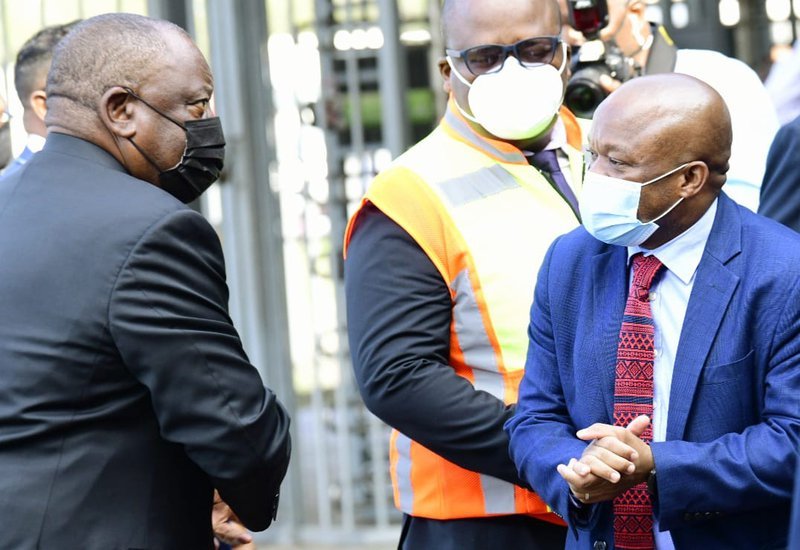
SATWAU’s comments comes a week after President Cyril Ramaphosa’s visit to Durban where he announced Transnet’s R100 billion in investment meant for operational improvements and structural reforms of the port.

During his visit, Ramaphosa dismissed fears raised by trade unions about the privatisation of the port of Durban, stating that Transnet is not going to be privatised, but partnerships are going to be forged to create more jobs and improve livelihoods.

SATAWU said the latest developments at Durban’s Transnet National Ports Authority has exposed government’s perseverance to sell both the SOE and workers to the highest bidder.

On Tuesday the transport union held lunch hour pickets to protest against the alleged privatization of the port of Durban.

SATWAU’s general secretary Jack Mazibuko said the first wave of action took place on Tuesday in KwaZulu-Natal’s Durban Port Pier 1.

“In counteracting the architects and impersonators of exploitation and dehumanisation, the union together with its members have embarked on lunch hour picketing essential for defending the working conditions and livelihoods of the downtrodden proletarian class,” said Mazibuko.

“We call on all Transnet workers regardless of enterprises and, or, operational divisions to embark on anti-privatisation pickets in their workplaces. The pickets are the first phase for organising a full-blown industrial action and the total shutdown of all Transnet operations.”

Mazibuko said in the month of March 2021, a memorandum of demand was handed to the Minister of Public Enterprise-Pravin Gordhan, citing the transport union’s discontent on ‘subservient conditions’ subjected to employees at SAA.

“Apart from consuming the labour-power of aviation workers without any convincing efforts to pay their salaries, the DPE has been unambiguous in maintaining and reproducing the social ills confronting the marginalised class in society,” said Mazibuko.

“Though the capitalist mode of production has entered into a cycle of insoluble crisis, the latest prescriptions aimed at privatising Transnet National Ports Authority (TNPA) exposes the government’s intent to reform a decomposing system at the expense of the livelihoods of ordinary South Africans.”

Mazibuko said the transport union has on many occasions questioned the government’s ‘hallucination about the private sector acting as a solution to South African problems’.

“The marketization of SOEs through public-private partnerships are the main reason for their underperformance,” added Mazibuko.

“Because workers evolve in the same proportion as capitalist development, terms because workers evolve in the same proportion as capitalist development, terms  such as “equity partnerships” cannot be used to lure them into accepting the privatisation of SOEs.”

He added: “These terms are not only unfortunate but support the argument that the actions of some leaders within the state are moulded by the deprived people syndrome (DPS) which is expressed through the intellectual undermining and the sub-oppression of the working-class and poor. The desire for super-profits has always been achieved on the back of employees.”

“Furthermore, the evidence before us establishes that the collapse of SOEs like SAA occurred as a result of intentional maladministration and grand-scale corruption between “democratically elected politicians” and the private sector.”

SATAWU said privatisation and private capital was the number one enemy of the South African people.

  •  
  • Inside Politics

More articles

LEAVE A REPLY

Please enter your comment!
Please enter your name here

CATHSSETTA

spot_img

AVBOB STEP 12

spot_img

Inside Education E-Edition

spot_img

Inside Metros G20 COJ Edition

spot_img

JOZI MY JOZI

spot_img

QCTO

spot_img

Latest article



