
THE IFP announced on Wednesday that it had reached an arrangement with the ANC to allow it to form a government where it holds majority seats, in a deal meant to ensure stability in municipalities.
Both parties have agreed that each party must govern in municipalities were they got a majority of votes.
However, just two weeks ago, the IFP was adamant that it was not going to work with the ANC in any way and allow it back to power via a back door in KwaZulu-Natal.
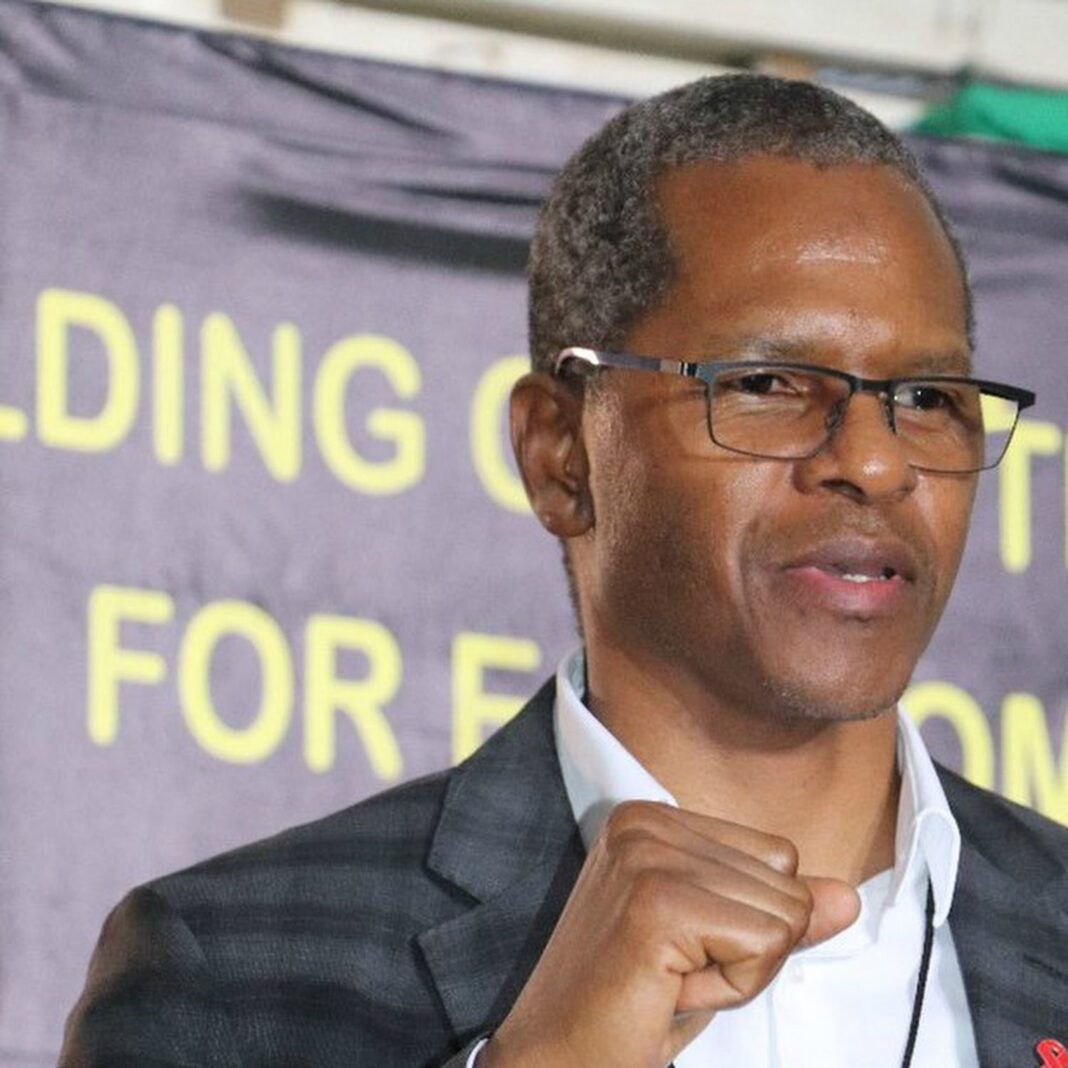
Addressing the media on Wednesday, IFP President Velenkosini Hlabisa said the party’s national executive committee (NEC) meeting resolved that IFP should not work with the ANC because it was not honest in the past and voters rejected it at the polls.
“As you will recall, last Sunday I said that where we will govern as a leading party we will not enter into a coalition with the ANC, because they have not been honest with us in the past. The voters expressed themselves clearly against the ANC,” said Hlabisa.
“In addition, last Sunday we stated categorically that we will not get into coalitions for the sake of coalitions. The difficulty with coalitions is their tendency to fall apart, as one or the other coalition partner sees an opportunity for advancement.”
Despite the party’s hard stance on the ANC, Hlabisa vowed to cooperate with the governing party.
“We decided, therefore, to approach governance in hung municipalities not on the basis of how much power we can take through uncertain coalitions, but on the basis of a principle: the principle that the electorate is entitled to get the government it chooses through the ballot box.” Said Hlabisa.
“Thus, after frank discussions at national level with the ANC, we have come to a broad understanding that where the IFP has the most seats, despite no outright majority, the IFP will form the municipal government. Reciprocally, where the ANC has the most seats, despite no outright majority, the ANC will form the municipal government.”
He was at pains to explain that this doesn’t constitute a coalition agreement.
“It goes without saying that this is not a coalition. A coalition places both parties in power, with a sharing of positions. What we are doing is allowing the party with the most votes to govern, while the other party is relegated to the opposition,” he said.
“Where the IFP governs, in about 22 or 24 municipalities, we will invite smaller parties and independent individuals to work with us to strengthen good governance and ensure the maturing of democracy.”
Hlabisa added that talks in other regions have not been completed.
“While talks are still ongoing over the four economic hubs of KwaZulu-Natal, where the dynamics are more complex, the IFP believes that the principle we have committed to can be expanded and replicated as a model in other parts of the country, allowing the biggest party to take control.”
- Inside Politics





