
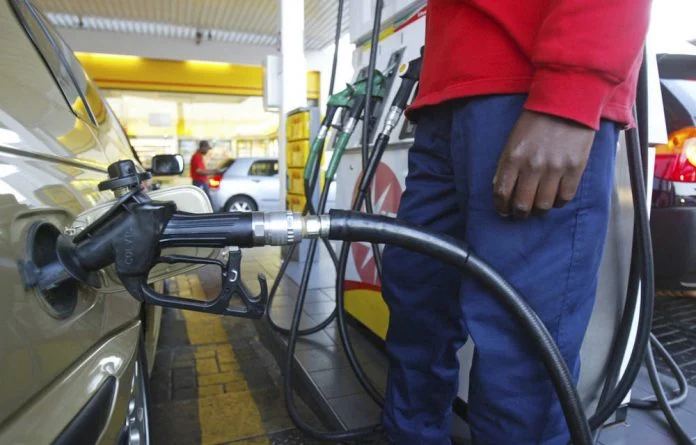
THE Department of Mineral Resources and Energy (DMRE) has announced a record price increase of at least R2.30 for all fuel variants from Wednesday.
The increase will see both grades of petrol going up by R2.37 and R2.57 per litre.
Diesel will increase by R2.30 and R2.31 per litre for both grades of diesel.
The department said there were several factors leading to the price adjustments, including the rand-US dollar exchange rate as well as the increase in the price of Brent crude oil.
Another major factor in the increase of international petroleum prices remains the ongoing conflict in the Ukraine which is contributing to supply and demand pressures
“The average Brent Crude oil price slightly increased from 115.00 US Dollars (USD) to 115.77 USD during the period under review. The average international product prices of petrol, diesel and Illuminating Paraffin increased during the period under review while the price of LPG decreased. The declining global refining capacity is having a negative impact on petroleum product prices,” the department said in a statement.
“The Rand appreciated, on average, against the US Dollar (from 15.95 to 15.76) Rand per USD during the period under review when compared to the previous one. This led to lower contributions to the Basic Fuel Prices of petrol, diesel and illuminating paraffin by 19c.”
The Automobile Association (AA) has warned that the fuel price adjustments announced by the government will hit already financially stretched consumers hard and put extra pressure on an already struggling economy.
The AA said that while pressure is building on the government to formulate a solution to the rising fuel costs, short-term relief, while welcome, is not sustainable.
“We understand that government has little leeway in terms of international petroleum prices and the Rand/US dollar exchange rate, which is why we have called, and will continue to press, for a review of the fuel price, an area where the government has control over the fuel price.
“There is a need to interrogate all the components of the fuel price, to determine whether all these components are still necessary in the existing formula, and to establish if the current calculations of these components are correct. The longer this review is not initiated, the longer the country will wait for lasting solutions.”
Meanwhile, the Democratic Alliance (DA) has submitted its Fuel Price Deregulation Bill to parliament for processing.
The bill aims to amend the existing Petroleum Products Act, which gives the government the power to prescribe the price of petroleum products. The bill is set to be gazetted for public comment in the next coming weeks.
“The primary objective of the Bill is to deregulate the fuel sector to increase competition in fuel price-setting at both the wholesale and retail level, which will result in lower petrol prices for consumers, as retailers compete to win customers based on price levels,” said the party’s Kevin Mileham.
“The bill does this primarily through the removal of Section 2 of the Petroleum Products Act. The bill also amends section 2(1)(d) to allow for businesses to implement creative methods of trading which may result in reduced petroleum prices.”
Mileham said that the bill will also give increased powers to the Competition Commission, which will be tasked with keeping a close eye on the fuel price market. Should any anti-competitive practices be determined, swift investigation and remedial action will follow, he said.
“The regulated fuel price system is rigged against the South African consumer. The average fuel price is composed of at least seven levies that combine to make our fuel one of the most expensive in the region when compared to countries such as Botswana, which happens to get most of its fuel supplies from South Africa.
“Independent estimates indicate that costs and profits at the wholesale, transport, and retail levels account for about 20% of the fuel price. This is unsustainable if South Africa is to have a competitive fuel market and fuel price system that protects consumers from exorbitant increases.”
INSIDE POLITICS





