- Advertisement -spot_img

UK Prime Minister Liz Truss resigns

- Advertisement -spot_img

Must read

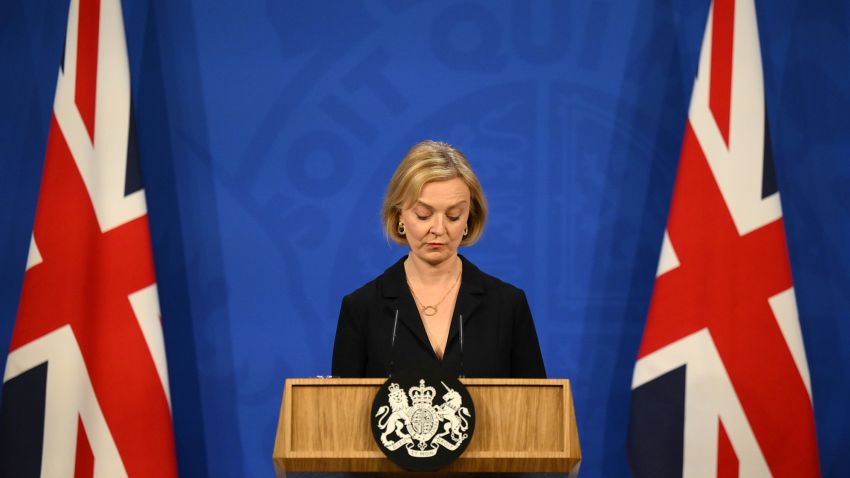
Liz Truss said on Thursday she was resigning as British prime minister, brought down by her economic programme that sent shock waves through the markets and divided her Conservative Party just six weeks after she was appointed.

A leadership election will be completed within the next week.

Speaking outside the door of her Number 10 Downing Street office, Truss accepted that she could not deliver the promises she made when she was running for Conservative leader, having lost the faith of her party.

“I recognise though, given the situation, I cannot deliver the mandate on which I was elected by the Conservative Party. I have therefore spoken to His Majesty the King to notify him that I am resigning as leader of the Conservative Party,” she said.

“This morning I met the chairman of the 1922 Committee, Sir Graham Brady. We’ve agreed that there will be a leadership election to be completed within the next week. This will ensure that we remain on a path to deliver our fiscal plans and maintain our country’s economic stability and national security.”

The party is now due to complete a leadership election within the next week, faster than the usual two-month period.

Truss has been in office for just 44 days, on 10 of which government business was paused following the death of Queen Elizabeth II.

Her resignation follows a meeting with Graham Brady, the Conservative politician that is in charge of leadership votes and reshuffles. Brady chairs the 1922 Committee — the group of Conservative MPs without ministerial positions who can submit letters of no confidence in the prime minister.

Just before the meeting, a Downing Street spokesperson told reporters Truss wanted to stay in office.

During the hour the meeting lasted, the number of MPs publicly calling for Truss to step down reached 17. The number who have written letters to Brady expressing no confidence in the prime minister was reported to be over 100 by Thursday.

The pound was up 0.4% on the day against the dollar shortly after the announcement, trading at $1.1273, briefly touching a session high. It remains at the level it was on Sept. 22, before Truss’ market-moving budget. The yields on 10-year and five-year gilts (U.K. sovereign bonds) we both down by around 5 basis points after Truss’ brief speech.

Opposition parties Labour, the Scottish National Party and the Liberal Democrats called for an immediate general election on Thursday afternoon. Labour leader Keir Starmer said: “The Conservative Party has shown it no longer has a mandate to govern.”

On Sept. 23, Truss’ finance minister, Kwasi Kwarteng, announced a so-called “mini-budget” which began a turbulent period for U.K. bond markets which balked at the debt-funded tax cuts he put forward. Most of the policies were reversed three weeks later by the second finance minister, Jeremy Hunt.

Truss beat Rishi Sunak to become leader of the Conservative Party following the resignation of Boris Johnson on July 7. Sunak is now one of the favorites to replace Truss, along with Hunt, another leadership contender Penny Mordaunt, Defense Minister Ben Wallace and former Prime Minister Boris Johnson.

The resignation leaves the status of the Conservatives’ expected budget update on Oct. 31 uncertain, but Truss said the leadership handover would “ensure we remain on a path to deliver our fiscal plans.”

News Agencies

More articles

LEAVE A REPLY

Please enter your comment!
Please enter your name here

CATHSSETTA

spot_img

AVBOB STEP 12

spot_img

Inside Education E-Edition

spot_img

Inside Metros G20 COJ Edition

spot_img

JOZI MY JOZI

spot_img

QCTO

spot_img

Latest article