
- Advertisement -spot_img

Minister of Electricity will be solely focused on addressing load-shedding crisis – Ramaphosa

- Advertisement -spot_img

Must read

PHUTI MOSOMANE

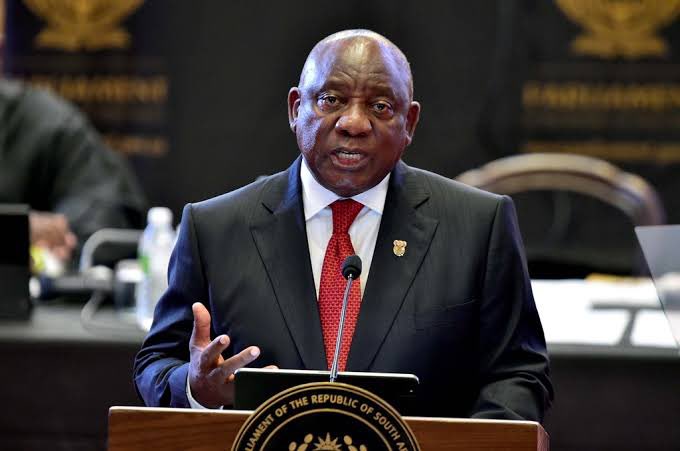
PRESIDENT Cyril Ramaphosa has defended the proposed appointment of a new Minister of Electricity to deal with Eskom’s load-shedding crisis.

Opposition parties, and the ANC’s key alliance partners, the South African Communist Party and COSATU, have slammed the creation of a new ministry, saying that government is already too big and costly to the taxpayer.

But in his response to the debate on the State of the Nation Address, Ramaphosa said the new Minister of Electricity will be solely responsible for driving the various actions being coordinated by the National Energy Crisis Committee to end load shedding as a matter of urgency.

 “To end load shedding, however, we must shift gear. A crisis of this nature demands a coordinated response, and it demands urgent action. That is the reason why I am appointing a special Minister in the Presidency and the reason why a national state of disaster has been declared,” he told Parliamentarians.

The new minister will assume full responsibility for overseeing all aspects of the electricity crisis response, he said.

Ramaphosa said the reality is that the resolution of the energy crisis required effective and better coordination across several departments and public entities.

“It requires the undivided attention of a political principal who does not need to split their time and energies among different important responsibilities,” he said.

Ramaphosa added that the appointment would ensure that there is a minister who is ultimately responsible for resolving load shedding and who is able to work with all other Cabinet Ministers, Departments and entities to do so.

“Some have suggested that the appointment of the Minister will cause confusion and fragmentation, and that it might also result in turf wars amongst the ministers who deal with energy and Eskom,” he said.

“This is not the case. The Minister of Electricity will be focused day in and day out only on addressing the load shedding crisis, working together with the management of Eskom and the board. The Minister will be leading the National Energy Crisis Committee and interacting with all other departments in the spirit of cooperative governance.”

The Minister of Mineral Resources and Energy deals with matters of energy policy as well as mineral resources. Beyond the energy crisis that the country is facing, the restructuring of government will be affected to enable entities that fall under various departments to be properly located in those departments.

On the other hand, the Minister of Public Enterprises is executing the recommendations of the Presidential Review Commission, as well as the State Owned Enterprises Council in relation to the ownership and the governance of state owned enterprises.

That function, Ramaphosa said, should be completed in time as the government continues with the restructuring of government.

The Minister of Public Enterprises will therefore continue to work on the restructuring of Eskom as well as other state owned enterprises until then.

“With the focus that the Minister of Electricity will have on load shedding and the work that is being done by Eskom and the board I do believe that we stand a much better chance to address this overriding challenge and crisis that our country faces,” said Ramaphosa.

He said the urgency of the execution and delivery is paramount.

“We don’t have the luxury of time,” he said.

He said the national State of Disaster that was declared last week will be used to mitigate the social and economic effects of load shedding and accelerate the measures necessary to close the shortfall in electricity, and nothing else.

Ramaphosa said the government will use the State of Disaster to get rid of unnecessary bureaucratic obstacles that stand in the way of urgently bringing new generation capacity onto the grid.

“We will use it to ensure continuity in the provision of critical services and supply chains, and to address the impact of load shedding on businesses and households.”

“As we build an electricity system that will meet our energy requirements into the future, we need to dispel this idea that we are abandoning coal as a fuel source. We should all remember that coal fired power stations provide 80% of our energy source and will therefore continue to provide the bulk of our ‘base load’ supply into the future,” he said.

South Africa remained, he said, committed to a future energy mix that consists of a diversity of energy sources, including coal, renewables, nuclear, gas, hydro, bio-mass and other forms of energy.

 “Our priorities in 2023 are to decisively resolve the electricity crisis, reduce unemployment and root out corruption and crime,” he said.

INSIDE POLITICS

More articles

LEAVE A REPLY

Please enter your comment!
Please enter your name here

CATHSSETTA

spot_img

AVBOB STEP 12

spot_img

Inside Education E-Edition

spot_img

Inside Metros G20 COJ Edition

spot_img

JOZI MY JOZI

spot_img

QCTO

spot_img

Latest article



