
PHUTI MOSOMANE
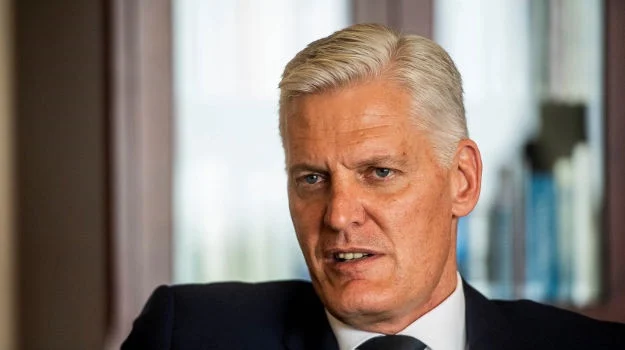
FORMER Eskom CEO André de Ruyter has declined to identify the cabinet minister who allegedly told him to allow people to eat when he reported corruption and criminal activities at Eskom.
Standing Committee on Public Accounts (Scopa) had invited de Ruyter to brief Parliament after he made serious allegations against ANC politicians and members of the executive in an explosive interview with ENCA.
During the interview, de Ruyter made allegations about an unnamed cabinet minister who told him to “allow others to eat a little bit” in order to achieve the greater good.
MPs at the committee meeting urged him to reveal the minister’s name, but de Ruyter refused, saying that he shared the information with Public Enterprises Minister Pravin Gordhan and President Cyril Ramaphosa’s advisor Sydney Mufamadi. The committee members accused de Ruyter of not telling them what they wanted to know.
In his submission, de Ruyter claimed that R1 billion is stolen from Eskom every month.
“The alleged criminal and unlawful activities that are currently under investigation are of a very sensitive and complex nature and they involve elements that are best characterized as organized crime. I would not want to be seen as defeating the ends of justice,” said de Ruyter.
Corruption impacted on loadshedding crisis
De Ruyter disagreed with Electricity Minister Dr Kgosientsho Ramokgopa’s assertion that corruption doesn’t impact load shedding.
However, he said he agreed with the labour union, the National Union of Mineworkers (NUM), that there is a direct link between corrupt activities at Eskom and resultant load shedding.
According to de Ruyter, there are various criminal activities at Eskom in Mpumalanga, including the operation of the “Presidential Cartel” and other cartels.
He confirmed that he conducted privately funded intelligence gathering to stop crime and corruption at Eskom, using funds from private donors that he approached after being encouraged to do so.
He refused to disclose the identities of these donors.
“A significant risk posed to Eskom is a result of criminal activities. It became clear that Eskom required some form of intelligence gathering capabilities. As the owner of a number of National Key Points, we were charged with the obligation to protect those national key points, and to ensure that we take all steps necessary to secure the safety of these national key points. We, therefore, approached funders, not using Eskom money. This was then encouraged by principals involved,” he said.
Analysts accused de Ruyter of blatantly undermining Parliament, even though he was offered protection, by refusing to name the said minister due to legal concerns.
Energy analyst Chris Yelland suggested that de Ruyter opted to appear virtually before SCOPA due to fears for his safety, which he confirmed by stating that his sources also fear for their safety and cannot be revealed due to their known association with the Hawks.
At the end of the three-hour hearing, the SCOPA chair Mkhuleko Hlengwa expressed frustration, stating that the committee was back at square one.
DA’s MP Benedicta van Minnen said the reluctance by de Ruyter to divulge the identities of individuals whom he alleged were involved in corruption at Eskom, did not come as a surprise and the blame should be placed squarely on the ANC.
“Today’s session before SCOPA was just a hearing and De Ruyter was not participating under oath. This made it impossible for SCOPA to force him to make disclosures which he presumed would place him at variance with the law and open him up to criminal prosecution,” she said.
“The attempts by some ANC members to propose that De Ruyter takes an oath, to force disclosures from him, midway through the hearing was disingenuous because the hearing was not originally framed as a parliamentary inquiry.”
In a statement released Wednesday, Eskom said it noted nothing in de Ruyter’s submissions that were not already being dealt with by law enforcement agencies.
INSIDE POLITICS





