PHUTI MOSOMANE
ANC Secretary-General Fikile Mbalula says Western Cape Premier Allan Winde does not have the authority to arrest Russian President Vladimir Putin.
Mbalula made the comments in response to Winde’s announcement on Thursday that the provincial police, including the Cape Town metro, would execute an arrest warrant issued by the International Criminal Court (ICC) for Putin if he ever sets foot in the Western Cape.
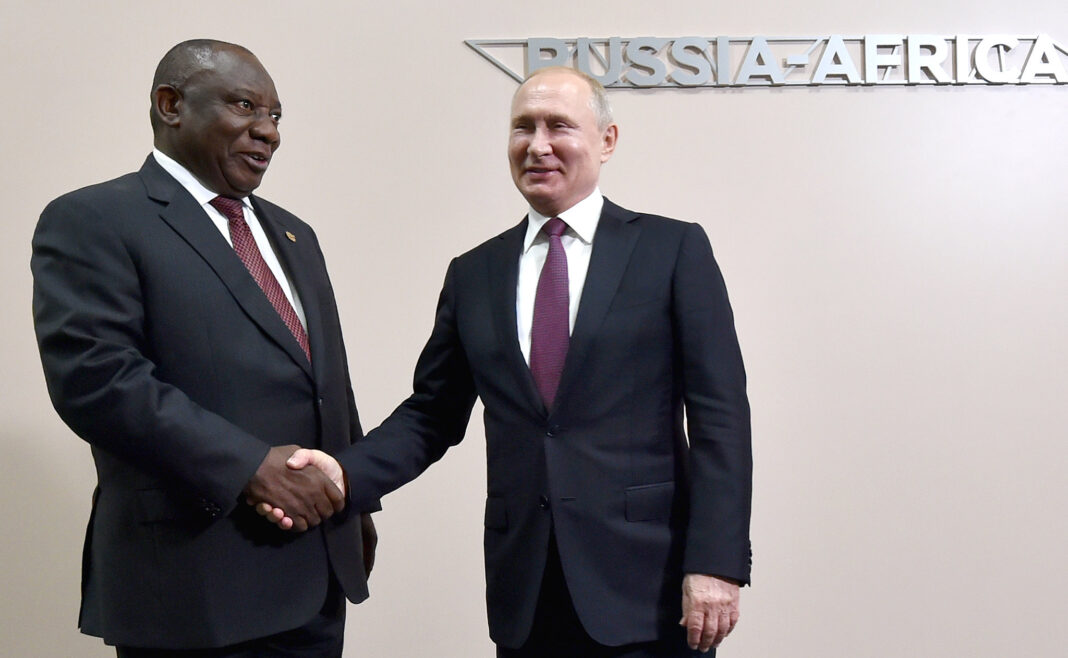
Putin has reportedly accepted the invitation to attend an in-person BRICS summit in South Africa in August.
“[Western Cape Premier] Allan Winde doesn’t have powers to stop anyone coming to this country. The Western Cape is a province – and not a country – under a unitary state,” said Mbalula in response to Winde’s comments on Thursday.
Analysts say the issuing of an international arrest warrant and war crimes charges against the leader of a major world power and a permanent member of the United Nations Security Council represents a significant moment in the history of international criminal justice.
The ANC NEC this week made a decision to allow Putin into the country at any time, despite the ICC warrant for his arrest.
However, President Cyril Ramaphosa’s recent statement on Tuesday about South Africa withdrawing from the ICC due to confusion over whether or not the country intends to abandon the ICC has raised concerns.
In response, Winde criticized the national government, ANC and Ramaphosa for showing confusion over the matter, particularly in light of the ICC’s arrest warrant for Putin.
Winde said that the warrant was issued for war crimes committed during Russia’s invasion of Ukraine, and therefore the country has an obligation to arrest Putin if he steps on South African soil.
South Africa is one of 123 signatories to the Rome Statute that established the ICC.
“Even in the face of this arrest warrant, national government seemingly intends to push ahead and host President Putin at a BRICS summit in South Africa, scheduled for later this year. This is unacceptable and deplorable,” said Winde.
He added, “Putin has consistently and violently eroded the freedoms of the Ukrainian people and those in his own country who dare take a principled stand against his brutal actions. If the Russian leader sets foot in the Western Cape we as the provincial government will have him arrested by our own Western Cape Government funded Law Enforcement Advancement Plan (LEAP) officers. If the South African Police Service is not instructed to act, we will.”
“I am highly disturbed by how the ANC national government is entirely focused on taking steps to ensure the freedom of Vladimir Putin, instead of focusing on securing freedoms for South Africans, many of whom are not free from fear, and have yet to achieve economic freedom, 29 years into our democracy.”
The ICC has faced criticism from many African countries, including South Africa, over its perceived inconsistency in its prosecutions.
Some critics, including leading scholars and jurists, have accused the ICC of bias against African nations, while others say the “ICC sadly reinforces Western perspectives and standpoints as universal maxims valid for all people and all nations, and re-enacts racialised metaphors of savages, victims and saviours in the name of truth and justice.”
Major global powers such as the United States, Israel, China, Ethiopia, India, Indonesia, Iraq, North Korea, Saudi Arabia, and Turkey are not signatories to the Rome Statute, a treaty which established the ICC.
Russia has also adopted a “non-recognition” policy towards the ICC, similar to the United States and Israel before it.
The Kremlin’s fundamental objection to the ICC is that the court lacks jurisdiction to try third-party nationals, as those states did not consent to the ICC’s jurisdiction.
This position has been a point of controversy, with some arguing that it undermines the ICC’s ability to hold individuals accountable for international crimes, and that it is inconsistent with the principle of universal jurisdiction, which holds that certain crimes are so egregious that they can be prosecuted by any state, regardless of where they were committed or the nationality of the perpetrator.
INSIDE POLITICS