
- Advertisement -spot_img

May Day| Cosatu wants to build unity amongst workers so it can positively change workers’ lives

- Advertisement -spot_img

Must read

PHUTI MOSOMANE

COSATU has reiterated the importance of worker unity and cooperation as the primary weapon for improving living conditions. 

As millions of workers celebrate Workers Day on Monday, Cosatu spokesperson Sizwe Pamla has called on workers to come together to combat the rising levels of extreme poverty, unemployment, declining public services, and elite corruption. 

The Federation is expected to hold a series of major events in eight provinces, with the national May Day celebration taking place at the Bethlehem showgrounds in the Free State.

Cosatu will also commemorate the 20th Anniversary of the Saulspoort Bus Disaster which left 51 workers dead after their bus plunged into a dam in 2003.

According to Pamla, it is only through collective action that workers can bring about meaningful change and create a better future for all.

“We need to work together to deal with the rising cost of living and levels of indebtedness among workers. We are calling on all unions to cooperate and work together during this year’s round of wage negotiations to fight for decent wages for the workers,” said Pamla.

Pamla has further stated that workers deserve fair compensation that keeps pace with inflation, enabling them to afford basic necessities such as food, clothing, and shelter for their families.

By standing together and advocating for their rights, workers can ensure that their labour is valued and that their contributions to society are duly recognized.

“Our priority should be a pushback against the electricity and petrol price increases,” Pamla said.

According to Cosatu, worker unity is necessary to drive financial and management interventions that can help rebuild embattled State-Owned Enterprises, many of which are currently in a state of free fall.

The Federation has also expressed concern over the alarming rate of retrenchments in these SOEs. Additionally, the rapid deterioration of many municipalities, with 90% now in severe financial distress, presents a significant challenge for workers.

Twenty-seven municipalities in the Northern and Eastern Cape, North-West, Free State, Limpopo, and Gauteng are routinely failing to pay their staff, which has resulted in the closure of rural businesses and further job losses.

Cosatu has called for both employed and unemployed workers to come together to demand meaningful relief for the poor and unemployed, as well as an end to load-shedding.

The Federation has also stated that it will continue to push for the expansion of the Presidential Employment Stimulus to create job opportunities for young people, as well as the retention and expansion of the SRD Grant as a foundation for a Basic Income Grant.

“We need to have a discussion on overhauling our skills development regime to ensure workers can not only find jobs in the economy of today but also tomorrow as the 4th industrial revolution gathers momentum,” said Pamla.

“We will continue to push to strengthen our labour laws to protect workers from naked exploitation and have scored positive victories recently with the President’s signing the Compensation of Occupational Injuries and Diseases and the Employment Equity Amendment Acts into law.”

Cosatu has faced challenges in recent years, including the loss of a significant number of members to the formation of rival trade union, the South African Federation of Trade Unions (SAFTU), as well as members retiring. As a result, the National Union of Metalworkers of South Africa (NUMSA), an affiliate of SAFTU, has become the largest union in the country, replacing the National Union of Mineworkers (NUM).

Moreover, Cosatu unions are no longer negotiating as a cohesive unit, which was evident during the public sector wage negotiations where the National Education, Health and Allied Workers’ Union (NEHAWU) and South African Democratic Teachers’ Union (SADTU) openly disagreed. This lack of unity and coordination could weaken the labour movement’s bargaining power and ultimately affect the working conditions of its members.

Cosatu has faced challenges in recent years, including the loss of a significant number of members to the formation of rival trade union, the South African Federation of Trade Unions, as well as members retiring. 

As a result, the National Union of Metalworkers of South Africa, an affiliate of SAFTU, has become the largest union in the country, replacing the National Union of Mineworkers.

Moreover, Cosatu unions are no longer negotiating as a cohesive unit, which was evident during the public sector wage negotiations where the National Education, Health and Allied Workers’ Union and South African Democratic Teachers’ Union openly disagreed.  

This lack of unity and coordination could weaken the labour movement’s bargaining power and ultimately affect the working conditions of its members.

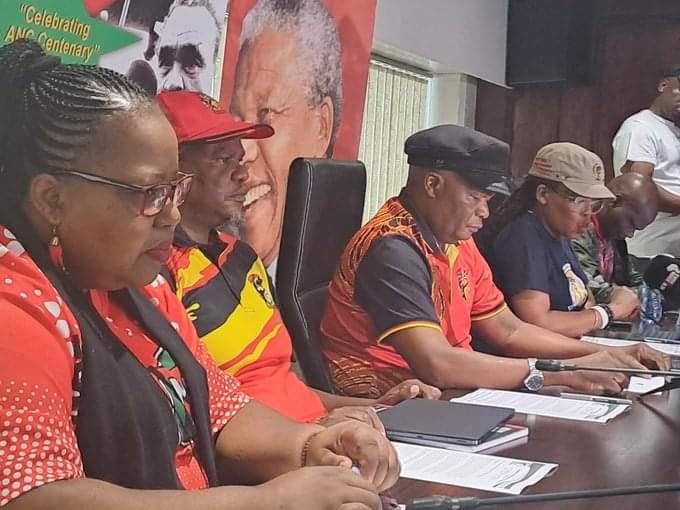
#SATAWU General Secretary Jack Mazibuko participating in the mobilization campaigns in Bethlehem as part of build-up up activities for May Day. PHOTO| COSATU
#COSATU 2023 May Day celebrations. IMAGE| COSATU

INSIDE POLITICS


More articles

LEAVE A REPLY

Please enter your comment!
Please enter your name here

CATHSSETTA

spot_img

AVBOB STEP 12

spot_img

Inside Education E-Edition

spot_img

Inside Metros G20 COJ Edition

spot_img

JOZI MY JOZI

spot_img

QCTO

spot_img

Latest article



