
- Advertisement -spot_img

Justice and Correctional Services reopens investigation into the Cradock Four murders

- Advertisement -spot_img

Must read

Johnathan Paoli

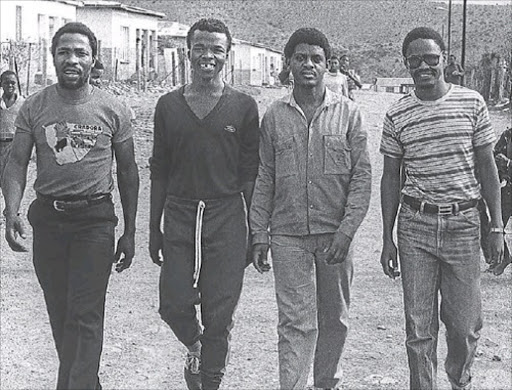
Justice and Correctional Services Minister Ronald Lamola announced last week that the department would reopen the inquest on the murders of the Eastern Cape anti-apartheid activists who became known as the Cradock Four.

The minister said in a press statement that there was new evidence which had never been presented in relation to the case.

Previously, a court of inquiry implicated six former police officers who applied to the Truth and Reconciliation Commission (TRC) for amnesty, including Harold Snyman, Eric Alexandra Taylor, Gerhardus Johannes Lotz, Nicolaas Janse van Rensburg, Johan van Zyl and Hermanus Barend du Plessis.

According to the statement, former colonel Eugene de Kock was pardoned for his role in the murders.

“What this inquest would do is give some sort of healing; the families would be able to take some type of relief,” Fort Calata’s daughter, Phumani said.

Fort Calata, Matthew Goniwe, Sparrow Mkonto and Sicelo Mhlauli, went missing and it was established that they had been detained by apartheid police in Gqeberha on June 27, 1985. Their bodies were later found burnt with stab wounds.

There have been two inquiries to establish the circumstances that led to the murders, with the second judgment resulting in a judge concluding that the four were kidnapped and killed by apartheid police, but it did not identify suspects.

University of KwaZulu-Natal political analyst Sakhile Hadebe said he did not believe that reopening investigations into crimes committed during apartheid would lead to arrests because perpetrators might be too old or already dead.

However, legal expert Mpumelelo Zikalala said he believed the inquest was necessary for the families to get some justice, with anyone suspected of a crime being capable of prosecution at any age.

But Zikalala said he believed there was little for police to investigate at this stage.

Matthew Goniwe was a teacher and popular community leader and organiser in Cradock, arrested in June 1976 in Mthatha and jailed for four years under the Suppression of Communism Act for being part of a Marxist reading group.

As a teacher at Sam Xhallie Secondary School in 1983, he was also instrumental in the formation of the Cradock Residents’ Association (CRADORA) and Cradock Youth Association (CRADOYA) in 1983.

Fort Calata was also a teacher at Sam Xhallie Secondary School and a close political ally of Goniwe. He was also detained in Dimbaza for three weeks for writing a letter to the municipality informing them about the dirty streets and the unhygienic bucket system.

Sicelo Mhlauli, a close friend of Goniwe, with whom he had grown up in Cradock, was a school principal in Oudtshoorn and began his career as a teacher at Thembalabantu High School in Zwelitsha in the 1970.

He was active in the Oudtshoorn Youth Organisation and in a community newspaper- Saamstaan – and became an active member of the UDF and was at its launch in 1983.

Sparrow Mkonto was a railway worker who was instrumental in the formation of CRADORA and CRADOYA and the successful lowering of the rents in Cradock, became a senior office-bearer of CRADOR. His involvement with CRADORA caused the Security Police to conspire with his employers at the railways to have him dismissed on a spurious charge.

INSIDE POLITICS

More articles

LEAVE A REPLY

Please enter your comment!
Please enter your name here

CATHSSETTA

spot_img

AVBOB STEP 12

spot_img

Inside Education E-Edition

spot_img

Inside Metros G20 COJ Edition

spot_img

JOZI MY JOZI

spot_img

QCTO

spot_img

Latest article



