
24.1 C
Johannesburg
- Advertisement -

Cosatu and Saftu welcome the recent National Minimum Wage increase

- Advertisement -

Must read

Johnathan Paoli

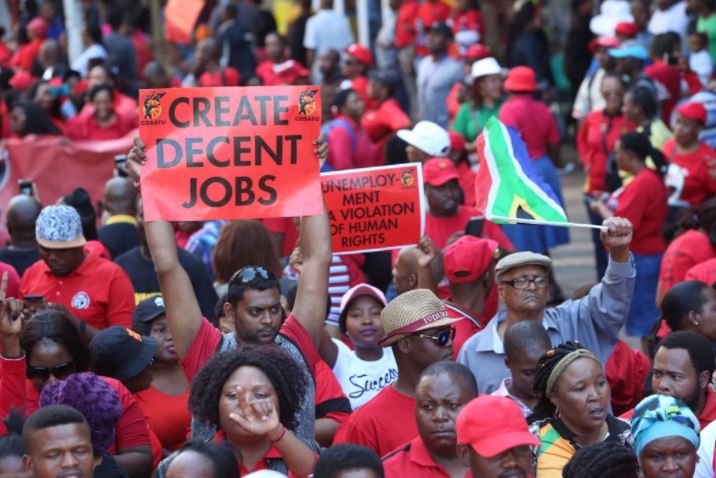
South African labour Cosatu and Saftu have welcomed the national minimum wage increase and said that employers and domestic workers alike should remain vigilant in order to ensure salaries are raised accordingly.

This comes after Employment and Labour Minister Thulasi Nxesi gazetted an increase of 8.5% to the minimum wage on Monday, effective from March.2024.

The national minimum wage is expected to go up from R25.42 to R27.58 per hour from 1 March, with vulnerable employees, such as domestic and farm workers, receiving remuneration at this prescribed level, while those employed under the Expanded Public Works Programme should be paid a minimum wage of R15 and R16 per hour.

Labour federations – the Congress of South African Trade Unions (COSATU) and the South African Federation of Trade Unions (SAFTU) have welcomed the adjustment.

SAFTU spokesperson Trevor Shaku said that the current minimum wage fell short of providing workers and their families with a decent standard of living.

Shaku said that Saftu previously expressed support for a national minimum wage but insisted that the minimum wage should be set at a level that could afford workers and their families a decent life.

The spokesperson said based on the assumption of a worker who worked eight hours per day and 21 days per month, this hourly rate translated into a monthly wage of R4 633.44.

In addition Shaku said that the latest Household Affordability Index by the Pietermaritzburg Economic Justice and Dignity group indicated that the average household food basket cost R5 324.86 per month.

“The current minimum wage is inadequate to cover even a basic household food basket, not to mention hygienic products, rent, municipal services, and transportation to work and school. These are fundamental necessities that sustain a worker and enable them to offer their labour power daily.”

SAFTU said employers paying below the minimum wage would face fines, and that workers needed “enough money” in order to afford all the basic goods and services, in line with the federation’s long standing demand of establishing R72 per hour as the minimum wage.

Cosatu acting spokesperson Matthew Parks said the new increase would protect “the value” of wages and “workers’ ability to take care of their families” against the ravages of inflation and that employees in the agricultural, domestic, construction, retail, hospitality, transport, security and cleaning sectors were expected to benefit the most from the increase.

“It will inject badly needed stimulus into the economy, spurring growth and helping to sustain and create jobs. It will provide relief to more than six million workers earning within the minimum wage range,” Parks said.

Meanwhile, some have complained over the manner in which the above-inflation increase in the minimum wage for domestic workers came at a time when those who can employ them are struggling financially, and could possibly have “reverse consequences on job creation”, with the majority of SMMEs already not able to afford last year’s minimum wage.

The National Employers’ Association of South Africa (Neasa) CEO Gerhard Papenfus said the minimum wage would keep millions of South Africans who currently did not have employment “out of work” for longer.

“It is absolutely meaningless except that it denies people the right to work. If a person has the right to work but we say you go to an employer and he says I cannot afford to pay what the state says I must pay you, so therefore I cannot help you, you can go home and sit and rely on the R350 grant,” Papenfus said.

INSIDE POLITICS

More articles

LEAVE A REPLY

Please enter your comment!
Please enter your name here

Inside Metros G20 COJ Edition

JOZI MY JOZI

QCTO

Inside Education Quarterly Print Edition

Latest article



