
By Akani Nkuna
Justice and Constitutional Development Minister Mmamoloko Kubayi has backed the establishment of the Special Investigating Unit Anti-Corruption and Cyber Academy, framing it as a strategic move to strengthen the state’s capacity to confront corruption, financial crime and cyber threats.
Positioning the academy as a cornerstone in the fight against complex criminal networks, Kubayi highlighted its role in advancing South Africa’s efforts with global standards in law enforcement and governance.
“I am also pleased that the academy will promote partnerships, collaboration and sharing of expertise domestically, regionally, within the continent and globally. A collaborative effort is required effectively to fight corruption,” Kubayi said in Cape Town on Monday.
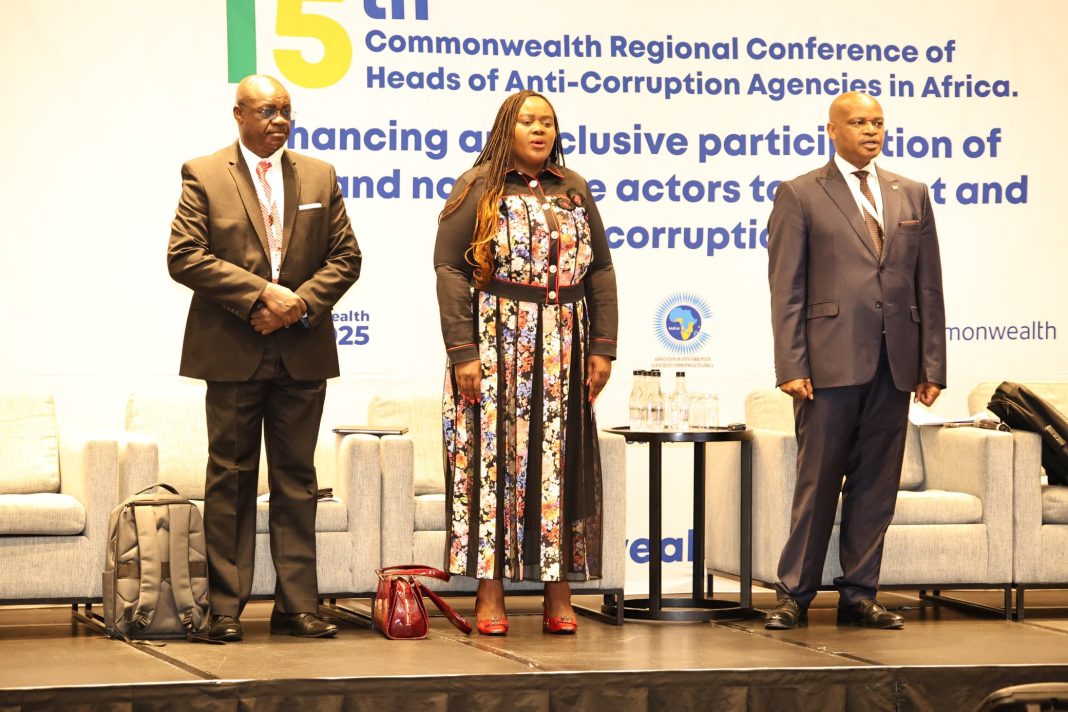
She was speaking at the opening ceremony of the 15th Commonwealth Regional Conference for Heads of Anti-Corruption Agencies in Africa.
The event brought together leaders of anti-corruption agencies, government representatives and experts from across the continent to address urgent challenges and exchange innovative solutions in the ongoing battle against corruption.
It was convened under the theme “Enhancing Inclusive Participation of State and Non-State Actors to Prevent and Combat Corruption”.
Kubayi stressed that this theme served as a call to action, urging all sectors of society to unite in the fight against corruption.
Reflecting on South Africa’s experience with state capture, Kubayi highlighted that it took brave individuals to expose and confront corruption head-on.
“Fighting corruption also requires civil society organisations that are willing to fight for the widening of democratic practices that include transparency and accountability,” she added.
“CSOs have the expertise to help to drive policy reform, generate evidence, provide technical skills and capacity building and be involved in the investigation and enforcement of transnational corruption cases.”
Furthermore, Kubayi cautioned against the misconception that corruption was confined to the public sector, stressing that private sector entities, often large and seemingly reputable, played a significant role in enabling public sector corruption. Both public and private actors needed to be accountable in the broader fight against corruption.
“By destroying institutions and redirecting public resources, corruption undermines democracy and render states, especially small ones, vulnerable to instability, civil wars and terrorism,” she said.
“Corruption undermines business confidence and chases away investment placing the country in a perpetual low growth trajectory and end up in economic crisis.”
Kubayi emphasised that Commonwealth nations must reinforce their collective efforts, share knowledge and enhance their capabilities to combat corruption, in line with UN Convention Against Corruption.
The only way to make the vision of a better Africa a reality was through a concerted and effective fight against corruption.
“It is for this reason that the need for strengthening the capacity to prevent and combat corruption cannot be overemphasized. As a mentioned before we now live a world in which the tools which perpetrators of corruption use have also evolved with technological developments,” Kubayi added.
INSIDE POLITICS



