
15.1 C
Johannesburg
- Advertisement -

ANC accuses DA of being anti-transformation as employment equity battles heats up

- Advertisement -

Must read

By Akani Nkuna

The African National Congress has condemned the Democratic Alliance for taking regulations in the Employment Equity Amendment Act to court, accusing the party of being anti-transformation.

Both the ANC and its parliamentary caucus issued statements on Tuesday, saying the “regressive action” was not only an affront to the Constitution, but a direct assault on the very foundation of South Africa’s transformation journey.

The DA is challenging Section 15 of the Act, which introduces sector-specific numerical targets to correct racial imbalances in the workplace.

The caucus said the DA was attempting to reverse the gains made in promoting fairness and diversity in the workplace.

“The Democratic Alliance’s recent push to challenge the Employment Equity Amendment Act is a direct attack on the progress South Africa has made towards building a more just and equitable society,” said ANC chief whip Mdumiseni Ntuli.

He maintained that the Act was a vital instrument for achieving its goal of a more equitable society and addressing the legacy of apartheid, which had left South Africa with one of the most unequal labour markets in the world.

“The claim that the EEAA is ‘anti-merit’ is a dangerous misrepresentation that ignores the brutal legacy of colonialism and apartheid, which systematically denied the Black majority access to education, employment, and opportunities,” Ntuli said.

Additionally, Ntuli argued that the law reinforced the core principles of the Constitution, especially the rights to equality and human dignity. He pointed out that the Act aligned with Section 9 of the Constitution, which not only guaranteed equality but also called for legislative steps to advance equal opportunities for the previously downtrodden.

ANC spokesperson Mahlengi Bhengu-Motsiri said the Act was not about quotas, but instead justice.

“It is about correcting structural imbalances in the economy and ensuring that all South Africans have a fair shot at opportunity. Section 15A does not eliminate merit; it creates the conditions in which merit can be meaningfully pursued by addressing the glaring underrepresentation of Africans, coloured and Indian South Africans in key sectors of the economy. This is a constitutional imperative, not a political favour,” she said.

The DA’s persistent campaign against transformation revealed its dangerous agenda to entrench the privileges of the past and preserve the apartheid-era economic status quo under the guise of constitutionalism, Bhengu-Motsiri said.

“It is a betrayal of the democratic gains we have made and a slap in the face of the Black working class, women and the youth who continue to bear the brunt of inequality and unemployment.”

DA Federal Council chairperson Helen Zille has contended that the legislation was both unconstitutional and unjust.

She described it as excessively authoritarian, arguing that it granted the Minister of Labour sweeping powers to enforce rigid national targets across all economic sectors.

Zille warned that these targets could be imposed without considering the unique circumstances of individual businesses and could carry severe penalties, including hefty fines and potential criminal charges for non-compliance.

“This can no longer be classified as a target. It amounts to an enabling law for the Minister to set rigid quotas, which have previously been found by our courts to be unconstitutional,” Zille added.

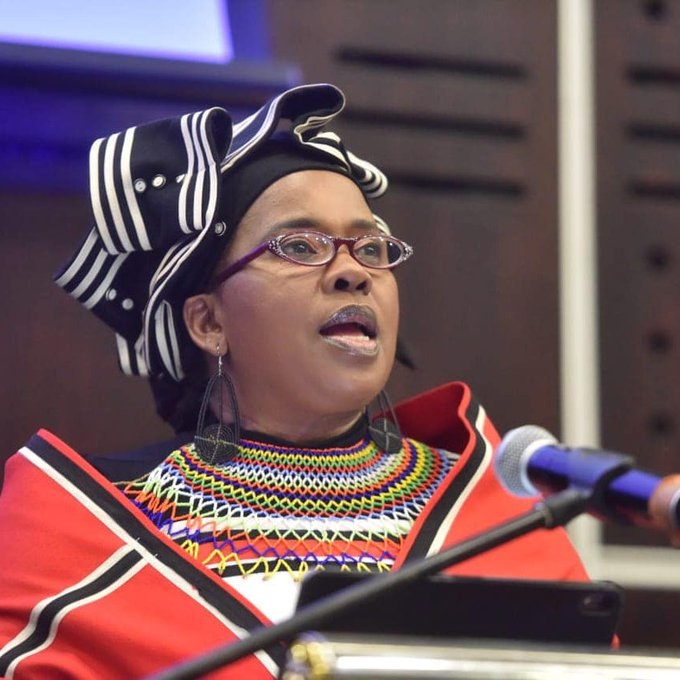
Employment and Labour Minister Nomakhosazana Meth has defended the law, stating that it introduces flexible targets rather than rigid quotas.

She said in a statement that designated employers were still allowed to set their own annual numerical goals within their employment equity plans, as long these aligned with broader sectoral targets.

Employers, she added, could also provide reasonable justifications if they failed to meet these goals.

“The DA’s challenge seeks to disrupt efforts aimed at achieving equitable representation and maintaining the inherently unfair status quo. By opposing these amendments, the DA is actively sabotaging the transformation goals that have been pursued since the end of the apartheid era, effectively hindering progress towards equality and fairness in the workplace,” said Meth.

INSIDE POLITICS

More articles

LEAVE A REPLY

Please enter your comment!
Please enter your name here

Inside Metros G20 COJ Edition

JOZI MY JOZI

QCTO

Inside Education Quarterly Print Edition

Latest article



