
14.2 C
Johannesburg
- Advertisement -

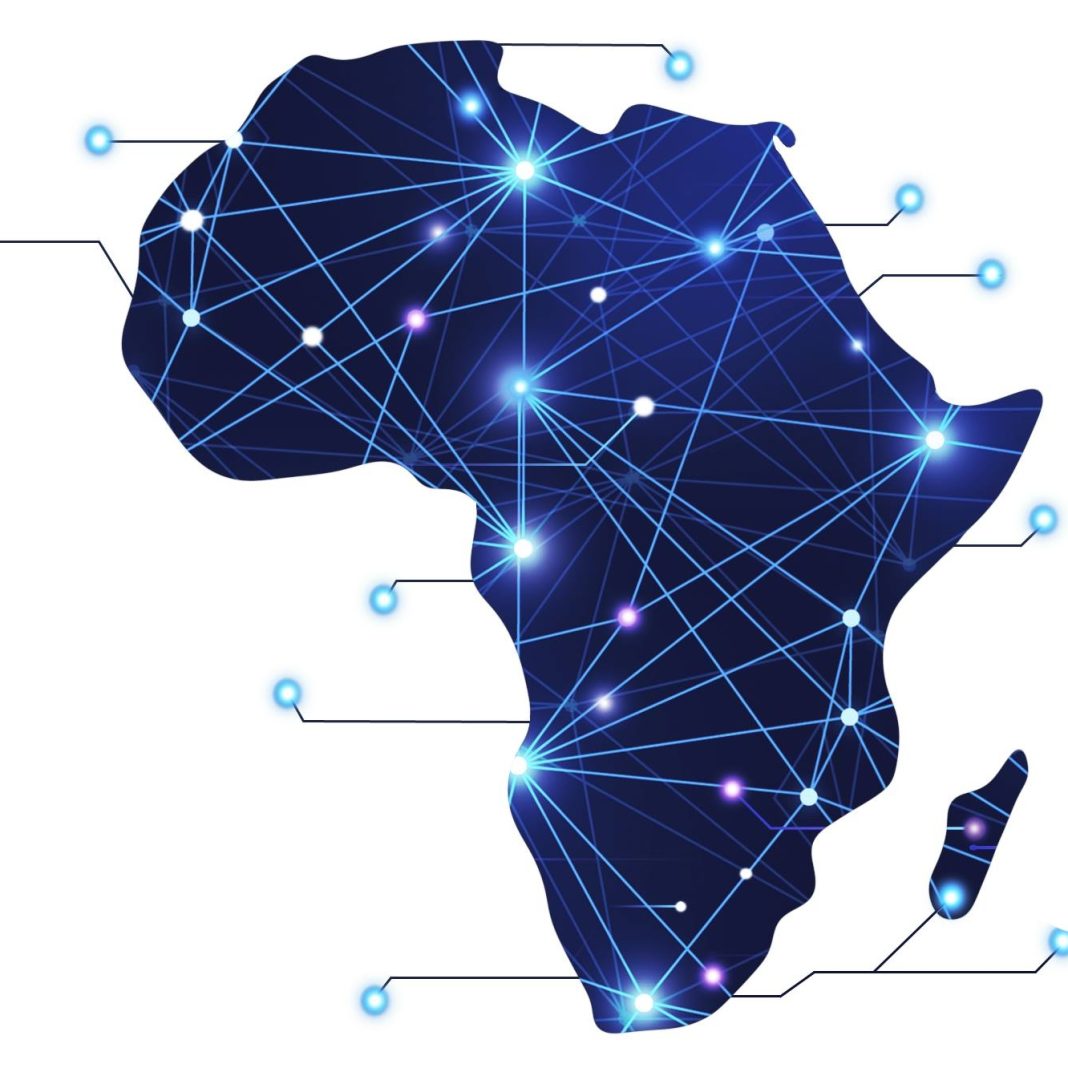
Africa confronts its digital crossroads

- Advertisement -

Must read

By Thapelo Molefe

Africa must take control of its digital infrastructure or risk repeating its historic role as a passive participant in global industrial revolutions. 

This was the key warning delivered during the first G20 Country Session at the Sustainable Infrastructure Development Symposium South Africa (SIDSSA) 2025 on Monday.

Panellists from South Africa, Liberia and China stressed that digital transformation must be inclusive, collaborative and African-led. The session formed part of Infrastructure South Africa’s (ISA) broader agenda to leverage global platforms like the G20 for strategic infrastructure collaboration.

The dialogue moderated by Gautrain Management Agency CEO Tshepo Kgobe offered a candid examination of the opportunities and risks facing Africa in the era of digital transformation.

Framing the discussion with a historical perspective, Kgobe cautioned that Africa had repeatedly played a subordinate role in previous industrial revolutions. 

“In the first industrial revolution, Africa sold its people to the world. In the second, we sold our coal. In the third, we sold our minerals, copper and everything else to the world,” he said. 

“We are hurtling head-on into us playing the wrong role again in the Fourth Industrial Revolution.”

Liberian Posts and Telecommunications Minister Sekou Kromahah, who was one of the panellists agreed, emphasising that Africa’s failure to industrialise and retain value from its own resources had long undermined its development. 

“Africa has the resources. It just needs how best we can manage it… If we can work together and see how best we can use our resources, we will not be standing our hand out there for the United States,” he said.

Kromahah added that digital development must be done with regional collaboration, noting that Liberia was coordinating the rollout of its national fibre infrastructure with neighbouring countries to promote regional integration. 

“Now, Liberia, we have a fibre that is connected… We are working towards bringing the second into Liberia,” Kromah said.

The panellists included the head of partnerships and strategic origination at the infrastructure Fund Masiveni Ngobeni and Ambassador Wu Peng of China.

Ngobeni underlined the importance of inclusive digital infrastructure as a tool for economic empowerment. 

“When we talk about inclusive growth, we’re talking about including all segments of the economy… bridging the digital divide,” he explained.

“Bringing in rural communities into the mainstream of the economy through digital infrastructure”.

Ngobeni argued that government policy must support this goal by ensuring equitable access to technology and reducing costs for underserved populations. 

“Ensure that your connectivity is not only in urban conurbations where a lot of economic activities take place. So you’re not leaving anyone behind. 

“Also working to lower the transaction costs overall for people to be able to access the issues of connectivity to ensure that small businesses also get to be connected and they also get to be productive,” he said.

He also stressed the role of public-private partnerships (PPPs) in unlocking private sector capital and technical expertise. 

“Currently we have done an overhaul on the PPP landscape and regulations to improve the ease of doing business… We could leverage off the private sector’s capital and skills,” he said.

Ambassador Wu Peng presented China’s experience in building the world’s largest digital infrastructure network boasting 4.25 million 5G base stations and over 2.6 billion mobile IoT users as a model of investment and technological ambition.

“Why ICT matters to us is not to a particular country, but to the whole world… AI can contribute 12% of the world total GDP by 2030… Every country must generate more resources to invest in ICT,” he said.

He was candid about China’s dual role as a consumer and investor in Africa’s digital space, highlighting infrastructure projects, fibre networks and concessional loans as part of China’s growing footprint on the continent. 

“We already, through use of our concessional loans or government-to-government cooperation, worked with African countries… We are also willing to keep doing so,” he said.

He advocated for a balanced role between governments and markets. 

“Government is not always smarter than the company,” he said. “Let the market decide… What the government should do is create a business-friendly environment”.

They acknowledged that digital development carried energy and environmental costs.

Kromah said Liberia had already taken steps to align infrastructure projects with green goals. 

“We were talking about building our national data centre… we reached out to see how that data centre can be built [to] support the green energy project,” he said.

He also stressed the need for local capacity. 

“Capacity in the digital space is something that we need to encourage investors to build… A government should be able to provide an environment that would be good for citizens and investors to do business in the digital space”.

The conversation turned to digital access and whether governments should push mobile operators to zero-rate key services. 

“Until certain government services are zero-rated by mobile network operators, the digital divide will continue,” Kgobe argued.

Ngobeni responded by advocating for regulatory innovation and strategic incentives. 

“The answer lies in the regulations… but my view is rather than have regulations being put down to be followed, it’s always good to introduce incentives to win over the private players”.

He also proposed using decommissioned low-power mobile networks to carry essential government services. 

“We need to do a proper assessment of the capacity sitting in those networks… but the use of access capacity for that, I think it’s a good consideration”.

As the session closed, panellists agreed that no single country could go it alone. 

“This forum is [mainly] about how we can bring in our regional partners to ensure that we have a stable and sustainable development in our country,” Kromah noted.

Ngobeni concluded with a call to elevate digital infrastructure to the same level of importance as traditional sectors.

“It appears to be the stepchild of the infrastructure landscape… But digital infrastructure and services are cutting across everything, from water to transport to electricity,” he said. “With all our concerted effort, it should be able to get the attention that it needs”.

SIDSSA 2025 continues on Tuesday.

INSIDE POLITICS

More articles

LEAVE A REPLY

Please enter your comment!
Please enter your name here

Inside Metros G20 COJ Edition

JOZI MY JOZI

QCTO

Inside Education Quarterly Print Edition

Latest article



