By Akani Nkuna
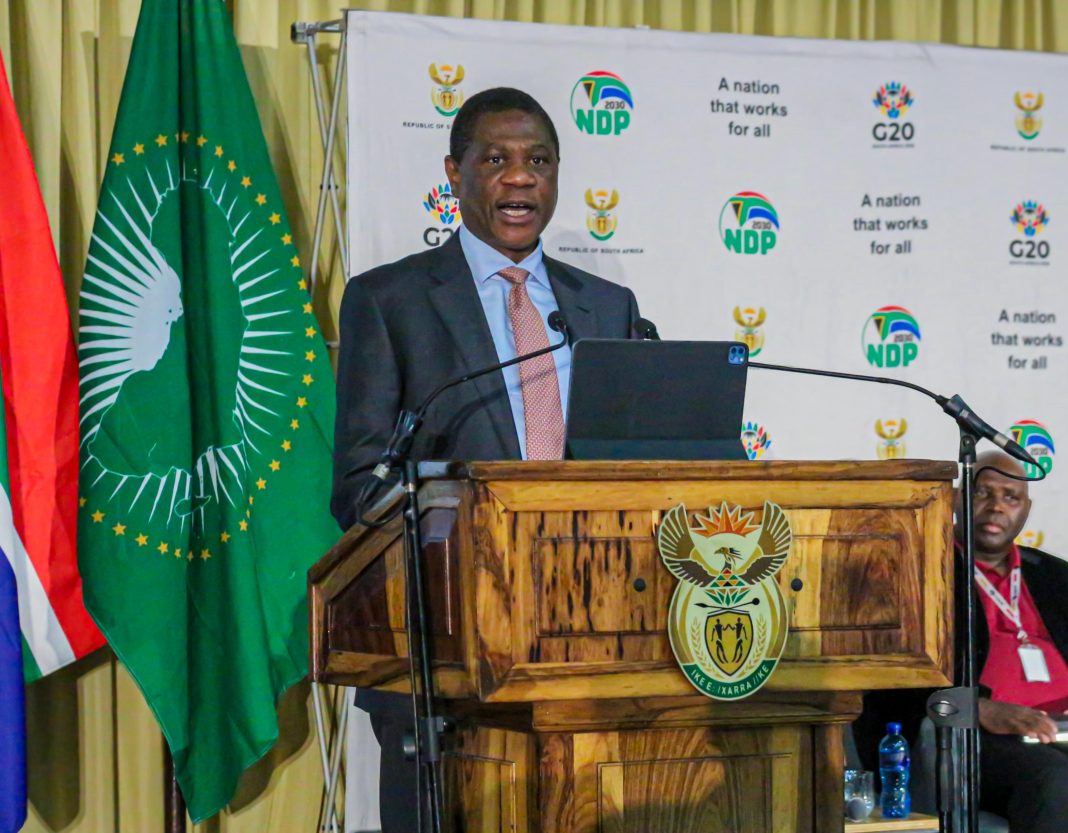
Deputy President Paul Mashatile has raised concerns about the frequent turnover of directors-general and HODs in government, warning that it weakens institutional memory, disrupts policy continuity and negatively affects staff morale.
Speaking on the impact of leadership instability, Mashatile emphasised the need for consistent and experienced leadership to ensure effective governance and long-term planning within the public service.
“Political interference in administrative decisions across government and state-owned enterprise – particularly in appointments, procurement and financial management – creates a precarious environment, making even our most qualified professionals hesitant to serve or unable to act with integrity,” Mashatile said on Friday.
He led a high-level roundtable, which was focused on strengthening the relationship between political leaders and administrative officials, at Sefako Makgatho Presidential Guesthouse in Pretoria.
The dialogue forms part of the Presidency’s broader push to implement the National Development Plan Vision 2030, which calls for a capable and developmental state to tackle South Africa’s socio-economic issues.
The roundtable supports the work of the Human Resources Development Council, which Mashatile chairs, and brought together key stakeholders to explore ways to improve governance and public service professionalisation.
It explored the political and administrative interface in the public service, or the critical relationship between ministers and senior officials. The interface has now become critical in the wake of the formation of the Government of National Unity (GNU), where ministries can undergo a change of political party leadership.
“… a development, capable and ethical state requires skilled managers, especially DGs and HODs, with clear lines of authority and accountability to execute their duties in a way that achieves optimal outputs and agreed outcomes,” Mashatile told reporters.
He further warned that ongoing institutional weaknesses were damaging public trust, deterring investors and harming South Africa’s global reputation by reinforcing the image of a failing state.
The deputy president stressed that building a capable and developmental state meant ensuring that government has the necessary resources, skills and institutional strength to implement policies that drove economic growth and improved citizens’ lives.
Acknowledging the barriers hindering progress toward SA’s developmental goals, which apart from high DG turnover include rigid legal and performance systems, forcing civil servants to uphold constitutional duties amid instability, Mashatile emphasised the urgent need to build a capable state.
He argued that, since the challenges were known, the focus must shift to effective action that accelerated the realisation of a developmental state as outlined in the national blueprint.
“The evaluation findings show that when the interface is unstable, plans remain unfunded, policies are inconsistently applied and citizens lose trust in the state. When DGs are routinely removed or undermined, when procurement processes are politicised… it is the South African people that suffer,” Mashatile added.
Mashatile stressed the need to reform institutional design to address governance gaps, corruption and instability the public service.
He highlighted the new White Paper on Local Government as a key intervention, warning that leadership turnover harmed vulnerable communities.
“… if we are to make significant strides in the implementation of our development goals, we must work towards the de-pollicisation of the public service through the recommended policy and legal reforms,” he added.
The de-pollicisation of accounting officers and executive authorities was a matter of urgency.
According to Mashatile, administrative functions must be institutionalised to ensure government programmes endure beyond political handovers. He further argues that building a capable developmental state requires decisive measures to re-centering the state in the transformation drive.
“Investing in continuous training and professional development is crucial for public servants to effectively implement sustainable development policies and programmes. This equips them with the necessary tools and knowledge to tackle complex challenges and drive innovation,” he said.
INSIDE POLITICS