
By Johnathan Paoli
The South African government has issued a firm call for diplomatic intervention and a peaceful resolution to the rapidly escalating conflict between Israel and Iran, expressing “a great deal of anxiety” over the entry of the United States into the war.
In a statement released by the Presidency on Sunday, President Cyril Ramaphosa and his administration urged all involved parties to halt military aggression and allow the United Nations to lead efforts toward a negotiated settlement.
“It was South Africa’s sincerest hope that President Donald Trump would use his influence and that of the U.S. government to prevail on the parties to pursue a dialogue path in resolving their issues of dispute,” said Presidency spokesperson Vincent Magwenya.
This comes in the wake of a dramatic escalation over the weekend when US President Donald Trump confirmed that American forces had launched coordinated airstrikes on three Iranian nuclear facilities, namely Fordow, Natanz, and Isfahan; describing them as “completely and totally obliterated.”
Trump further warned Tehran of additional military action should it refuse to “make peace.”
The South African government, long an advocate for multilateral diplomacy and peaceful conflict resolution, expressed disappointment over what it sees as a missed opportunity for meaningful engagement.
The presidency reiterated its support for the United Nations as the primary international body responsible for overseeing nuclear non-proliferation and urged all parties to cooperate with UN agencies.
“South Africa calls on the United States, Israel, and Iran to give the United Nations the opportunity and space to lead on the peaceful resolution of the matters of dispute, including the inspection and verification of Iran’s status of uranium enrichment, as well as its broader nuclear capacity,” the statement read.
Iran’s Foreign Minister Abbas Araghchi responded to the American strikes by calling them “outrageous” and warned of “everlasting consequences.”
The targeted nuclear sites were central to Iran’s disputed nuclear program, and their destruction represents a significant blow to Tehran’s strategic capabilities.
Tensions between Israel and Iran have been steadily escalating since 12 June, when Israel launched a series of precision airstrikes on Iran’s nuclear infrastructure, including the Natanz enrichment facility.
That attack killed several high-ranking Iranian military commanders and nuclear scientists. In retaliation, Iran has fired missiles into Israeli territory, striking both military installations and urban centers.
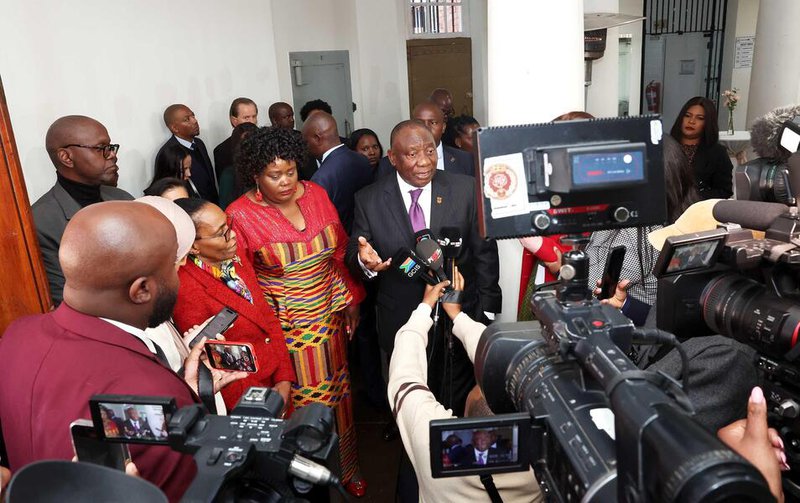
Ramaphosa, speaking earlier this week at the 30th anniversary celebration of South Africa’s Constitutional Court, commented on the dire global ramifications of the conflict.
He warned that the ongoing war has already had a ripple effect on international stability and economies, exacerbating volatility in oil prices and disrupting trade networks.
“This conflict is not only a humanitarian crisis but an economic catastrophe in the making. We are deeply concerned about its implications for the global economy, especially for developing nations,” Ramaphosa said.
INSIDE POLITICS



