
By Johnathan Paoli
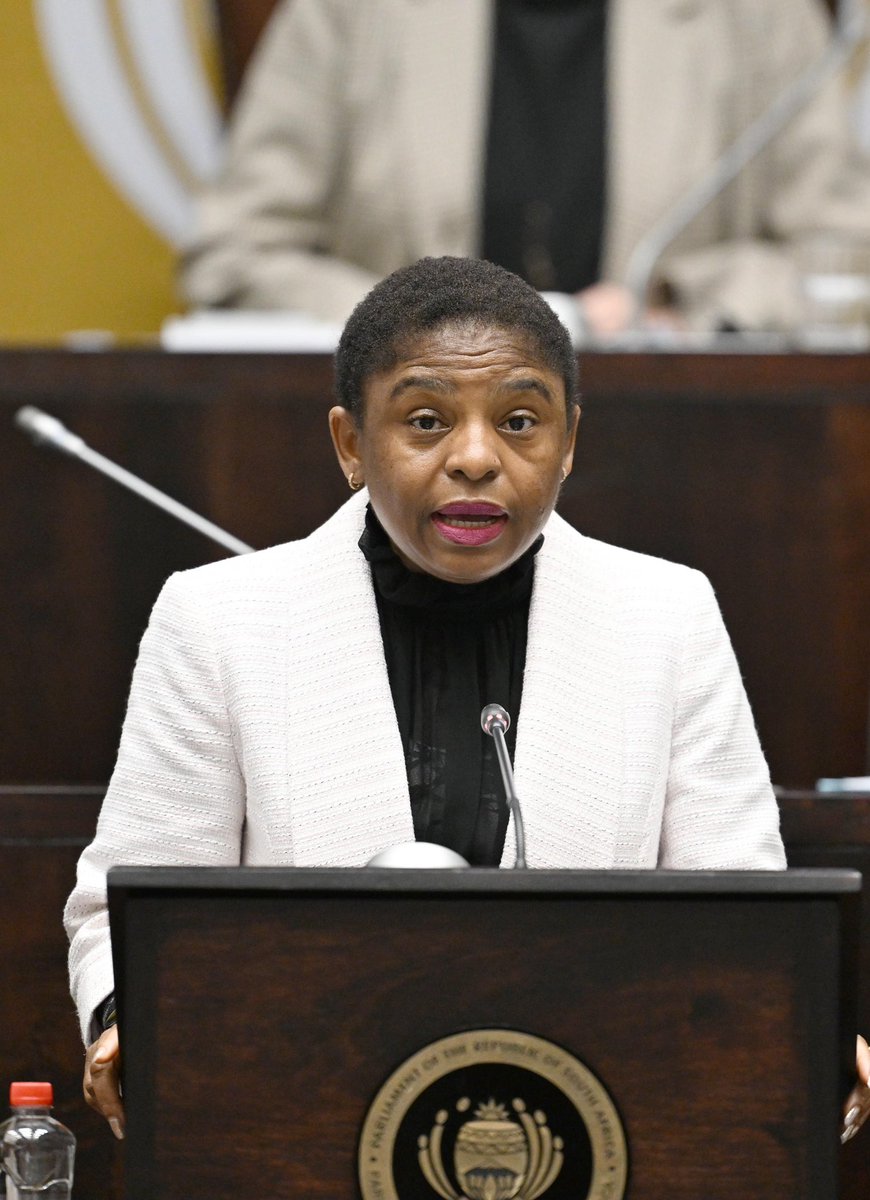
Minister in the Presidency Khumbudzo Ntshavheni for Government Communication and Information System (GCIS) has outlined a comprehensive budget to modernise state communication, support community media, promote South Africa’s global image and enhance transparency between government and citizens.
Presenting her ministry’s 2025/26 Budget Vote in Parliament on Friday, Ntshavheni outlined ambitious reforms, while members of Parliament voiced support, concerns, and criticism; highlighting divergent views on the future of state communication, media transformation, and digital engagement in South Africa.
“As South Africa prepares to hold a National Dialogue, the GCIS and its agencies stand ready to ensure South Africans have access to information that will enable their effective participation and feedback,” Ntshavheni said.
She emphasised the department’s commitment to the 7th Administration’s goals of economic growth, poverty alleviation, and building a capable state.
Highlighting the shift from print to digital media, Ntshavheni noted the decline of print outlets like City Press and the challenges facing community media.
She announced the formation of a Print and Digital Media Transformation and Revitalisation Steering Committee to support struggling outlets, alongside proposed legislative reforms to modernize community broadcasting laws under the Electronic Communications Act.
On the international stage, South Africa’s 2025 G20 Presidency was positioned as a strategic opportunity.
GCIS and Brand South Africa unveiled campaigns promoting “Shared and Unified Prosperity,” aiming to bolster the country’s global reputation and unify government messaging.
Ntshavheni outlined significant reforms to improve government communication coherence through a new National Communication Strategic Framework (NCSF) approved by Cabinet.
The framework fosters integrated messaging, with provincial offices set to oversee municipal communication plans in collaboration with premiers and SALGA.
New norms will mandate communication budgets (1-5% of operational expenditure), enforce a 30% community media advertising quota, and require media training for officials.
She also highlighted GCIS’s expanding digital footprint of over 3.5 million followers across platforms, a Facebook audience growth from 200,000 to 1.1 million within 18 months, and 1.4 million WhatsApp subscribers.
GCIS actively counters misinformation, publishing thousands of stories and distributing radio products to reach diverse, rural audiences.
Despite these initiatives, Ntshavheni acknowledged the R820.3 million budget allocation falls short of the department’s needs, particularly for digital transformation and capital infrastructure investments.
She pledged further innovations, including a Digital Transformation Strategy and reforms for Brand SA, and called on Parliament for support.
African National Congress MP Khusela Sangoni voiced support for the GCIS budget but warned that communication often fails to engage the public meaningfully.
“Hope needs to be fed with facts, clarity and truth,” she stressed, citing examples of citizens left uninformed about critical services.
She confirmed the Portfolio Committee’s backing is conditional on enforceable reforms, demanding a communications performance framework for Ministers and Directors-General; revised legislation ensuring coherent, government-wide communication; impact-focused monitoring and evaluation; Brand SA and MDDA reforms; and enforcement of the 30% community media spend.
“Communication is not a box to tick. It is the bridge between state and people,” Sangoni concluded.
In sharp contrast, uMkhonto weSizwe Party’s Crossby Shongwe rejected the GCIS budget outright, branding it “a propaganda package padded with vanity targets.”
He accused GCIS of bureaucratic excess, with nearly 89% of funds allocated to salaries and consultants rather than platforms that engage the public.
Shongwe highlighted the decline of community media, accusing the MDDA of “capture” by ANC insiders and warning of political interference.
He criticised the lack of measurable empowerment targets for marginalized groups and described the G20 summit focus as elite-driven distraction.
Democratic Alliance (DA) MP S’bongiseni Vilakazi acknowledged GCIS’s alignment with national priorities but criticised weak, activity-based indicators lacking rigour.
He opposed ending Vuk’uzenzele’s print edition, warning this risks excluding rural and vulnerable groups.
Vilakazi called for stronger enforcement of community media advertising budgets and transparent, long-term MDDA funding with third-party oversight.
He urged enhanced digital goals, audience development, and monitoring capacity to rebuild trust and empower all South Africans.
The Economic Freedom Fighters’ Sixolisa Gcilishe categorically rejected the budget, accusing GCIS of prioritising foreign capital interests and facilitating Elon Musk’s Starlink satellite internet “through the back door.”
She demanded a ban on Starlink until compliance with South Africa’s B-BBEE laws, denouncing Equity Equivalence Investment Programmes (EEIPs) as mechanisms for foreign corporations to evade transformation.
Gcilishe called for state-controlled broadband infrastructure and community internet cooperatives, condemning the budget as “a sellout to American tech imperialism.”
Deputy Minister Kenny Morolong addressed committee concerns, clarifying that GCIS is not a regulator and explaining the phase-out of Vuk’uzenzele’s print edition due to low reach.
He highlighted GCIS’s role in uniting citizens, government segmentation models, and a strong compliance rate with communication policy.
Morolong noted upcoming policies to allocate 30% of government advertising to community media and underscored extensive community outreach efforts, including nearly 1,750 communication projects and NDDA-funded studios.
He ended with a call to use communication as a bridge for unity and democratic participation.
Ntshavheni reiterated that many concerns are addressed in GCIS plans and announced a National Communication Strategic Framework and enhanced quarterly reporting for transparency.
She highlighted efforts to clarify communication roles across government and pledged legislative amendments to support community media sustainability.
Acknowledging the print media decline, she affirmed proactive government action, dismissing opposition criticisms as misguided.
INSIDE POLITICS





