
By Johnathan Paoli
Gauteng environment MEC Ewan Botha has unveiled a R679.4 million budget for the 2025/26 financial year, framing it as a strategic and urgent intervention to tackle the province’s growing environmental pressures while unlocking green economic growth.
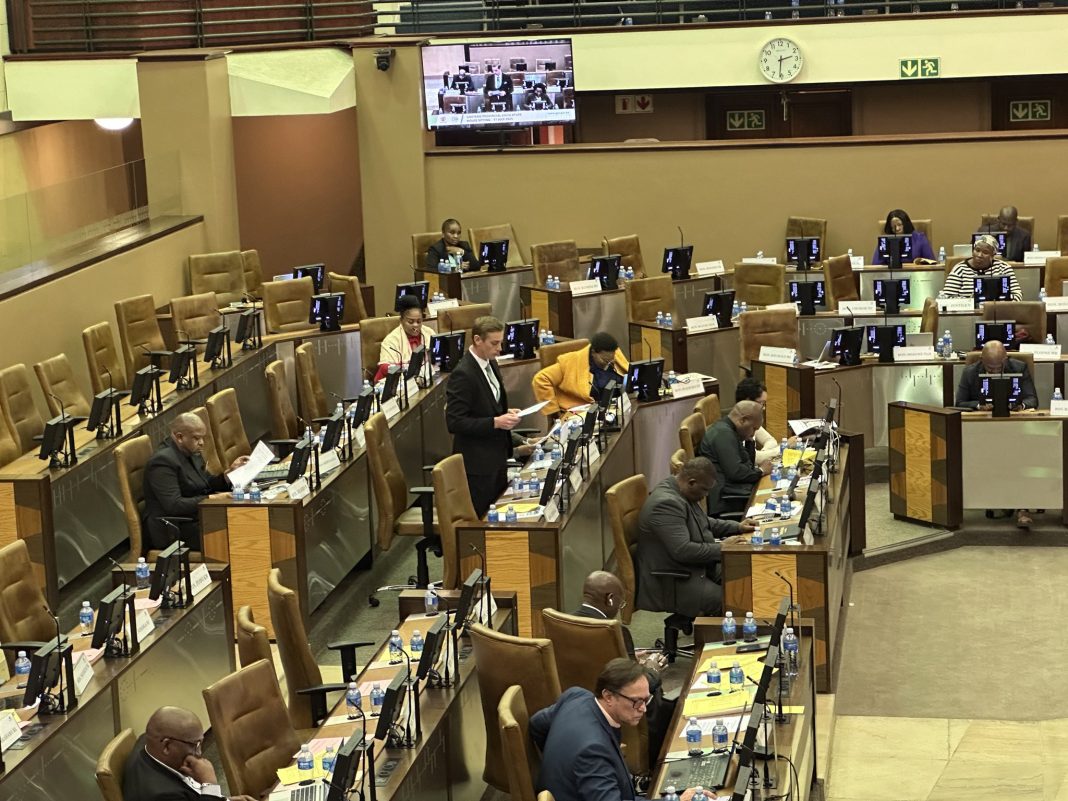
Tabling the budget before the provincial legislature on Thursday, Botha stressed the dual need for cleaner cities and “green jobs”.
“This is not just a financial statement; it is a declaration of intent. We are reshaping this department to reflect the urgency that the environmental mandate demands,” Botha said.
The budget prioritises inclusive economic growth, climate action, waste innovation and the transformation of key heritage sites into drivers of sustainable tourism and job creation.
The R679.4 million allocation has been designed with focused intent.
The major components include R353.3 million for personnel and strengthening departmental capacity through the hiring and development of environmental specialists, compliance officers, and planners.
A total of R498.7 million will be allocated for inclusive economic growth and job creation, which is Gauteng’s top environmental priority. It covers infrastructure upgrades, eco-tourism and employment initiatives.
Around R9.3 million will be set aside through the Expanded Public Works Programme Integrated Grant, creating short-term green jobs for women and youth in recycling, greening and park maintenance, R78.3 million for flagship heritage sites including the Cradle of Humankind and Dinokeng Game Reserve to elevate tourism, R50 million to clean 18 central business districts under the G20 Green Cities Initiative.
Several targeted allocations were announced.
They include R10 million for a feasibility study into Gauteng’s first integrated Eco-Park Waste Facility, R3.5 million for Buy-Back Centre infrastructure supporting township recyclers, R2.9 million to implement waste minimisation regulations and promote separation at source, and R2.5 million to review the province’s Integrated Waste Management Plan.
A total of R8 million has been implemented for the Gauteng Climate Change Action Plan and the annual Climate Indaba, and R11.9 million to streamline environmental impact assessment approvals to cut red tape and turnaround times.
“These investments are not just visible projects, they’re long-term value creators. We must shift from constant cleaning to sustainable environmental infrastructure that serves generations,” Botha said.
The MEC highlighted the global significance of the Cradle of Humankind, which held 40% of the world’s hominid fossils, and the Dinokeng Big Five Game Reserve, the only such reserve next to a major city.
“These are not just natural wonders, they are economic levers with the power to create jobs, attract global tourists and reinforce our identity as a smart, green province,” he said.
The EPWP continues to be a flagship vehicle for dignity and local development, with funding for jobs across recycling, park restoration and greening projects.
“Young people and women will be at the forefront of our green revolution. We’re not just giving them jobs, we’re equipping them with skills that transform their lives and communities,” Botha said.
For the first time, all municipalities in Gauteng have signed Memoranda of Understanding (MoUs) with the department, enabling a more unified environmental governance framework.
The agreements cover joint clean-up operations, shared data on compliance and enforcement, and public education and recycling messaging.
“This marks the end of siloed operations and the beginning of a system that finally works together,” Botha declared.
The department collected R9.3 million in environmental fines last year.
Under his predecessor, Shyla Peters, major strides were made in reducing appeal backlogs. Botha has now pledged to fast-track remaining cases.
“You cannot pollute your way to profit and expect to out-wait the system. The system will move. And it will move with consequences,” he said.
Calling on businesses to play an active role, Botha emphasised the importance of co-creating sustainable infrastructure, not just complying with regulations.
“We urge mining companies to restore land and water. We invite the private sector to invest in boreholes, fire-fighting infrastructure and mentorship for EPWP youth. Corporate clean-up drives are not just PR, they’re catalysts for jobs, safety and pride.”
Botha paid tribute to Peters and former HOD Mosley Lefatola before underlining his department’s new direction under a restructured mandate.
He concluded with a rallying call to residents, urging them to report illegal dumping, take out bins on time and participate in greening projects.
He highlighted the budget as a roadmap not just for environmental management, but for inclusive green growth, dignity and resilience in Africa’s most densely populated and economically critical region.
INSIDE POLITICS



