
15.1 C
Johannesburg
- Advertisement -

Treasury rebukes navy chief over budget criticism

- Advertisement -

Must read

By Johnathan Paoli

The National Treasury has clarified its constitutional and legal role in managing the national budget, stressing that it was incorrect to accuse it of budget challenges the South African National Defence Force (SANDF), specifically the Navy, may be experiencing.

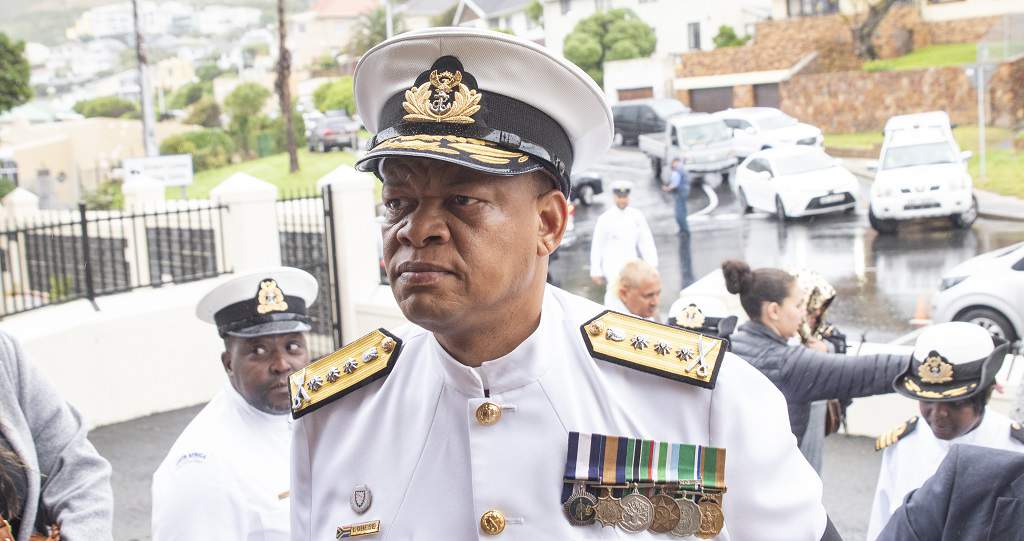
This follows comments by the Chief of the South African Navy, Admiral Monde Lobese, who accused the National Treasury of sabotaging the SANDF through chronic underfunding.

Lobese warned that this was placing national security and maritime sovereignty at risk in the face of what he called “forces of doom”.

“The National Treasury is responsible for the planning process that results in a Cabinet decision reflecting trade-offs between various policy priorities. Final approval is by Parliament, and the National Treasury is then entrusted to ensure the implementation of Parliament’s decisions,” the department said in a statement on Sunday.

Treasury highlighted that the proposed R57.2 billion allocation to the department for the 2025/26 financial year was made in line with the country’s broader fiscal strategy aimed at stabilising public finances, reducing debt-servicing costs and creating fiscal space to support infrastructure and frontline services.

Within this constrained environment, the SANDF received an additional R4.3 billion over the medium term to support critical priorities, including the withdrawal of troops and equipment from the DRC.

The Treasury noted that R5.5 billion has been earmarked over the next two years for early retirement packages—much of which is expected to help the SANDF restructure its unsustainable personnel costs.

Addressing the Joint Standing Committee on Defence on Friday, Lobese delivered a stark assessment of the South African Navy’s operational readiness; attributing the Navy’s persistent difficulties, including an inability to deploy naval platoons and a five-year-long failure to operationalise the SAS Drakensberg, to budgetary constraints imposed by National Treasury.

“The National Treasury cannot be allowed to be a super department or a government on its own. We are mindful of the challenges that the country is facing, but funding the SANDF to 1.7% of GDP is not negotiable. It is an order from the Commander-in-Chief,” Lobese said.

Lobese insisted the impact of underfunding was crippling daily naval operations.

“Our platoons cannot go to sea. We do not have the spares required for maintenance. The SAS Drakensberg has been non-operational for five years—not due to lack of will from myself or my predecessors, but because of the noose that National Treasury has placed around the Navy’s neck.”

He also issued a stark warning, linking global security trends to South Africa’s own vulnerabilities.

Parliamentarians across the political spectrum expressed concern, and many supported Lobese’s call for intervention from higher executive authority.

Economic Freedom Fighters’ Carl Niehaus referenced the president’s prior commitment to allocate at least 1.5% of GDP to defence, lamenting that “in this austerity budget… we actually got a real cut.”

African National Congress MP Mzimasi Hala added that the treasury does not take the department seriously, suggesting to escalate this to the office of the president.

Democratic Alliance MP Chris Hattingh backed the proposal, stating that the Commander-in-Chief’s presence was needed in the committee to get to the bottom of this defence funding directive.

Despite the robust defence of its budgeting approach, National Treasury acknowledged the concerns raised and confirmed that engagements with the Defence Committee will continue.

For now, the committee has resolved to formally meet with National Treasury to further unpack the funding challenges faced by the SANDF and explore possible solutions.

INSIDE POLITICS

More articles

LEAVE A REPLY

Please enter your comment!
Please enter your name here

Inside Metros G20 COJ Edition

JOZI MY JOZI

QCTO

Inside Education Quarterly Print Edition

Latest article



