By Simon Nare
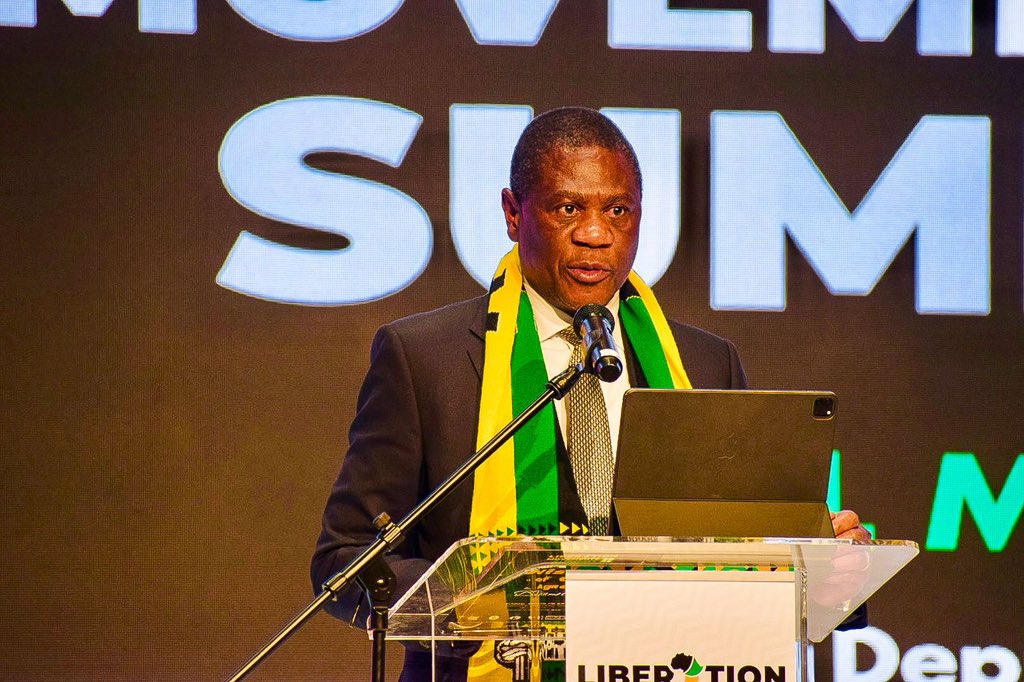
ANC Deputy President Paul Mashatile has issued a stinging rebuke to Africa’s liberation movements, urging them to confront the uncomfortable question: “Are we still vehicles of justice—or have we become platforms for status and convenience?”
Delivering a keynote address titled Reflections of the Present at the ANC Liberation Movement Summit in Johannesburg, Mashatile challenged former liberation parties, including Mozambique’s Frelimo and Zimbabwe’s Zanu-PF, to take a hard look at their legacies, and whether they still serve the people who entrusted them with freedom.
The four-day summit, which ends on Monday, brings together key liberation movements including SWAPO of Namibia, FRELIMO of Mozambique, Chama Cha Mapinduzi (CCM) of Tanzania, and ZANU-PF of Zimbabwe.
Delegates will engage in robust discussions on a range of pressing issues, from regional integration and economic transformation to the impact of shifting global power dynamics.
“We did not fight to liberate our people only to create space for the enrichment of elites,” he said, warning that the rise of factionalism and internal power struggles threatens to erode the moral authority these movements once held.
Mashatile called on the parties to reflect not only on how they led in the past, but how they are leading now—and what kind of future they are shaping for the next generation.
“It is not enough to wear the badge of liberation,” he said. “We must ask: Are we still advancing justice, or merely clinging to power?”
“We must ask ourselves: are our movements still vehicles of justice, or have they become platforms for status and convenience?
“This gathering therefore stands at a cross roads, consequently, it must serve not only as a remembrance but also as a recommitment. A commitment to address remaining challenges and focus on sustainable development,” he said.
Mashatile called for the renewal of liberation movement ideological clarity and the reclaimant of the narrative of transformation and commitment to international solidarity not as a memory of the past but as a living force for change in the present and future.
He said that effort would require the liberation movements to double down on the current approach to international relations within the Southern African region.
He added the approach should be informed by historical experience and relationships with the Frontline States that were forged during the protracted years of struggle for liberation against racism, colonialism and apartheid.
“As we reflect on the present, we must also remember our treacherous journey towards liberation. That journey was marked by sacrifices, resilience, and unwavering determination to secure freedom, equality, and justice for our people.
“We must also recall that our struggles were not simply for political independence, but for the total liberation of our people: economic, cultural, intellectual, and social. It was Thomas Sankara who reminded us that “He who feeds you, controls you,” he said.
He called on the liberation movements to continue to lit torches of freedom in Angola, Namibia, Zimbabwe, Mozambique, South Africa, Tanzania and far beyond.
Mashatile reminisced on the liberation efforts that he said to dismantled apartheid, racism, colonialism and hate. He said the time had come for liberation movements to ensure that the hard fought democratic dividents became a lived reality for the masses.
He warned that liberation movements could not become custodians of yesterday’s glory while today’s youth are unemployed, disillusioned, or migrating.
Mashatile urged that liberation movements should become engines of transformation, homes of ideology, and centres of accountability.
“Our unity as liberation movements is not symbolic; it is strategic. The enemies of our people are reorganising. Imperialism has rebranded, but it is no less exploitative.
“Multinationals control our mines, our data, our narratives, and even our elections. Debt has replaced the chains of slavery. AI and technology, if left unregulated, will create a new digital divide deeper than apartheid ever was,” he said.
The deputy president said the liberation movements serve not only as a remembrance but also as a recommitment and address remaining challenges and focus on sustainable development.
Mashatile told the gathering that there was a growing tendency of unilateralism where right-wing populist-led tendencies undermined global collective decisions and warned that if left unfettered, this would undermine global peace and security.
“Comrades, we therefore have the obligation to recalibrate the global balance of forces in the favour of progressive forces. With the renewed scramble for Africa by both traditional and emerging powers, the challenge has become more nuanced.
“These nuances have taken political, economic and military dimensions. Thus, in navigating this new global realities we must continue to be guided by the principles that have guided our movements,” he said.
INSIDE POLITICS