
By Johnathan Paoli
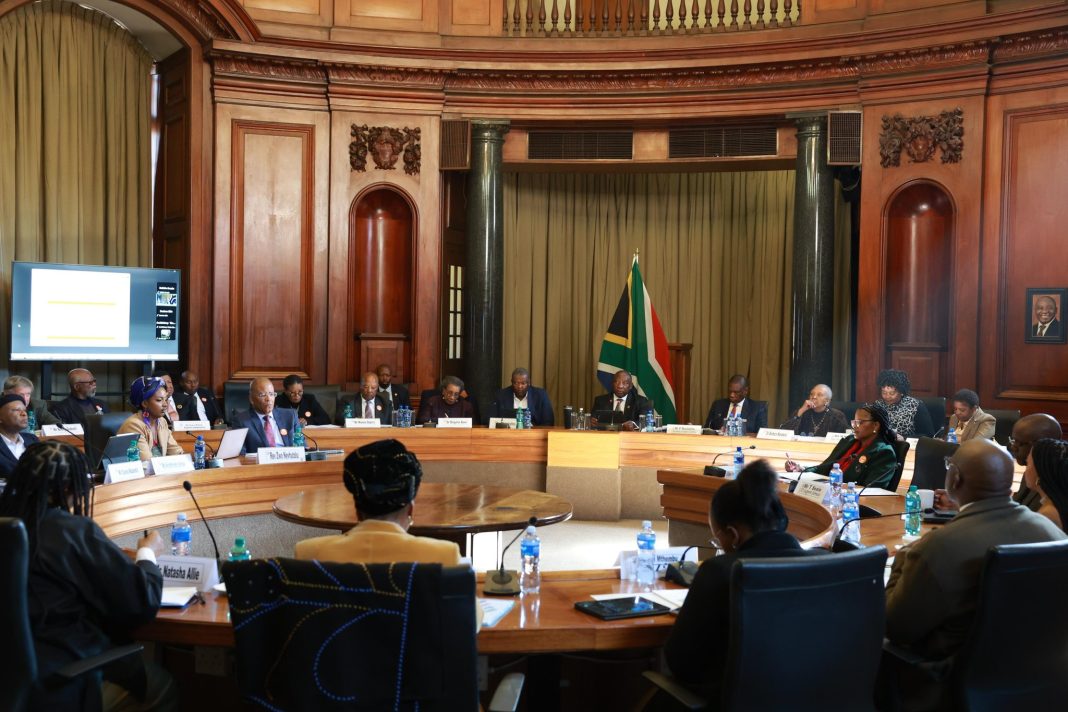
Just a week before the scheduled start of much-anticipated national convention of the National Dialogue, several of the country’s most influential legacy foundations have announced their withdrawal from the event’s Preparatory Task Team (PTT).
They cite “violated principles”, inadequate preparation and an unacceptable shift from a citizen-led to a government-controlled process.
The Steve Biko Foundation, Thabo Mbeki Foundation, Chief Albert Luthuli Foundation, Desmond and Leah Tutu Legacy Foundation, FW de Klerk Foundation, Oliver and Adelaide Tambo Foundation and the Strategic Dialogue Group issued a joint statement confirming their collective decision to step back from both the PTT and the 15 August convention.
“The National Dialogue is a generational opportunity to reconnect the people of South Africa to each other and to the democratic project. But we cannot pursue that goal by cutting corners, centralising power or rushing the process.
“We, therefore, withdraw from the Preparatory Task Team and current convention plans as they currently stand in order to protect the long-term credibility and integrity of the dialogue,” the statement read.
The withdrawal deals a significant blow to President Cyril Ramaphosa’s flagship nation-building initiative, which was intended to foster a broad-based, non-partisan conversation on South Africa’s political, social and economic future.
It was envisaged as a citizen-driven process to address systemic crises and reconnect South Africans to democratic values.
At the heart of the foundations’ concerns is what they describe as the “erosion of citizen leadership” in favour of government control.
“What began as a citizen-led initiative has unfortunately, in practice, shifted towards government control. In pushing forward for a convention on 15 August at the will of government officials and against the advice of the Sub-Committee Chairs, we believe that a critical moment in which citizens should be leading will be undermined,” the statement said.
They stressed that the dialogue could not be seen as a government consultation exercise, warning that credibility and public trust would be compromised if it was not “qualitatively different from any previous attempts at social compacting”.
The group expressed alarm at what they viewed as an unrealistic and politically driven fixation on the 15 August date.
“The rushed timeline, constrained logistics and limited interactive design mean that the proposed Convention no longer offers a meaningful platform for engagement. The structure risks becoming symbolic rather than substantive – more performance than participation,” the statement warned.
They further argued that the convention was meant to be a launchpad for the “real heart” of the dialogue, 13,664 community and sectoral dialogues, 50,000 citizen-led engagements, and mass media outreach, none of which have yet been adequately planned or funded.
The withdrawal statement revealed that the process suffered from serious resource shortfalls, with no confirmed and approved budget until a last-minute allocation of initial funds.
This, the group claimed, has forced organisers into “emergency procurement” practices that may risk violating the Public Finance Management Act.
“The lack of resourcing has affected the logistical readiness for the convention, but even more so the possibility of it being a substantive and meaningful engagement. Without programmatic, operations, communications and other critical capacity, the event will not be a credible launchpad for a truly transformative process for South Africans,” they noted.
Beyond budget and logistics, the foundations point to deep internal divisions within the PTT over the nature, governance and direction of the dialogue.
“Without shared clarity and alignment at the core of the process, moving ahead would be destabilising to the national effort. Unfortunately, this strategic misalignment revolves around the move away from a citizen-led National Dialogue to a government-led process,” they stated.
While pulling out of the current convention plans, the organisations stressed they remain fully committed to the broader vision of a National Dialogue.
They have proposed that the event be rescheduled to after 15 October to allow for “adequate preparation, coherence, and participatory integrity”.
The withdrawing foundations indicated they will hold a press conference in the coming days to elaborate on their concerns and outline the conditions under which they would re-engage with the dialogue.
Meanwhile opposition party ActionSA says it is reconsidering its participation in the National Dialogue amid growing concerns over government interference and a rushed process.
Parliamentary leader Athol Trollip warned the party would not lend credibility to what could become a “window-dressing exercise,” echoing legacy foundations’ criticism that the event risks being government-led rather than citizen-driven.
The African National Congress (ANC) called on the foundations to consider a constructive resolution in addressing their concerns instead of withdrawal from the PTT.
“We urge the Legacy Foundations, who embody the values and sacrifices of South Africa’s democratic journey, to reconsider their withdrawal. Their insights, leadership and institutional memory are invaluable to the success of this process,” ANC spokesperson Mahlengi Bhengu said.
She said issues of transparency, coordination, financial oversight and ensuring a truly citizen-led process must be resolved to safeguard the initiative’s credibility.
Reaffirming the party’s commitment to inclusive participation rooted in constitutional and liberation values, Bhengu stressed the dialogue’s role in building trust, healing divisions, and fostering national unity.
The ANC pledged support for improving governance, transparency, and accountability, urging all stakeholders to act with urgency and humility to restore public trust.
INSIDE POLITICS



