
24.1 C
Johannesburg
- Advertisement -

SA sweetens US trade deal while exploring new markets 

- Advertisement -

Must read

By Thebe Mabanga

South Africa has sought to sweeten the terms of its trade deal with the United States while continuing to look for alternative markets for some of its exports.

This follows the imposition of 30% tariffs by the US, which came into effect at the end of last week.

At the same time, the country must also take steps to prevent a flood of imports and dumping by countries facing similar or even harsher tariffs and now seeking new markets for their goods.

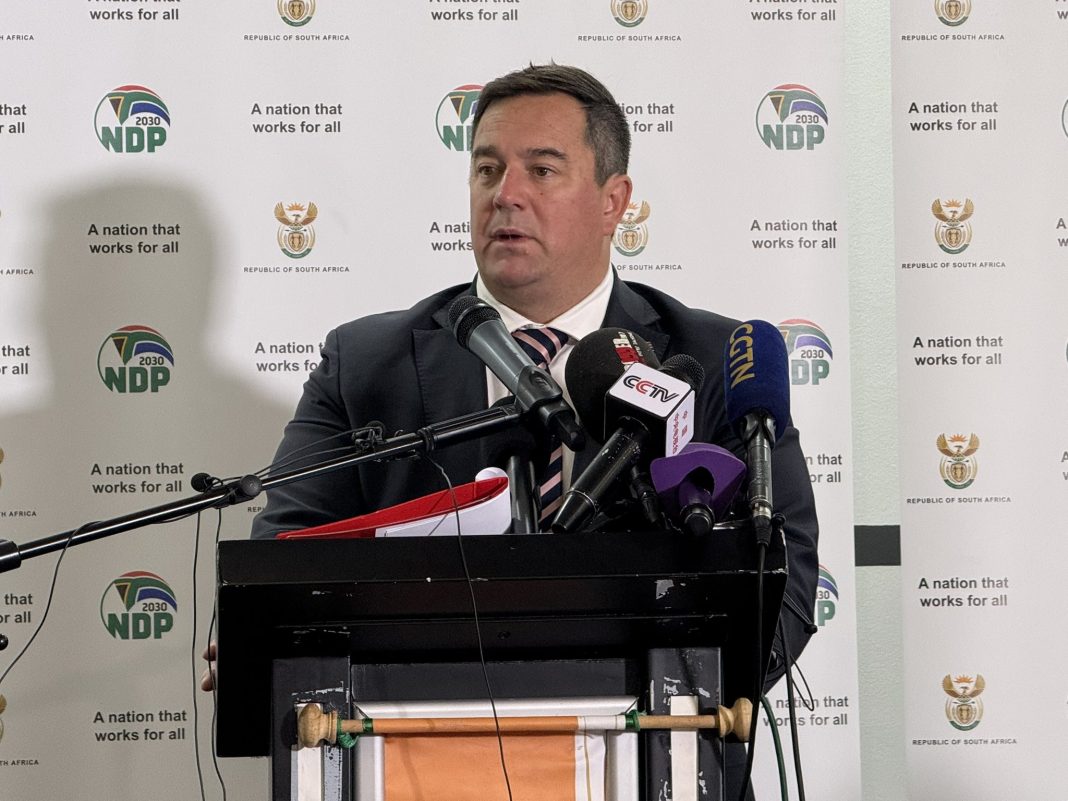
This was revealed by Trade, Industry and Competition Minister Parks Tau and Agriculture Minister John Steenhuisen during a joint briefing in Pretoria on measures to mitigate the impact of the tariffs, with a particular focus on agriculture.

“Cabinet has approved that South Africa submits a revised offer as a basis for negotiations with the US. The new offer builds on the previous offer submitted in May 2025. The new offer substantively responds to the issues the US has raised in the 2025 National Trade Estimates Report,” the two ministers said in a joint statement.

The previous trade proposal, submitted in May, was dismissed by the US as unambitious.

In contrast, the latest offer was described by Steenhuisen as “broad, generous, open and ambitious.”

Specific details could not be disclosed due to non-disclosure agreements in place.

The US market accounts for about 4% of South Africa’s total agriculture exports, or R9.8 billion ($537m) of our total agricultural exports last year, an increase of 104% from 2018.

South Africa says it has addressed US health and safety concerns regarding the import of poultry, blueberries, and pork.

Under the arrangement, the US will be able to export up to 72 000 tons of poultry, in line with the terms agreed in 2016, with a built-in mechanism to self-monitor for issues such as bird flu and impose an immediate ban if detected.

The US will also be allowed to export blueberries from states free of fruit flies, with mitigation measures in place for those where the pest is present.

Pork imports, meanwhile, will be subject to strict biosecurity protocols.

“Consequently, the USA-Africa Trade Desk has informed us that it will be shipping containers of poultry and pork to South Africa in two weeks’ time, which is testimony that these issues have been resolved,” the ministers announced.

“The shipments will come from the states of Georgia,  Mississippi, South Carolina, North Carolina and Alabama through the Ports of New Orleans in Louisiana, Savanna in Georgia, and Norfolk in Virginia.”

As is always the case in trade negotiations, one party will always seek to sneak in other issues.

“Another significant request from the US, was that South Africa consider reducing tariffs as a way to address the deficit and tariff disparity with the European Union due to the SADC-EU Economic Partnership Agreement,” the ministers noted.

Tau confirmed that the was due to be a South African Customs Union (SACU) on Tuesday to consider the issue. The EU may enjoy preferential status due to its volume of trade and the intermediate goods like catalytic converters it exports from South Africa.

The bloc may thus be unhappy to see the tariff advantage over the US eroded.

The ministers confirmed that 77 exporters have approached the Export Support Desk, with 23 receiving direct assistance.

They also announced plans to establish a Localisation Support Fund, though Tau could not clarify how it would be financed.

Previously announced measures include the creation of an Export Competitiveness Support Fund, support from entities such as the Unemployment Insurance Fund (UIF), and a block exemption from the Competition Act to allow exporters to cooperate.

The proposed details of the latter will be published on Friday.

Export diversification is another critical pillar of the government response.

“The diversification is a strategic imperative to ensure better resilience of our economy to economic shocks. This is not a plan B; it is a plan A for long-term resilience and competitiveness,” the ministers said.

“We are looking at Asia, including Japan, Vietnam and Thailand, the Middle East and India. We are pursuing these markets because we see growing demand, existing negotiations, and a positive reception to South African products.”

Tau confirmed that direct negotiations are also underway with several Gulf states.

“This is not just about trade numbers; it is directly linked to job protection. Diversification is about protecting rural livelihoods and ensuring sustainable agricultural growth for our people,” he said.

South Africa will also seek to leverage its relatively favourable position in US trade.

“ South Africa is the 43rd export destination for the United States and accounts for 0.25% of total US imports and is therefore not a threat to US production.” But that may not be enough. The US will be concerned that if they give concession to SA, they will have to do so to others.

South Africa says it expects an import surge and dumping as other countries look for alternative outlets for their goods that were destined for the US.

Dumping is the act of selling goods in a foreign market at a lower price than it costs to produce in their home country. This undercuts the goods in a foreign market.

Government says there is already excess capacity for items such as steel, glass, subsidised agricultural goods, solar panels and automotives in world markets.

To guard against import surge and dumping, South Africa would need heightened vigilance and borders and at customs as well as, ironically, to impose tariffs and import duties.

The DTIC says it also encourage local companies to buy local and assist those with export potential to search for new markets.

INSIDE POLITICS

More articles

LEAVE A REPLY

Please enter your comment!
Please enter your name here

Inside Metros G20 COJ Edition

JOZI MY JOZI

QCTO

Inside Education Quarterly Print Edition

Latest article



