
14.2 C
Johannesburg
- Advertisement -

Labour rebukes KZN police boss over remarks on wages

- Advertisement -

Must read

By Johnathan Paoli

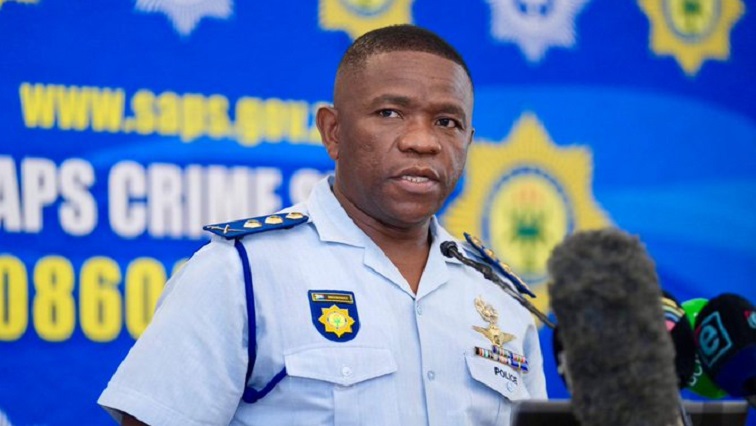
The Congress of SA Trade Unions (Cosatu) in KwaZulu-Natal has expressed deep disappointment with recent comments made by KwaZulu-Natal police commissioner, Lieutenant General Nhlanhla Mkhwanazi, where he appeared to blame unions and wage demands for declining government workforce numbers.

Cosatu provincial secretary Edwin Mkhize acknowledged the commissioner’s leadership in combating violent crime, but rejected his assertion during a stakeholder engagement on crime in Durban, that public sector staff shortages were the result of worker demands for better pay.

“While we commend Lt. Gen. Mkhwanazi and all SAPS members for their tireless work in extremely difficult conditions, his remarks are misplaced, out of context and risk creating unnecessary tension between the labour movement and law enforcement leadership,” he said on Wednesday.

The commissioner reportedly said: “The population of KZN is growing, but the number of police officers is going down thanks to the unions… the labour people who say, ‘We want salaries for our members’. So the more [the] government increases salaries, the less [people] they employ and the more [unemployment there is].”

According to Cosatu, the real drivers of staff shortages in SAPS and across the public sector lie in austerity budgets imposed by the government and were influenced by credit rating agencies and global capitalist pressures.

This had forced the state to reduce hiring despite South Africa’s growing population and escalating service delivery demands.

Mkhize criticised the government’s “bloated” ministerial structures, highlighting that ministers and deputy ministers continued to enjoy lucrative benefits while frontline workers, including police officers, teachers and nurses, remained underpaid and overburdened.

The federation further argued that attempts to scapegoat workers echoed past debates around the National Minimum Wage, where business and political opponents warned that raising wages would threaten jobs.

“Workers cannot be expected to carry the economy on empty stomachs while the elite benefit disproportionately from their labour,” Mkhize said.

Cosatu stressed that wage negotiations should be confined to bargaining councils rather than aired through public commentary that risked “misleading society and creating hostility towards workers.”.

It cautioned that unresolved perceptions like those expressed by the commissioner could prove dangerous, given the sensitive role police played in monitoring protests, pickets and community demonstrations often organised by unions.

Instead, Cosatu called for a “holistic approach” to tackling policing and public service challenges, including reversing austerity measures, reducing waste and prioritising investment in frontline services.

The SA Federation of Trade Unions (Saftu) also weighed in, echoing Cosatu’s concerns but sharpening its critique of the government’s fiscal policies.

Saftu general secretary Zwelinzima Vavi dismissed Mkhwanazi’s claims as “distorting public understanding” of the real crisis hollowing out SAPS: sustained budget cuts.

“This perspective risks distorting public understanding of a far more serious issue: decades of neoliberal austerity and budget cuts that have hollowed out the police service, a crisis that deepens insecurity for all South Africans,” he said.

Citing Treasury data, Saftu noted that the policing budget had been reduced from R125 billion in 2024 to R113.6 billion in 2025, a 9% real-terms decline in just one year.

This came despite an overall 0.8% rise in non-interest spending, confirming what the federation described as “structural austerity”.

It warned that the consequences were stark. South Africa’s police-to-population ratio now stood at roughly one officer per 423 people, far below the United Nations’ recommended 1:220 standard.

With violent crime averaging 75 murders and 400 aggravated robberies daily, the country has seen a surge in private security, which now employs over 2.7 million registered guards. This is more than the police and military combined.

Cosatu and Saftu urged Mkhwanazi to direct his critique toward the “real adversary”, which was systemic underfunding of the police service and public sector.

Both federations demanded urgent steps to restore the policing budget, fill all funded vacancies, provide fair wages that reflected the risks of policing, and invest in training and resources to strengthen community trust.

INSIDE POLITICS

More articles

LEAVE A REPLY

Please enter your comment!
Please enter your name here

Inside Metros G20 COJ Edition

JOZI MY JOZI

QCTO

Inside Education Quarterly Print Edition

Latest article



