21.3 C
Johannesburg
- Advertisement -

ANC considers new approach to picking leaders

- Advertisement -

Must read

By Simon Nare

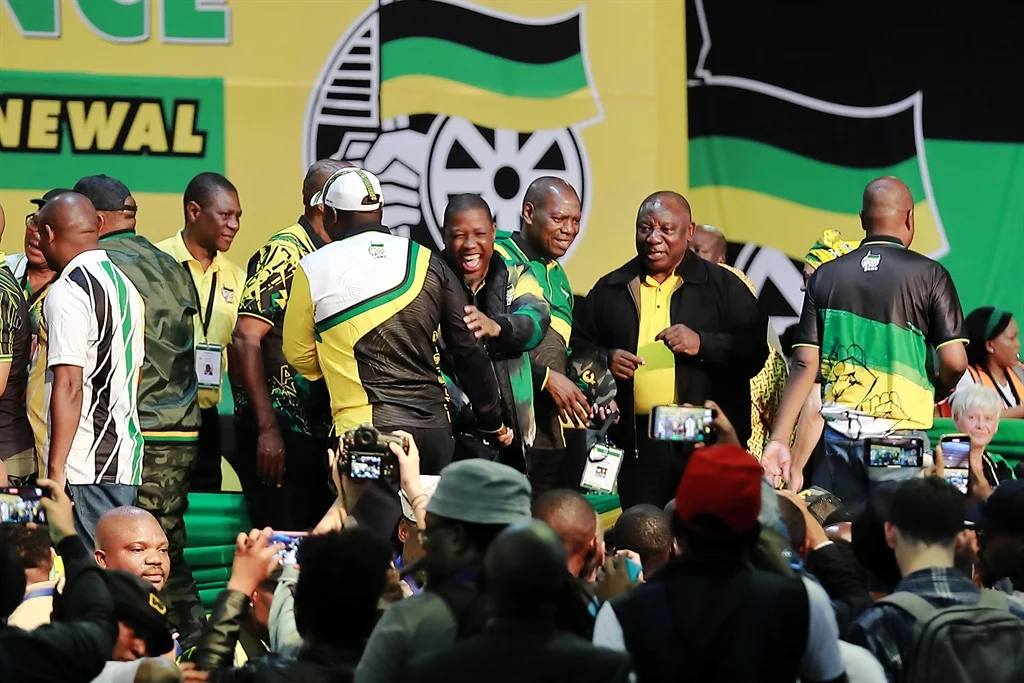
The ANC will consider changes to its leadership appointment processes as part of a broader push for party renewal when it convenes the National General Council (NGC) in December at the Nasrec Expo Centre in Johannesburg.

Over the weekend, senior party leaders engaged with regions and branches across the country to discuss the NGC document.

The discussion document, seen by Inside Politics and titled “ANC Renewal to Advance the Freedom Charter: Forward to a National Democratic Society Based on Social Justice, Shared Prosperity & Human Solidarity”, acknowledges that public confidence in the ANC has declined, as reflected in recent elections where the party suffered a historic drop in support and failed to secure a majority vote.

The document state that societal renewal cannot occur without national rejuvenation, improving the quality of leadership, and pursuing people-centred development that addresses inequality and restores dignity.

“Organisational renewal demands rebuilding the ANC’s discipline, integrity, capacity, and effectiveness as a movement that leads society. Ideological renewal calls for reaffirming the values of the National Democratic Revolution (NDR), deepening political education, and decisively countering corruption, careerism, and factionalism,” the document reads.

It does not outline specific changes to how the party will select its leaders or whether it will abandon traditional methods of leadership elections. However, it emphasises that renewal should not be treated as a slogan but as a strategic imperative crucial to the survival of the revolution.

The party acknowledges that since the dawn of the new dispensation, it has relied on the working class, rural poor, middle strata, women, and youth to maintain power.

Yet, these forces are fragmented and diverse.

Divisions between urban and rural communities, employed and unemployed workers, and the working poor and emerging middle class have weakened unity in the struggle for change.

“Many young people are apathetic about formal electoral politics and do not see the ANC as fighting to improve their lives or representing them in government. The key strategic question is: who are the motive forces today, what unites them, and how can a common programme be rebuilt that speaks to their needs and consciousness?” the document asks.

The ANC also acknowledges that the National Democratic Revolution aims to address apartheid-era inequalities rooted in racial oppression, class exploitation, and gender injustice by building a new society.

“The goal is to create a National Democratic Society with an ethical and capable developmental state that delivers better services, improves the quality of life for all, and drives an inclusive economy that creates decent jobs. This society must be built on a shared national identity, non-racialism, and non-sexism, ensuring that the injustices of the past are not reproduced in new forms. The true test of progress is whether the daily lives of the majority of citizens are improving in ways that are visible, measurable, and sustainable,” it states.

The document stresses that the NDR remains the most direct route to tackling the triple challenges of poverty, inequality, and unemployment.

It describes the revolution as a necessary foundation for advancing toward higher stages of social and economic transformation.

However, it admits that the NDR cannot progress without a deep process of renewal in society, within the organisation, and in ideology and values.

“Organisational renewal demands rebuilding the ANC’s discipline, integrity, capacity, and effectiveness as a movement that leads society. The renewal process must confront entrenched corruption, complacency, and factionalism that have weakened the ANC. It must also cultivate a new culture of accountability, service, and principled leadership at all levels of the movement,” the document states.

INSIDE POLITICS

More articles

LEAVE A REPLY

Please enter your comment!
Please enter your name here

Inside Metros G20 COJ Edition

JOZI MY JOZI

QCTO

Inside Education Quarterly Print Edition

Latest article