
22.6 C
Johannesburg
- Advertisement -

Court reserves ruling in Sibiya suspension showdown

- Advertisement -

Must read

By Johnathan Paoli

The Pretoria High Court has reserved judgment in the urgent application brought by suspended Deputy National Police Commissioner for Crime Detection, Lieutenant-General Shadrack Sibiya, who is seeking reinstatement after being placed on leave of absence by National Police Commissioner Fannie Masemola.

Sibiya, suspended in July following explosive allegations by KwaZulu-Natal Police Commissioner Nhlanhla Mkhwanazi, argued that Masemola’s directive was “unlawful and unconstitutional,” claiming he had no authority to remove him without following the South African Police Service’s (SAPS) disciplinary procedures.

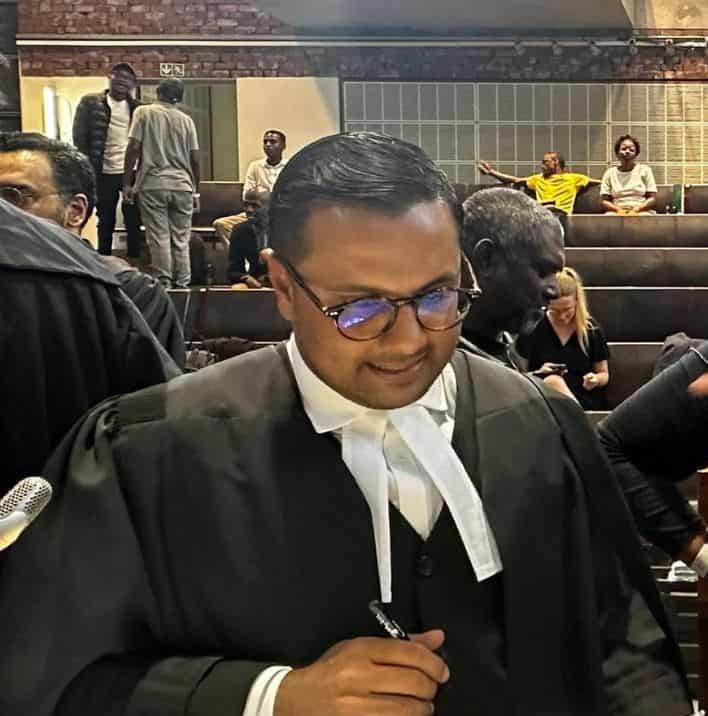
Representing Sibiya, counsel Kameel Premhid told the court on Wednesday that Masemola’s decision amounted to an unfair labour practice.

“The high-water mark of why the stay-at-home order is unlawful is because it did not comply with the mandatory disciplinary regulations that apply to such a decision. There is no ‘stay-at-home power’ in the regulations. Sibiya has a right to just administrative action and if there is no authority ipso facto, that’s unjust administrative action,” Premhid argued.

He added that while the national commissioner has disciplinary powers, those powers do not extend to removing an official from duty without due process.

The application sought not only to reinstate Sibiya but also to interdict Masemola from instituting or advancing any disciplinary action against him until due processes are followed.

Central to Sibiya’s case was the newly established Judicial Commission of Inquiry into Criminality, Political Interference and Corruption in the Criminal Justice System, chaired by former Constitutional Court Justice Mbuyiseli Madlanga.

Premhid argued that the Madlanga Commission, not Masemola, was the correct forum to determine whether disciplinary action should be taken against his client.

“Given that there are questions about General Masemola’s independence, his conflict of interest, his mala fides, and so on, there is no principal reason why a parallel disciplinary process should be allowed to proceed,” he told the court.

He further submitted that Masemola was too “heavily intertwined” in the matter to act impartially.

“A conflicted party can’t sit as the judge in their own cause,” Premhid said.

The Madlanga Commission, established by President Cyril Ramaphosa earlier this year, was mandated to probe allegations of corruption and political interference within SAPS, including Mkhwanazi’s claims of “police capture”.

Although the commission was due to begin hearings on 1 September, delays in the procurement of infrastructure by the Department of Justice have stalled its work, creating uncertainty for Sibiya’s case.

The 121 criminal dockets handled by the disbanded KwaZulu-Natal Political Killings Task Team have become a flashpoint in the legal battle.

Mkhwanazi has accused Sibiya of unlawfully dismantling the task team and locking away the files at SAPS headquarters in Pretoria.

He branded Sibiya a “criminal” and claimed the dockets were deliberately shelved to shield politically connected figures.

The police have since clarified that the original dockets remain with the KZN task team, while copies have been made available to the Madlanga Commission to assist its inquiry.

Premhid stressed that the commission would not be doing “police work” but rather evaluating the conduct of officials.

“What they are going to be doing is looking at the conduct of the officials in carrying out orders, evaluating that conduct and deciding whether that’s worthy of disciplinary sanction or not,” he said.

He also insisted that Sibiya, being placed on forced leave, could not be held responsible for what happened to the dockets.

“To the extent that there is a question asked about what he should be doing, my response is I’m not sure that he can be saying anything, because he’s currently at home and outside the operational remit,” Premhid explained.

Adding to the pressure, Sibiya has also been summoned to appear before Parliament’s Ad Hoc Committee on 10 September.

The committee is investigating Mkhwanazi’s allegations of corruption and political interference within the police.

Speaking to journalists outside court, Sibiya said he would reserve his full account for the parliamentary hearing and the Madlanga Commission.

“As you can see, as you know, I will wait for my time to comment at the Ad Hoc [committee] and at the commission. I will be able to open up and say what needs to be said,” he said.

Despite the escalating battle, Sibiya maintained that his relationship with Masemola remained intact.

“The last time I met with my boss, we were on good terms. I still respect the national commissioner of the South African Police Service. I’m a disciplined member of the police and I will subject myself to his authority,” he told reporters.

The High Court reserved judgment on whether Masemola’s decision to place Sibiya on leave was lawful, leaving the embattled deputy commissioner’s future hanging in the balance as Parliament and the Madlanga Commission prepare to scrutinise the deepening crisis within SAPS.

INSIDE POLITICS

More articles

LEAVE A REPLY

Please enter your comment!
Please enter your name here

Inside Metros G20 COJ Edition

JOZI MY JOZI

QCTO

Inside Education Quarterly Print Edition

Latest article



