
21.3 C
Johannesburg
- Advertisement -

MPC holds rates steady while exploring new inflation target

- Advertisement -

Must read

By Thebe Mabanga

The South African Reserve Bank’s Monetary Policy Committee (MPC) voted 4–2 to keep interest rates unchanged, with the minority advocating a 25 basis-point cut losing out. The repo rate therefore remains at 7%, after a cumulative reduction of 125 basis points since September last year.

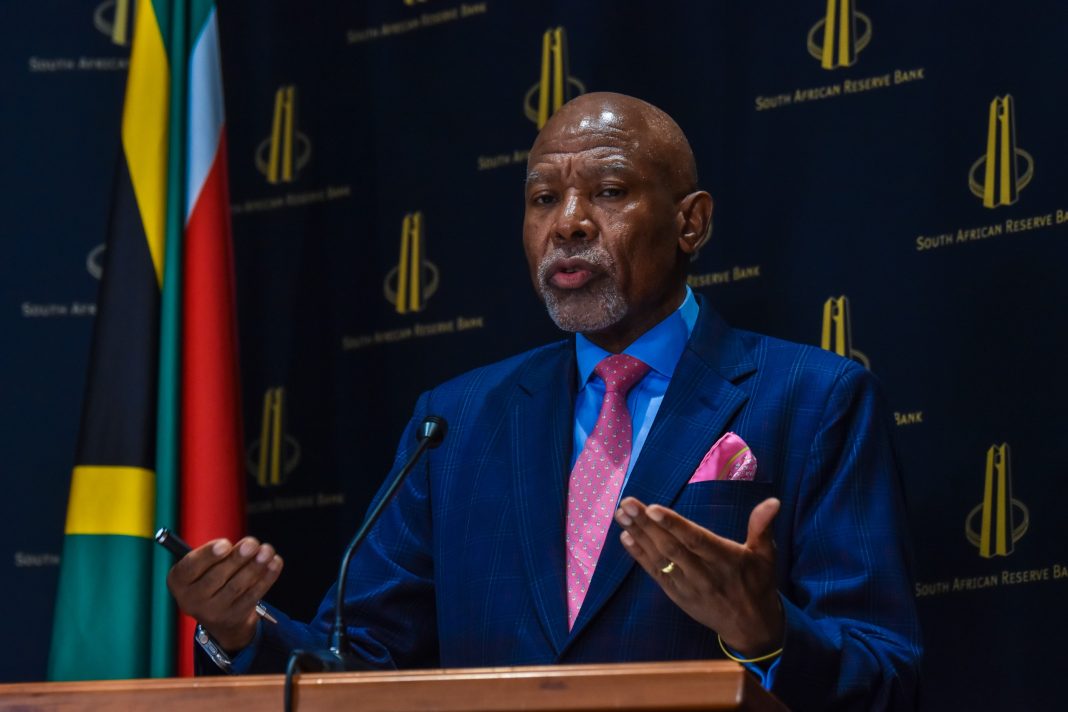
At the same time, Reserve Bank Governor Lesetja Kganyago showed deference to Finance Minister Enoch Godongwana, subtly acknowledging that while he might prefer the inflation target be lowered to the bottom of the 3–6% range, the ultimate decision rests with Godongwana.

Kganyago and the MPC held rates steady, even as they acknowledged that conditions could support a cut, with global growth remaining resilient despite disruptions to trade from U.S. tariff adjustments, and local growth having been revised upward.

“The global economy appears resilient so far. While the geopolitical environment remains difficult, and trade disruptions continue, growth is holding up and market volatility has subsided.” the MPC said in its statement. 

“Since our last meeting, policy rates have been cut in the United States and the United Kingdom, and the dollar has weakened. Various commodity prices have risen, although oil prices remain contained. These conditions are supportive for emerging markets like South Africa.” the committee said.

The committee cited several risks, noting: “Long-term interest rates have shifted higher in several major economies. This reflects a range of pressures, especially high and rising debt levels, as well as inflation risks.”

Locally, the MPC highlighted better-than-expected GDP numbers released last week, and the Bank has revised its GDP growth forecast for this year from 0.9% to 1.2%.

However, it stressed that fixed investment would be required to lift growth over the longer term.

“Although the strong GDP report was welcome, we do not want to overstate the importance of one good quarter,” the MPC said.

“We continue to see modest output gains over the next few years, helped by structural reforms.” The Bank described the risks to growth and inflation as “balanced.”

The Committee also noted risks to the inflation outlook, most notably electricity prices.

“We anticipate that headline inflation will rise over the next few months, peaking at around 4%. Our forecast now incorporates higher electricity price inflation, of nearly 8% rather than 6%,” the statement read, following recent adjustments by the National Energy Regulator of South Africa (NERSA).

The Reserve Bank stressed that the solution to higher prices is not to allow inflation to rise further but rather to improve efficiency.

Higher food and service prices are also expected.

The Bank now forecasts inflation to average 3.4% this year and 3.6% next year, before reverting to 3% in 2027.

The Bank emphasised its long-term preference for inflation to move toward 3%, rather than 4.5%, the mid-point of the target range.

The MPC noted: “In our economic modelling, inflation expectations play an important role in shaping the transition to our 3% preference.”

It acknowledged that expectations may adjust more slowly, meaning the market needs more time to respond.

Consequently, the Bank prefers to use interest rates as an incentive rather than a punitive measure to guide expectations downward.

Kganyago noted a scenario over the next three years where inflation moves more slowly toward 3%, accompanied by a tighter monetary policy stance, one less rate cut than currently forecast, and more moderate growth.

He also emphasised the need to finalise a new inflation target.

“In this regard, it is desirable to finalise target reform. Accordingly, and in line with the recent joint statement from the SARB and National Treasury, we look forward to agreeing on a new target as soon as practical, to better anchor inflation expectations,” he said, referencing the statement released in early September.

Deputy Finance Minister David Masondo underscored the status quo, telling an investor conference that “the existing 3%-6% target remains operational and that any decision to change it should not be taken lightly.”

Economist Raymond Parsons of North-West University Business School supported the minority view of the MPC advocating further rate cuts.

“Given the overall balance of risks now facing the SA economy, the minority MPC view was nonetheless right to prefer another 25 basis-point reduction in interest rates,” Parsons said.

He shared the Bank’s view of a benign global outlook, supported by a stronger rand.

Parsons also emphasised the urgency of finalising the revised inflation target.

“While there is widespread support for exploring a lower inflation target for SA, it is not yet entirely clear whether the necessary political support and ‘buy-in’ has been secured for the change,” he noted.

The MPC will sit again in the latter half of November.

INSIDE POLITICS

More articles

LEAVE A REPLY

Please enter your comment!
Please enter your name here

Inside Metros G20 COJ Edition

JOZI MY JOZI

QCTO

Inside Education Quarterly Print Edition

Latest article



