
14.2 C
Johannesburg
- Advertisement -

Day three of Madlanga Commission opens with Brown Mogotsi’s shadow over policing

- Advertisement -

Must read

By Johnathan Paoli

The third day of the Madlanga Commission on Friday opened with a dramatic examination of politically connected businessman Brown Mogotsi and his alleged influence over South Africa’s police leadership.

KZN Police Commissioner Nhlanhla Mkhwanazi, appearing before the Commission, told members that Mogotsi had “privileged access to confidential police information without holding a single official role in SAPS”.
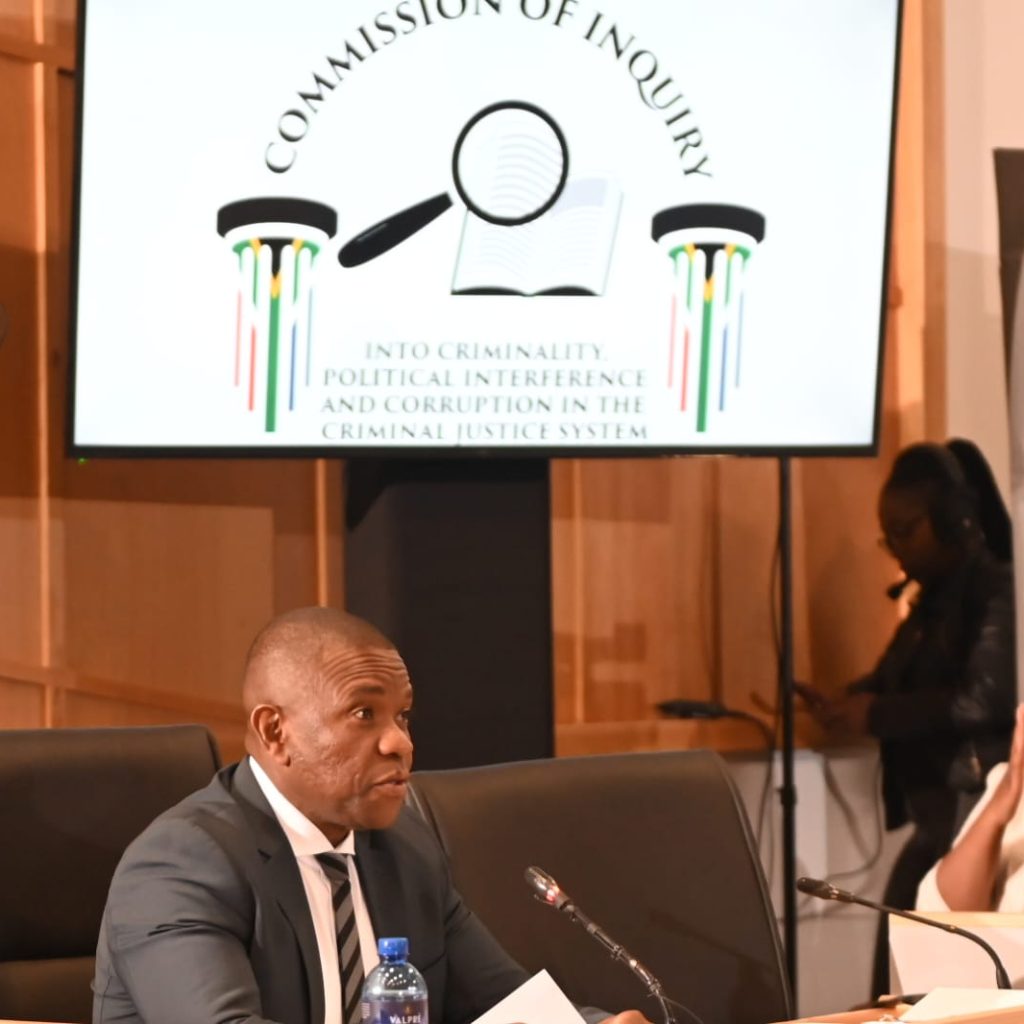
“Brown Mogotsi had no official authority, yet he was treated like an insider, receiving our classified intelligence, directing police actions, and influencing operational decisions. This wasn’t just interference; it was a direct attack on the independence and integrity of the South African Police Service,” Mkhwanazi said.

His testimony began with a WhatsApp exchange dated 30 September 2024, in which Mogotsi allegedly warned the general of an attempt to “defeat the ends of justice” in a policing matter.

Confirming the authenticity of the number, Mkhwanazi established that the businessman had direct access to highly sensitive information.

The exchanges revealed Mogotsi’s unusual role as an intermediary between political figures and operational policing matters.

In one instance, Mogotsi sent Mkhwanazi two documents – a police letter and a copy of the occurrence book (OB) – which contained identical content and were never meant to leave police channels.

Additional messages instructed Mkhwanazi to “please handle confidentially” and hinted at meetings with complainants, signaling attempts to monitor or manipulate police operations from outside the force.

Perhaps most concerning was a screenshot of a Crime Intelligence presentation Mogotsi sent to Mkhwanazi.

Covering policy priorities for 2024 to 2025, the presentation suggested that sensitive internal briefings were being leaked to private actors.

“Either Mogotsi was present in the meeting, or a senior officer bypassed normal channels to share this with him,” Mkhwanazi explained.

The implication, he said, was a systemic vulnerability in the handling of classified material, which could compromise national security.

Mkhwanazi also recounted interactions with former police minister Bheki Cele, who had issued instructions for police resources to be deployed under questionable circumstances.

The General said the directive appeared intended to protect Crime Intelligence officer General Feroz Khan from an internal disciplinary process, which Mkhwanazi was to preside over, revealing a worrying level of political interference in operational decision-making.

Following this, Mkhwanazi ceased communication with Cele, marking a clear rupture in professional trust between police leadership and political office. “I did not talk to him from that day, he disappointed me as someone who was a former minister,” Mkhwanazi said.

Khan was eventually absolved of any wrongdoing.

The Commission also probed media involvement in shaping public perception of these incidents.

Mkhwanazi said journalist Mzilikazi Wa Afrika initially refrained from publishing allegations of interference by Mkhwanazi into a senior prisons official, after reviewing the facts, but was later pressured by a colleague to run the story in a Sunday publication.

“It shows how selective reporting can distort operational realities and unfairly tarnish reputations,” he observed.

Such coverage, he suggested, amplified misinformation and strained public confidence in policing.

Throughout his testimony, Mkhwanazi painted Mogotsi as a well-connected intermediary with access to classified intelligence and links to both political leaders and criminal networks.

The General suggested that Mogotsi’s communications may have formed part of coordinated attempts to monitor or discredit him, potentially orchestrated by actors with vested interests in policing outcomes.

“This was not ordinary meddling; it was an external actor with a foot inside the house of police operations,” Mkhwanazi stressed.

Key takeaways from day three include Mogotsi’s privileged access to sensitive SAPS documents despite lacking official authority, clear attempts to undermine Mkhwanazi’s credibility, political interference in operational policing, selective media amplification of incidents, and evidence of systemic information leaks.

Mkhwanazi’s testimony continues.

INSIDE POLITICS

More articles

LEAVE A REPLY

Please enter your comment!
Please enter your name here

Inside Metros G20 COJ Edition

JOZI MY JOZI

QCTO

Inside Education Quarterly Print Edition

Latest article



