
By Akani Nkuna
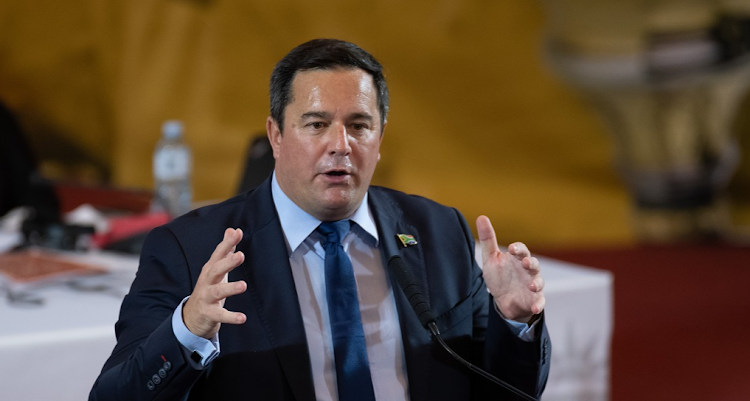
Minister of Agriculture John Steenhuisen has called for broader investment to climate-smart agriculture practices and a diversification of food sources to cut down on over-reliance of imports to ensure food security in the region.
“We need to invest in climate smart agriculture: drought-tolerant seed, efficient irrigation, and soil-water analytics that make farming more adaptive. We must invest in the diversification of food sources, including fisheries and aquatic foods, and strengthen local and regional value chains to reduce reliance on imports,” said Steenhuisen on Friday.
He was speaking during the last day of the three-day Ministerial Meeting of the G20 Food Security Task Force held in Somerset West. The meeting brought together ministers, deputy ministers and representatives from G20 member countries to discuss data-driven food security solutions and inclusive agricultural investments.
On Thursday, ministers convened under the Agriculture Working Group to harness and advance agriculture cooperation priorities and to adopt the Agriculture Working Group Ministerial Declaration through which interstate agricultural solutions can be brought about.
The last day marked the endorsement of outcomes adopted at the Food Security Task Force resulting from political commitment and shared principles which according to Steenhuisen “[Are] needed to strengthen food security and nutrition at the global level.”
“We must support smallholder and family farmers with inputs, extension services, and access to finance. We must tackle post-harvest losses through storage, cold chains, and logistics, and we must diversify cropping towards more nutrient-rich foods,” Steenhuisen urged.
“We must also embed social protection, from school feeding programmes to targeted transfers, as a core investment in stability and human development.”
The minister highlighted that South Africa together with its partners has sought to establish new export opportunities, a stronger resistance against market shocks and a greater inclusion of youth and women within the agriculture economy.
Whilst the G20 Presidency has placed combating hunger and affordability at the centre of its agenda, Steenhuisen said they have proposed five key joint initiatives to translate principles into investment and major economic boast, including a digital trade accelerator.
“A rural energy partnership for cold chains, and a skills and inclusion deal for youth and women. These are designed to ensure that what we agree on today is matched tomorrow by capital flows, jobs, and livelihoods,” he added.
He underscored South Africa’s influence in ensuring food stability on the continent.
“From this collective work, we have developed a suite of concrete proposals. The Ubuntu High-Level Principles set out shared actions and approaches to deal with excessive price volatility and persistent food inflation,” said Steenhuisen.
He said that South Africa has faced challenges within the agriculture sector as a result of weaknesses in adaptability, however reaffirmed that lack of food is not one of the challenges.
“South Africa ranks 59 on the Global Food Security Index, not because of a lack of food, but because of weaknesses in sustainability and adaptability. Across Africa, hunger remains widespread, with more than 300 million people affected in 2024,” he said.
INSIDE POLITICS



