
By Charmaine Ndlela
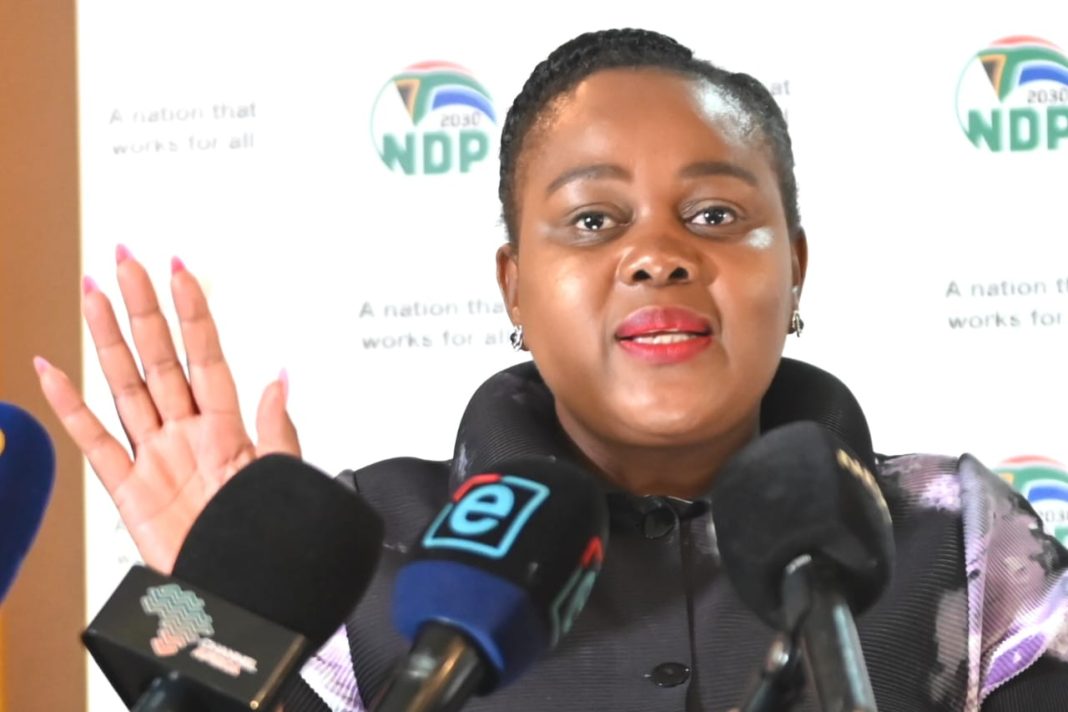
Justice Minister Mmamoloko Kubayi has urged South Africans to support the Madlanga Commission, saying accountability is vital to rooting out corruption in the justice system, as she led a Justice, Crime Prevention and Security (JCPS) Cluster media roundtable in Johannesburg.
The event, hosted by the Government Communication and Information System (GCIS) with the JCPS Cluster and Brand South Africa at the Nelson Mandela Foundation, was supported by Special Investigating Unit head Advocate Andy Mothibi, National Director of Public Prosecutions Advocate Shamila Batohi, and Brand SA CEO Neville Matjie.
The engagement aimed to highlight JCPS milestones and foster dialogue with the media.
Addressing the value of democratic accountability in enabling whistle-blowers and senior officials to be heard, the minister said: “If our democracy was not allowing for something like this, General Mkhwanazi couldn’t have stood up, if he didn’t know that the country and the systems have the ability to listen to him, not to target him,’’ she said.
KZN police chief Nhlanhla Mkhwanazi was the first witness to testify before the Madlanga Commission when it started this week. The commission was established following a press briefing by Mkhwanazi in July at which he claimed the justice system was captured by organised crime and politically-connected civilians, magistrates, and politicians.
Of the commission, Kubayi said: “Everyone should be held accountable,” adding she was hopeful it would “yield positive results in rooting out corruption in South Africa’s justice system”.
“If you are called upon to assist that commission, you have an obligation as a South African to assist that commission…” she said.
Kubayi said that government was strengthening law enforcement institutions and accelerating technology upgrades in police stations.
She said a key focus was the rollout of an integrated persons-management system at police stations to capture biometric data and link identities to cases.
“We visited a police station in Mthatha to see the rollout of the integrated person’s management system. We have about 1,000 police stations [nationwide]. We have been able to roll out [at] 88 police stations and we want to do this across the country,’’ Kubayi said.
She said the rollout was intended to ensure that everyone who comes to a police station has fingerprints taken, with a number issued to those without identification documents and linked to their prints.
The South African Police Service would work with Home Affairs to ensure the system is effective. Kubayi said the initiative would improve identification of criminals and repeat offenders.
She condemned attacks on police officers, saying they were a broader democratic risk that required a collective response.
“When I kill an ordinary police officer next to the police station, who do I expect to find tomorrow when I want to report a case? All of us, any day, can become victims of crime.”
The acting minister of police, Firoz Cachalia, announced last month that 27 police officers were killed in the last financial year. In the same period, SAPS trained 10 000 new recruits.
Kubayi urged active partnership between communities, stakeholders and the criminal justice system to bring perpetrators to book.
INSIDE POLITICS



