
By Johnathan Paoli
Police Minister Senzo Mchunu overstepped his constitutional powers when he ordered the disbandment of the KwaZulu-Natal Political Killings Task Team (PKTT).
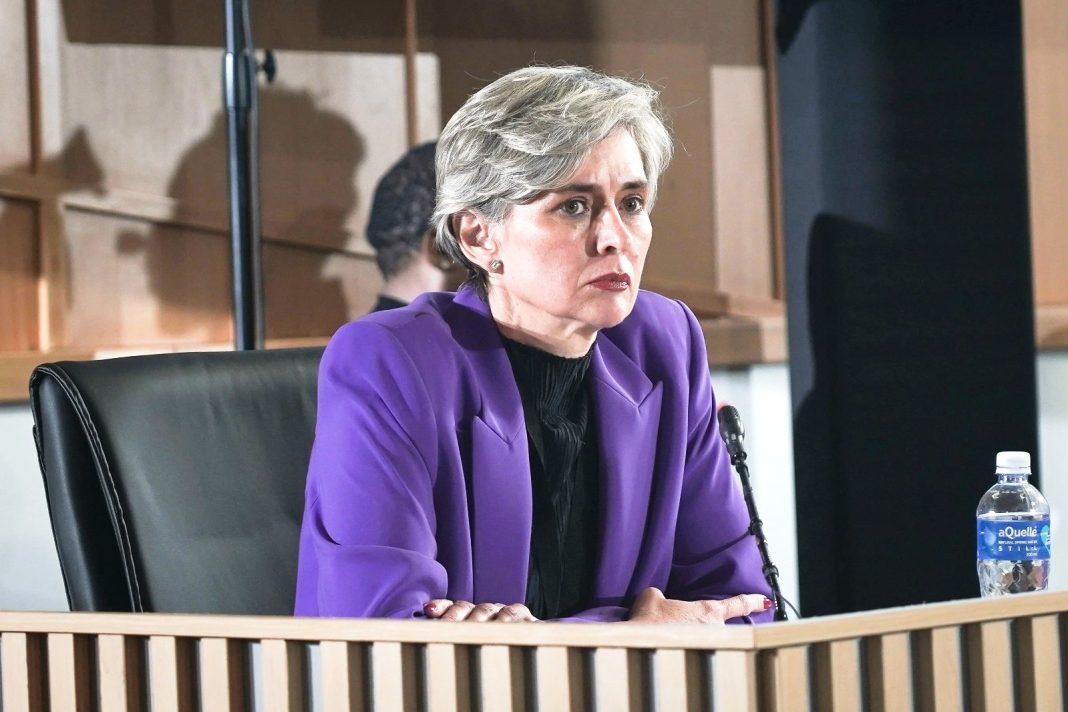
This was the evidence of Major-General Petronella van Rooyen, head of governance in the SAPS legal services division, testifying before the Madlanga Commission of Inquiry in Pretoria on Thursday.
“The minister’s role is to formulate policy, not to intervene in operational matters. Disbanding the PKTT was an operational issue, and therefore the instruction was unlawful,” she testified.
Van Rooyen cited Section 207 of the Constitution, which gives the national commissioner operational control of the police.
Her testimony echoed that of National Police Commissioner Fannie Masemola earlier in the week, who stressed that while the minister may set priorities and guide policy, he cannot interfere in operational decisions such as creating or disbanding investigative teams.
Masemola said Mchunu’s directive blurred constitutional boundaries, insisting that decisions about personnel, resources, and operations lie within his mandate as National Commissioner.
Chaired by retired Constitutional Court Justice Mbuyiseli Madlanga, the Commission is probing allegations of corruption, political interference, and maladministration in the criminal justice system.
The PKTT’s disbandment has been a key focus, with critics warning that dismantling the unit jeopardised investigations into political murders in KwaZulu-Natal, a province long scarred by factional violence.
Van Rooyen also raised red flags over the reassignment of 121 dockets from the PKTT to SAPS headquarters in Pretoria, arguing that proper procedures had not been followed.
She said deputy national commissioners lacked the authority to move dockets without involving provincial commissioners, and warned that such actions undermined command structures.
“Deputy national commissioners do not have the power to comply with illegal orders from the minister,” she said.
Her testimony placed the issue squarely within the framework of the National Policing Policy, approved by Cabinet in July.
That policy defines the minister’s responsibilities as focusing on effective policing, service delivery, community involvement, and ethical leadership.
Mchunu’s directive, she argued, did not fall into any of those categories.
The Constitution itself reinforces the separation of powers: Section 206 allows the minister to set national policing priorities, while Section 207 gives the national commissioner the authority to control and manage the service.
Conflating the two, Van Rooyen warned, sets a “dangerous precedent.”
“To manage and control the police service must be linked to its constitutional mandate. Operational independence is crucial to the integrity of the SAPS,” she said.
Van Rooyen further revealed that her division had launched a legal review into the minister’s letter, suggesting Mchunu may have breached constitutional boundaries—an issue the Commission is expected to clarify.
“In my view, he did not have the authority to order the closure of a task team investigating crimes. That falls within the operational mandate of the National Commissioner,” she said.
With nearly 42 years of SAPS service and a doctorate in criminal law, Van Rooyen described her portfolio as covering legislation, compliance, and policy vetting across the service.
She reports to the divisional commissioner for legal services, who reports directly to Masemola.
Van Rooyen’s testimony is set to continue on Friday.
INSIDE POLITICS



