
24.1 C
Johannesburg
- Advertisement -

‘Comrade’ culture to blame for SAPS politicisation – Mkhwanazi

- Advertisement -

Must read

By Johnathan Paoli

‘Comrade’ culture is to blame for the politicisation of the South African Police Service (SAPS), according to KwaZulu-Natal Police Commissioner Lieutenant-General Nhlanhla Mkhwanazi.

He was responding to questions from EFF leader Julius Malema during Tuesday’s Ad Hoc Committee hearings in Parliament, where MPs probed allegations of political interference and the erosion of discipline within SAPS.

Malema began by asking Mkhwanazi whether he was a deployed cadre.

“No, unfortunately,” the general replied bluntly, setting the tone for an exchange about how political loyalties have infiltrated the police.

Mkhwanazi told the committee that discipline within SAPS began to deteriorate when individuals “who didn’t grow up in the police” entered the organisation, undermining the chain of command.

“The leadership that arrived at Crime Intelligence were comrades,” he said.

He described a cultural shift in which constables began addressing senior officers as “comrade”, a practice that intensified after the ANC’s 2007 elective conference in Polokwane, Limpopo.

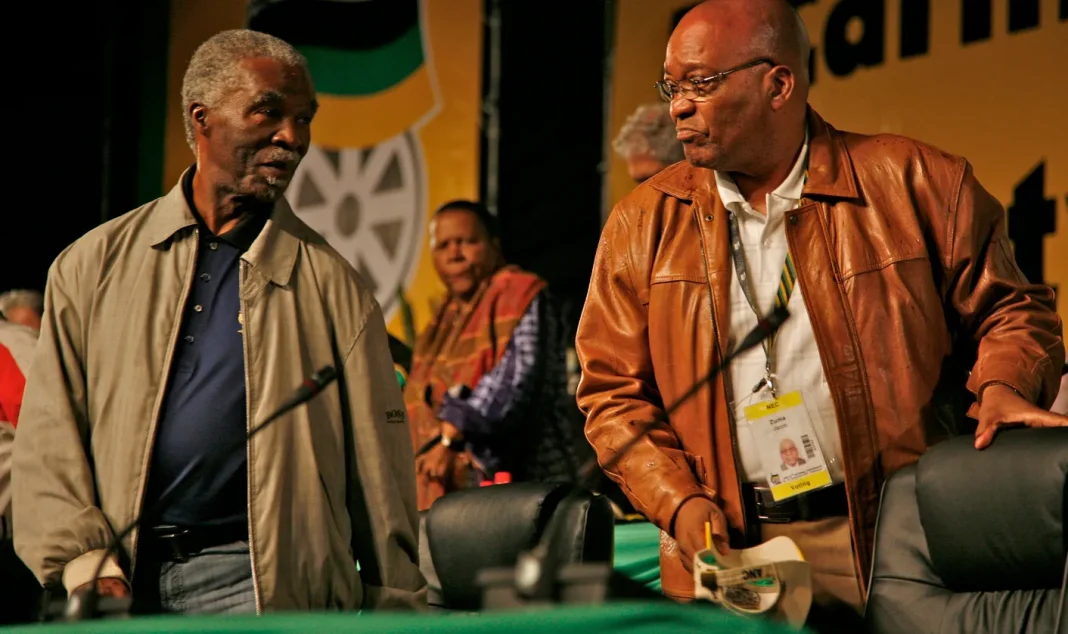
At the ANC’s 2007 Polokwane conference, the party was deeply divided between factions aligned with Thabo Mbeki and Jacob Zuma.

Mkhwanazi recounted how senior police managers who attended the ANC’s Polokwane conference did not go to police the event but instead set up their own tent, drinking alcohol and celebrating what they anticipated would be Zuma’s victory.

He added that officers were even recruited to join COPE within police headquarters during this politically charged period.

According to Mkhwanazi, this politicisation fostered a culture of greed and eroded professional integrity within SAPS.

He also said operational discipline declined, with some members prioritising political allegiance over policing duties.

He further shared a striking example of mismanagement, describing how Crime Intelligence officers were sometimes forced to work in extreme conditions.

“One officer was made to drive in 35-degree heat without relief,” he said.

“These were not isolated incidents.”

Mkhwanazi stressed that the poor treatment of personnel reflected a broader failure of leadership and accountability.

Malema’s questioning underscored long-standing tensions between political interference and professional policing.

By linking the rise of “comrade” culture to the Polokwane conference and subsequent political maneuvering, Mkhwanazi painted a picture of a police service crippled by divided loyalties and internal corruption, with serious implications for crime prevention and public trust.

INSIDE POLITICS

More articles

LEAVE A REPLY

Please enter your comment!
Please enter your name here

Inside Metros G20 COJ Edition

JOZI MY JOZI

QCTO

Inside Education Quarterly Print Edition

Latest article



