By Akani Nkuna
South Africa has launched a national roadmap to strengthen its ability to predict and respond to natural disasters, part of efforts to align with global initiatives on disaster risk reduction.
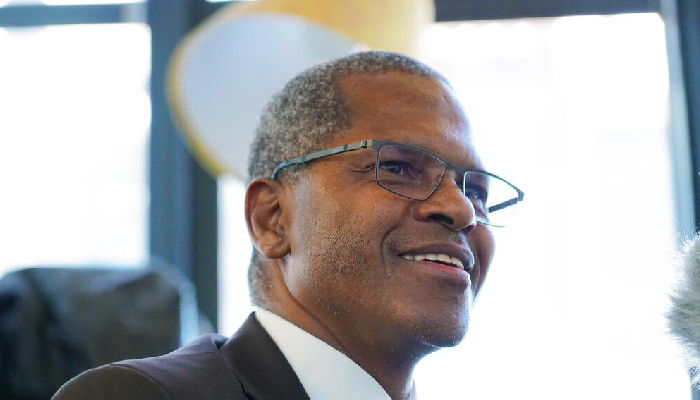
Cooperative Governance and Traditional Affairs Minister Velenkosini Hlabisa said the Early Warning for All (EW4All) Roadmap would use advanced technology to improve preparedness and resilience across the country.
“This initiative is not merely a technical achievement; it serves as a powerful declaration of intent and commitment,” Hlabisa said at the launch.
“It signals that South Africa, and by extension the entire African continent, is poised to take on a leadership role in global efforts aimed at fostering safety and resilience.”
The roadmap was unveiled at the G20 Ministerial Declaration on Disaster Risk Reduction, held over the weekend at the Lord Charles Hotel in Somerset West, Western Cape.
The meeting, attended by ministers from G20 member states, focused on the growing risks of natural disasters and the need for coordinated global strategies to reduce their impact.
The South African plan forms part of the United Nations’ EW4All initiative, launched by UN Secretary-General António Guterres in 2022. The programme aims to ensure that every person on earth is protected by a multi-hazard early warning system by 2027, with a focus on vulnerable populations most exposed to floods, droughts, heatwaves and storms.
The system will facilitate swift and thorough communication between weather forecast entities, thus aiding government to alert citizens earlier. According to UN officials, fast and precise communication of the dangerous weather can reduce the scale of damage by 30%.
Hlabisa said the EW4All initiative would harness advanced technology and data analytics to improve disaster preparedness and response. “It will create a comprehensive framework that enhances preparedness and response capabilities,” he said.
The minister praised international partners for their solidarity and shared commitment to tackling inequality, advancing climate justice, and supporting inclusive financing strategies to address climate-related disasters.
He said the initiative drew inspiration from India’s leadership in promoting advanced early warning systems and nature-based solutions to reduce disaster risks, describing its approach as both effective and sustainable.
Hlabisa said that South Africa’s own experiences with extreme weather warranted the urgency of such systems, citing the 2022 KwaZulu-Natal floods, which killed 443 people people, and the subsequent Eastern Cape floods, which left about 100 dead.
He said the national early warning framework would help the country prevent similar tragedies in the future.
INSIDE POLITICS