
19.5 C
Johannesburg
- Advertisement -

Mchunu takes full responsibility for PKTT disbandment letter

- Advertisement -

Must read

By Johnathan Paoli

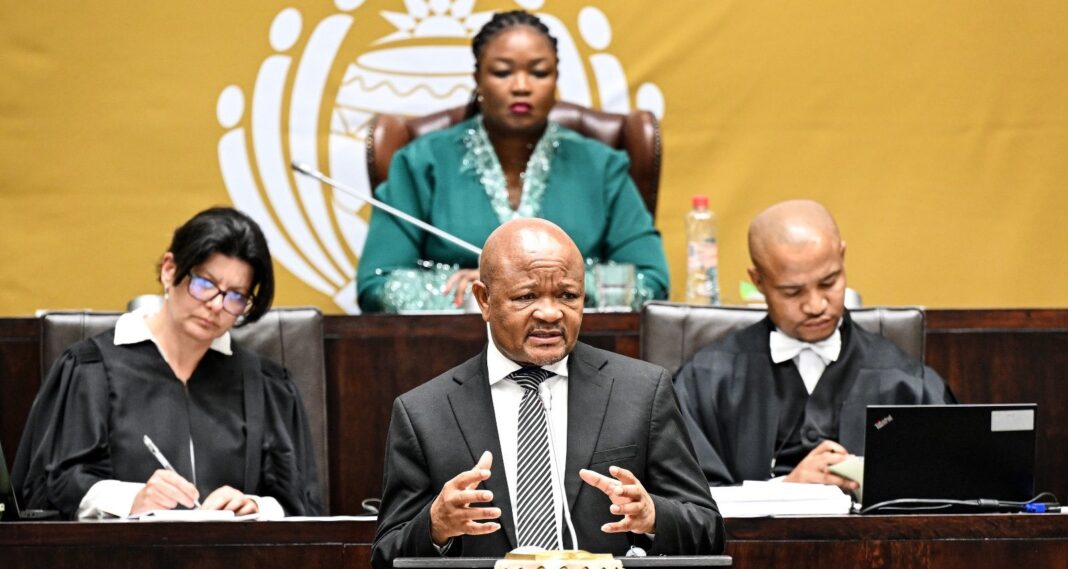
Suspended Police Minister Senzo Mchunu on Wednesday told Parliament’s ad hoc committee that he personally authored and signed the 31 December 2024 directive ordering the disbandment of the Political Killings Task Team (PKTT), insisting that the decision was lawful, constitutional, and taken without outside influence.

Appearing before the committee for his first day, Minister Mchunu rejected claims that his instruction was politically motivated or engineered by senior SAPS officials.

” I’m taking personal responsibility for that letter, and I stand by it,” Mchunu said.
He said the directive was born out of five months of growing frustration with the police’s failure to curb murder, gang violence, and the proliferation of illegal firearms.

Mchunu’s testimony directly contradicted assertions by former KwaZulu-Natal commissioner Nhlanhla Mkhwanazi and PKTT project leader Dumisani Khumalo, who told the inquiry earlier that the minister had exceeded his authority and bypassed operational command structures.

“It didn’t come from anyone else. It came from me. And I have the capacity to think at that level. As a matter of fact, I have nothing to do with criminal syndicates, never in my life. It will never happen,” Mchunu told MPs.

He said while the task team had made some impact, it could not be treated as a permanent or independent unit outside the national policing framework.

The minister argued that the new SAPS organogram, approved by National Commissioner Fannie Masemola in May 2024, catered for political killings as part of a broader restructuring plan and rendered the PKTT redundant.

“If you continue to have a PKTT, you are not recognising the new work study and the new organogram. You can’t have duplicate structures,” Mchunu said.

Mchunu maintained that the Constitution empowers the minister of police to issue policy directives to the National Commissioner, even where those directives have operational consequences.

However, evidence leader and senior counsel Norman Arendse SC pressed Mchunu on whether he had met with Masemola, Mkhwanazi or Khumalo before issuing the directive.
Mchunu conceded he had not.

Arendse described it as “odd, curious and almost bizarre” that Mchunu would send such a consequential letter at 17:20 on New Year’s Eve, when the commissioner was on leave.

Mchunu defended the timing, saying 31 December was a working day for the police and that he wanted the new year to begin with a “sense of achievement”.

Arendse noted that the letter’s tone, instructing that the task team be “immediately” disbanded, contradicted Mchunu’s claim that the directive was intended as a phased restructuring.

The police minister said he similarly felt the tone was wrong, conceding that it could have been “softer”, but insisting that “strong tone does not mean unlawful act.”

INSIDE POLITICS

More articles

LEAVE A REPLY

Please enter your comment!
Please enter your name here

Inside Metros G20 COJ Edition

JOZI MY JOZI

QCTO

Inside Education Quarterly Print Edition

Latest article



