By Johnathan Paoli
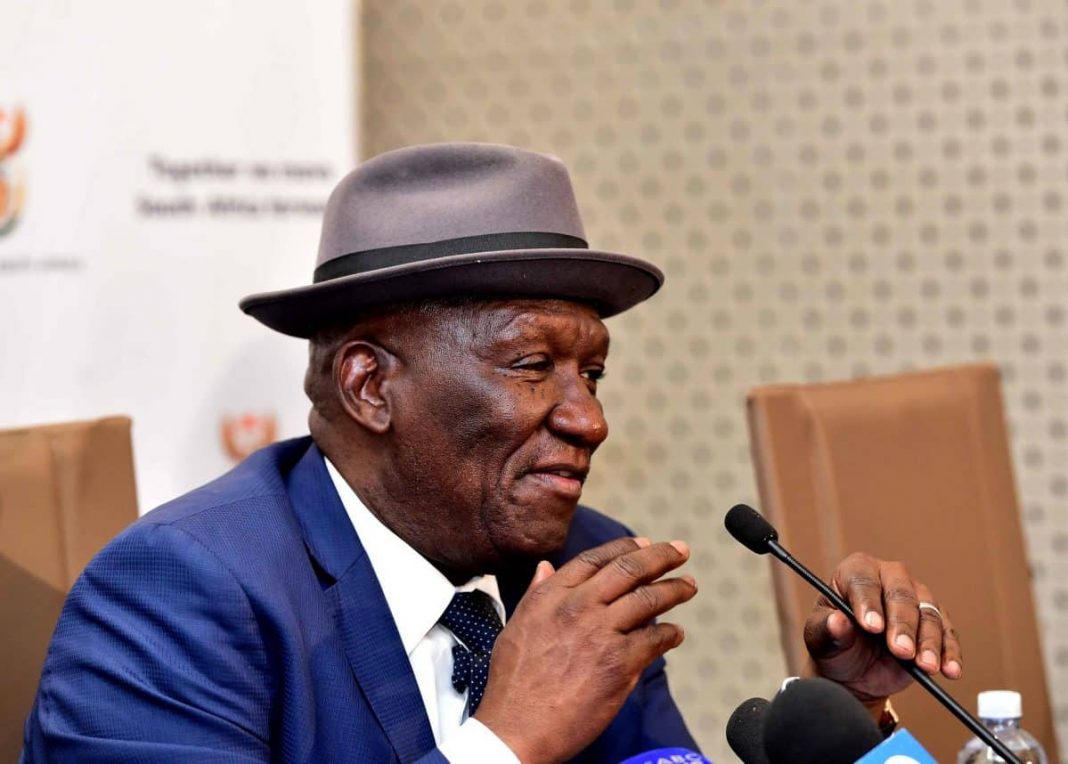
Parliament’s ad hoc committee investigating alleged misconduct and political interference in the South African Police Service (SAPS) resumed on Friday with a heated morning of questioning aimed at former Police Minister Bheki Cele.
The day’s questioning was led by committee members from across the spectrum, focusing on political interference, leadership failures, and the escalating rate of organised crime in the country.
EFF’s Leigh-Ann Mathys opened proceedings by confronting Cele about his past remarks praising former police commissioner Jackie Selebi for stabilising the service but accusing former commissioner Riah Phiyega of “deliberately” dismantling SAPS structures.
Cele reaffirmed this position, claiming that Phiyega’s appointment under then-President Jacob Zuma formed part of a broader weakening of law enforcement institutions, including the National Prosecuting and State Security agencies.
“If you ask me if it was an accident, I would say no. If someone wants to steal but you have a bulldog, they’ll remove the teeth from the bulldog,” Cele said.
On the Marikana massacre, Mathys asked how he would have handled the crisis.
Cele replied: “If I were there, there would be no Marikana,” adding that the tragedy’s blame lay more with then-minister Nathi Mthethwa and Phiyega.
He insisted he was not defending Cyril Ramaphosa, arguing that too little attention was given to the ten police officers killed.
Mathys accused Ramaphosa of “political interference” for his ministerial communications during the crisis.
ANC MPs Khusela Diko and Xola Nqola interjected, correcting her timeline that Ramaphosa was not yet ANC deputy president at the time.
Cele defended interactions between political and government figures, saying meetings between leaders “happen all the time”.
Mathys pressed Cele on the disbandment of the Political Killings Task Team (PKTT) and whether current commissioner Fannie Masemola allowed interference.
Cele described Masemola as “a respectful person, almost a bishop,” who should have objected more strongly but was not the problem.
Patriotic Alliance MP Ashley Sauls adopted a combative tone, alleging that corruption cost lives.
He probed Cele on his free stay at Matlala’s residence.
“Someone paid for your stay. Her name is Babita Deokaran. She paid with her life,” Sauls said.
Sauls accused Cele of maintaining ties with Bongani ‘Mabonga’ Mpungose, who introduced him to Matlala.
Cele admitted knowing Mpungose’s father but denied any criminal connection or asking Matlala for favours, vehicles, or money.
On the Western Cape’s gang crisis, Sauls proposed deploying special task forces to Cape Town.
Cele replied that soldiers had already been sent but lamented inequality.
Sauls blamed Cele for failures in popular musician Kiernan Forbes’s murder investigation, claiming it occurred near the PKTT base.
DA MP Glynnis Breytenbach questioned Cele’s retraction of his claim to know Matlala “very well”.
Cele admitted it was “an error,” saying he only met him in a “semi-work” context and would have preferred “never to have met him.”
She and Dianne Kohler-Barnard pressed Cele on SAPS leadership failures.
Cele defended Selebi as “trapped by the likes of Glen Agliotti” but called Phiyega “catastrophic.”
Cele also urged Parliament to expand its inquiry beyond the police, warning that focusing solely on SAPS ignored the broader chain of dysfunction involving courts and prisons.
INSIDE POLITICS