
21.3 C
Johannesburg
- Advertisement -

Cachalia, IDAC to appear before ad hoc committee into Mkhwanazi allegations

- Advertisement -

Must read

By Johnathan Paoli

Parliament’s ad hoc committee investigating alleged criminal infiltration and political interference in South Africa’s criminal justice system, will resume public hearings on Tuesday.

Pressure is mounting on committee members to make progress while tackling a ballooning witness list, procedural delays, and a deadline that now seems impossible to meet.

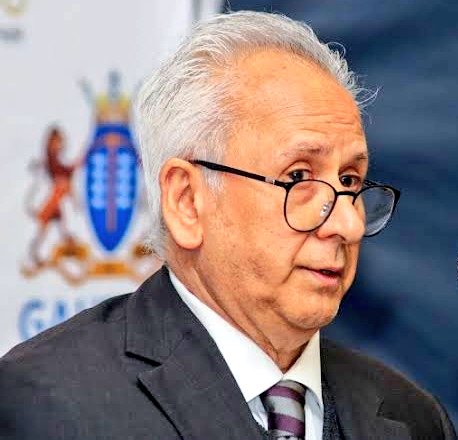
When proceedings recommence, Deputy Police Minister Polly Boshielo will take the stand, followed by Acting Police Minister Firoz Cachalia on Wednesday and an official from the Investigating Directorate Against Corruption (IDAC) later in the week.

The testimony of IDAC will be the committee’s first direct engagement with prosecutors working on corruption cases related to the probe.

The week is viewed as pivotal for the committee, which has already heard testimony from some of the country’s most senior law enforcement officials, including KwaZulu-Natal Police Commissioner Lieutenant-General Nhlanhla Mkhwanazi, whose allegations of corruption and criminal behaviour in the upper echelons of the criminal justice system led to the establishment of the committee and the Madlanga Commission. 

Thus far, senior law authorities to have testified include National Police Commissioner General Fannie Masemola, suspended Deputy National Commissioner Lieutenant-General Shadrack Sibiya, Suspended Police Minister Senzo Mchunu, Former Police Minister Bheki Cele, and Deputy Minister Cassel Mathale.

Committee chairperson Soviet Lekganyane has made it clear that despite a recent one-month extension, the inquiry will not conclude by its revised deadline of 28 November.

He said the committee would formally request another extension from National Assembly Speaker Thoko Didiza. 

Lekganyan said that it would be a gross injustice to dismiss submissions due to time constraints.

The committee was originally expected to wrap up by the end of October, but the scale of evidence, volume of witnesses, and complexity of allegations have made that impossible.

Members agreed that a status report should be sent to the Speaker outlining their progress and motivating the need for more time to complete the inquiry thoroughly.

The committee’s evidence leader, Advocate Norman Arendse (SC), has confirmed that the testimonies of several key witnesses are still pending.

Among them are Crime Intelligence boss Lieutenant-General Dumisani Khumalo and Chief of Staff in the Police Ministry, Cedrick Nkabinde, as well as figures linked to the broader corruption narrative, such as political fixer Brown Mogotsi, tenderpreneur Vusimusi “Cat” Matlala – currently in jail after being denied bail on charges that include attempted murder – and forensic investigator Paul O’Sullivan.

Arendse said that the committee would need to carefully manage scheduling and security logistics for certain witnesses, particularly Matlala. 

Lekganyane has classified Matlala as a “category A witness”, agreeing that special arrangements will be needed for his testimony.

Another key decision taken last week was to recall Mkhwanazi after all remaining witnesses had testified.

 MPs from across the political spectrum agreed that the provincial commissioner must return to clarify several issues, including his withdrawal of allegations made against Cele.

uMkhonto weSizwe Party MP Sibonelo Nomvalo said Mkhwanazi’s return was essential. 

Nomvalo said that despite Mkhwanazi withdrawing the allegations against Cele, there were “other issues” from new testimony that needed more clarity. 

Mathale earlier in the week reignited debate over Mchunu’s decision to disband the Political Killings Task Team (PKTT), a move he described as impractical and poorly executed.

He said the decision was never discussed or approved within the ministry, adding that the team’s work was vital in combating politically motivated murders in KwaZulu-Natal.

Behind the scenes, committee staff are still sifting through an enormous backlog of public submissions, nearly 300 in total, many of which include whistle-blower statements and NGO reports.

The documentation must be authenticated before it can be included in the committee’s final report, a process that could take weeks.

INSIDE POLITICS

More articles

LEAVE A REPLY

Please enter your comment!
Please enter your name here

Inside Metros G20 COJ Edition

JOZI MY JOZI

QCTO

Inside Education Quarterly Print Edition

Latest article



