

By Johnathan Paoli
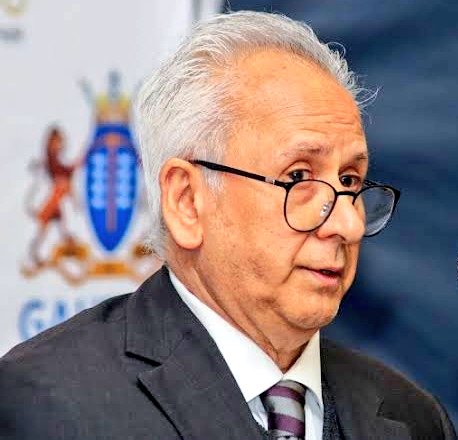
Acting Police Minister Firoz Cachalia has told Parliament’s ad hoc committee that he remains troubled by the decision to disband the KwaZulu-Natal Political Killings Task Team (PKTT).
“I could not understand exactly what the reasons were for the disbandment of the task team. Political killings are ongoing and likely to worsen before the elections. The country needs a clear, coordinated strategy to fight organised crime,” Cachalia told the committee on Wednesday.
Cachalia assumed office in August after Police Minister Senzo Mchunu was placed on special leave.
The committee is probing allegations of political interference, criminal infiltration, and corruption within the South African Police Service (SAPS), following explosive claims made by KwaZulu-Natal Police Commissioner Lieutenant-General Nhlanhla Mkhwanazi at a July press briefing.
Evidence leader Advocate Norman Arendse (SC) started proceedings on Wednesday by noting that Cachalia had been thrown into the deep end of a volatile political and institutional crisis.
The acting minister agreed, admitting that he was not sure if everything had been prepared for his role when he took office.
Cachalia said Mkhwanazi’s press briefing would have been inappropriate under ordinary circumstances, as it breached command protocol.
However, he added that in extreme situations where norms have broken down, one expected bold, courageous conduct from those who hold important positions.
Cachalia confirmed that the SAPS National Commissioner, General Fannie Masemola, had told him the 31 December 2024 letter from Mchunu ordering the dissolution of the task team did not follow procedure.
Masemola, he said, accommodated Mchunu’s instruction but raised the matter of dockets that were ordered to be transferred from the team.
Cachalia said there were inconsistencies between what Masemola told him privately and what the national commissioner later stated publicly.
“What Masemola communicated to me and what he actually did was not consistent,” Cachalia said.
Masemola later announced that the PKTT’s dockets had been returned to KwaZulu-Natal, despite previously indicating the team was being phased out.
Cachalia said he had requested a written report from Masemola, who later confirmed in that document that the PKTT should in fact remain in place.
He further noted that the dissolution of the PKTT was ill-timed and ill-advised, particularly amid increasing cases of whistleblower and councillor assassinations.
Arendse suggested that Cachalia had been handed a poisoned chalice.
The acting minister did not dispute the metaphor, acknowledging that the SAPS was in a very difficult period, but insisted it was not beyond saving.
“SAPS is not an organisation on its knees. At the top of the organisation there are still very competent generals and detectives, though we are losing talent to the private sector,” he said.
Cachalia said testimony given at the parliamentary inquiry and the Madlanga Commission thus far had been deeply disconcerting but also necessary.
He reiterated that policing had been eroded because of political interference.
He pointed to ongoing failures in oversight mechanisms, including IPID, the Auditor-General, and parliamentary committees.
Cachalia praised the establishment of the Investigating Directorate Against Corruption (IDAC) as an important step forward, but cautioned that it was not yet fully capable of fulfilling its mandate. He called for reforms to the Prevention and Combating of Corrupt Activities Act.
Responding to questions about the arrest of Crime Intelligence head Lieutenant-General Dumisani Khumalo by IDAC, Cachalia declined to comment, citing ongoing investigations.
However, he said the broader lesson was clear and that corruption was an existential threat to the country.
The commission continues.
INSIDE POLITICS