
15.1 C
Johannesburg
- Advertisement -

SAPS leadership crisis deepens as Khumalo and Cachalia testify 

- Advertisement -

Must read

Johnathan Paoli

The crisis in South Africa’s policing leadership deepened on Wednesday as the Madlanga Commission of Inquiry and Parliament’s ad hoc committee on police corruption heard testimony that underscored the institutional turmoil within the security cluster.

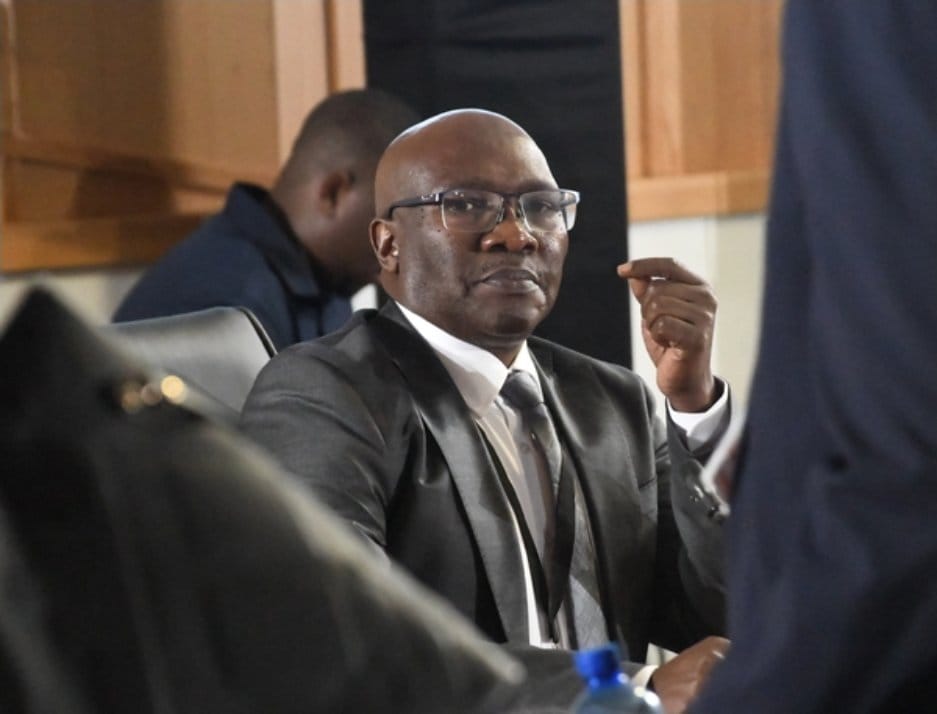
In the country’s capital, Pretoria, Lieutenant-General Dumisani Khumalo, head of Crime Intelligence, told the Madlanga Commission that suspended Police Minister Senzo Mchunu had insisted that President Cyril Ramaphosa “was in agreement” with the decision to disband the Political Killings Task Team (PKTT), a statement Khumalo said left him shocked and disturbed.

Khumalo’s evidence painted a troubling picture of political interference and institutional sabotage.

He recalled a 27 March 2025 meeting with Mchunu and National Police Commissioner General Fannie Masemola, which he described as one of the most uncomfortable encounters of his career.

“The minister said we should not mention the president and mentioned he was tired of hearing about the president. He said the president was in agreement that the PKTT be disbanded,” Khumalo testified.

According to Khumalo, both he and Masemola opposed the abrupt dissolution, suggesting a gradual winding-down to avoid jeopardising prosecutions still before the courts.

“Mchunu was completely against the gradual approach. He declared there would be no further meetings on the matter and that any future engagements would happen only with the commissioner,” Khumalo said.

Documents tabled before the commission showed that a 2023 Interministerial Committee led by then-Police Minister Bheki Cele had declared the PKTT indispensable, commending its success in securing convictions and uncovering links between politicians and contract killers.

Khumalo told the commission that the disbandment was announced abruptly through a 31 December 2024 directive from Mchunu, without consultation with the National Commissioner or affected divisions.

He said subsequent interference in Gauteng’s intelligence operations, including attempts to retrieve sensitive dockets like that of businessman Katiso ‘KT’ Molefe, reflected coordinated efforts to destabilise crime-fighting structures.

The commission also heard that Khumalo was later arrested and stripped of key responsibilities, which he described as politically motivated.

“As the whole world knows, I’ve been arrested and removed from some responsibilities, and I could not sign off on matters that were supposed to be signed by me,” he said.

By the time the PKTT’s cases were handed over to subordinates, he testified, no further investigative activity took place.

The commission will continue tomorrow morning at 10:00, with testimony from the next witness being held in public.

Meanwhile in Cape Town, Acting Police Minister Firoz Cachalia asserted that he holds full executive authority as the country’s legitimate Police Minister, warning MPs of cartels corrupting procurement systems and vowing to restore integrity in law enforcement.

Cachalia, testifying for the first time since assuming the post, firmly asserted that he is the de facto and de jure Police Minister, ending speculation about overlapping authority with suspended Minister Mchunu.

“There can only be one minister. If the president decides to divide the portfolio, then you can have two ministers, but that’s not the case here,” Cachalia said in response to uMkhonto weSizwe Party Sibonelo Nomvalo, who had asked whether Mchunu was a minister without portfolio.

Cachalia’s intervention clarified weeks of uncertainty following Mchunu’s suspension amid allegations by KZN Police Commissioner Lt-Gen Nhlanhla Mkhwanazi that political interference had crippled the PKTT and exposed corrupt networks within SAPS.

Cachalia warned that criminal cartels have deeply infiltrated public procurement systems, using Tembisa Hospital as an example where the Special Investigating Unit uncovered R2 billion in fraudulent contracts.

He revealed plans for a specialised investigative unit to focus on procurement-related crimes, describing corruption as a systemic cancer eating away at the country’s institutions.

Cachalia said he would institute lifestyle audits, tighten oversight over procurement committees, and review SAPS’s “organisational design, strategy, and culture”.

He acknowledged irregular expenditure of R650 million, including a tender awarded to Vusimusi ‘Cat’ Matlala, and vowed to act on the Auditor-General’s findings.

“That contract should never have been considered,” he said.

Touching on the PKTT controversy raised at the commission, Cachalia agreed that its disbandment “was not properly handled” and suggested that the country still needed a dedicated political killings task team.

The committee will continue tomorrow morning at 10:00, with Andrea Johnson, head of the National Prosecuting Authority’s Investigating Directorate Against Corruption (IDAC) testifying before Parliament.

INSIDE POLITICS

More articles

LEAVE A REPLY

Please enter your comment!
Please enter your name here

Inside Metros G20 COJ Edition

JOZI MY JOZI

QCTO

Inside Education Quarterly Print Edition

Latest article



