
14.2 C
Johannesburg
- Advertisement -

Madlanga Commission hears about EMPD capture, as IDAC boss defends integrity before Parliament

- Advertisement -

Must read

By Johnathan Paoli

The Madlanga Commission and Parliament’s ad-hoc committee converged in narrative and tone on Thursday, each exposing how internal rivalries, blurred loyalties, and political interference have hollowed out law enforcement from metro level to national command.

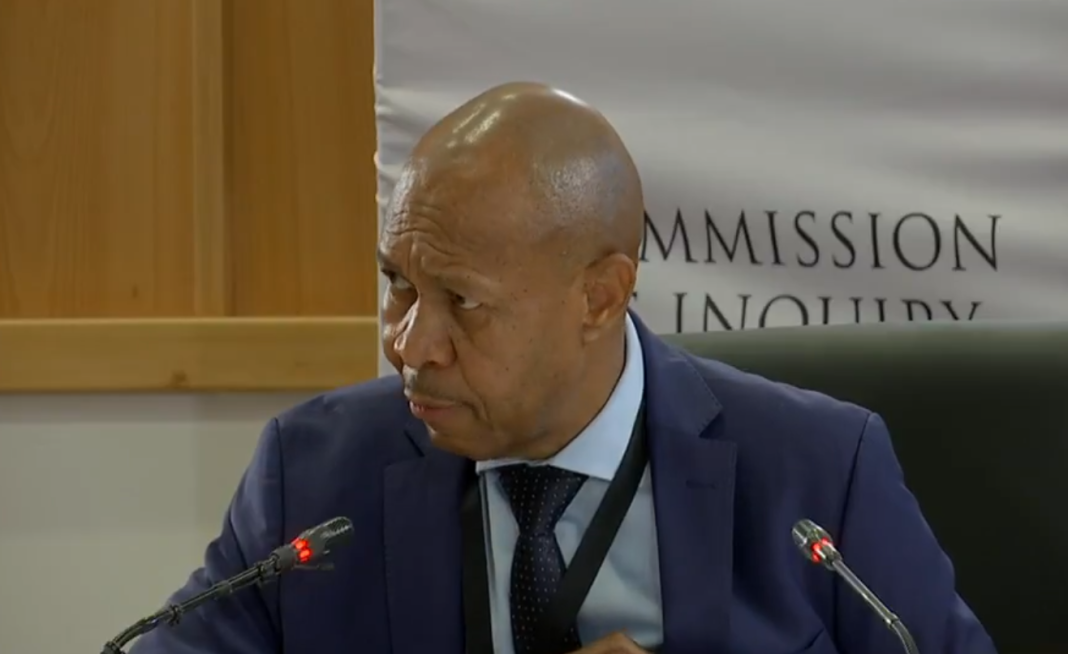
In Pretoria, suspended Ekurhuleni Metropolitan Police Department (EMPD) Chief Isaac Jabulani Mapiyeye delivered testimony about the usurping of power and irregular appointments within his department, implicating senior officials and private security companies in what commissioners described as institutional capture.

Before the Madlanga Commission, Mapiyeye, currently on suspension over sexual misconduct allegations, described how his legal authority had allegedly been systematically usurped by other city officials, notably former city manager Imogen Mashazi and deputy chief Brigadier Julius Mkhwanazi.

Between May and July 2024, he said, Mkhwanazi made 55 appointments and promotions without his involvement, many drawn from his own former unit.

“Most of the posts had not even been advertised,” Mapiyeye testified.

He accused Mashazi of “blessing” the irregular appointments despite his objections.

The tension came to a head after his refusal to approve the extension of a deputy chief’s contract in 2023.

“I could not be a part of someone preparing food which I don’t eat and just come and dish for me,” he said.

The commission then turned to the 2023 blue-light scandal, showing that tenderpreneur Vusimusi “Cat” Matlala’s private security company, CAT VIP Protection Services, had illegally fitted vehicles with emergency lights and signed unauthorised “cooperation” agreements with EMPD.

Documents signed by Mkhwanazi outlined a working relationship and memorandum of understanding with Matlala’s firm, even listing several vehicles registered to the city. Mapiyeye told the commission he had never approved or been informed of such agreements.

The memorandums also promised skills transfer and tactical training by Matlala’s company and allowed its vehicles to use blue and red lights, directly contravening the National Road Traffic Act.

Commissioner Sandile Khumalo called the arrangement a case study in how corruption decentralises from national syndicates to local police.

Mapiyeye ended his testimony by saying that the memorandums were unauthorised, irregular, and unlawful, and that his suspension in September 2024 followed retaliation for challenging these practices.

The commission is expected to summon both Mashazi and Mkhwanazi in the coming days to respond.

Meanwhile, in Cape Town, IDAC head Andrea Johnson faced a barrage of questions about her unit’s prosecutions of police generals, alleged bias, and oversight gaps, all while defending her integrity and independence.

Facing the committee, Johnson recounted her 29-year prosecutorial career, from the Directorate of Special Operations or Scorpions and the Jackie Selebi conviction to the Oscar Pistorius case, describing her life’s work as a commitment to law, not loyalty.

Evidence leader and senior counsel Advocate Norman Arendse asked why an oversight judge for IDAC was only appointed last month, five years after its creation.

Johnson admitted the delay was regrettable, though she maintained that IDAC had operated under the National Prosecuting Authority’s supervision.

Questions over her husband’s employment in Crime Intelligence, under Lieutenant General Dumisani Khumalo, added further tension.

“Pillow talk gets people killed. I take my oath of office very seriously,” she said

The Matlala scandal, first raised in Mapiyeye’s hearing, resurfaced in the committee when Johnson confirmed that IDAC was investigating Matlala for alleged corruption involving the Medicare24 Tshwane District contract.

“We have obtained a cyber-warrant and recovered deleted data from devices seized during the search. Many persons in SAPS are implicated and yes, that includes political figures,” Johnson said.

Pressed by committee member Julius Malema about whether IDAC was probing politicians, Johnson replied in the affirmative, but insisted that it would be irresponsible to name them.

The commission and committee continue.

INSIDE POLITICS

More articles

LEAVE A REPLY

Please enter your comment!
Please enter your name here

Inside Metros G20 COJ Edition

JOZI MY JOZI

QCTO

Inside Education Quarterly Print Edition

Latest article



